
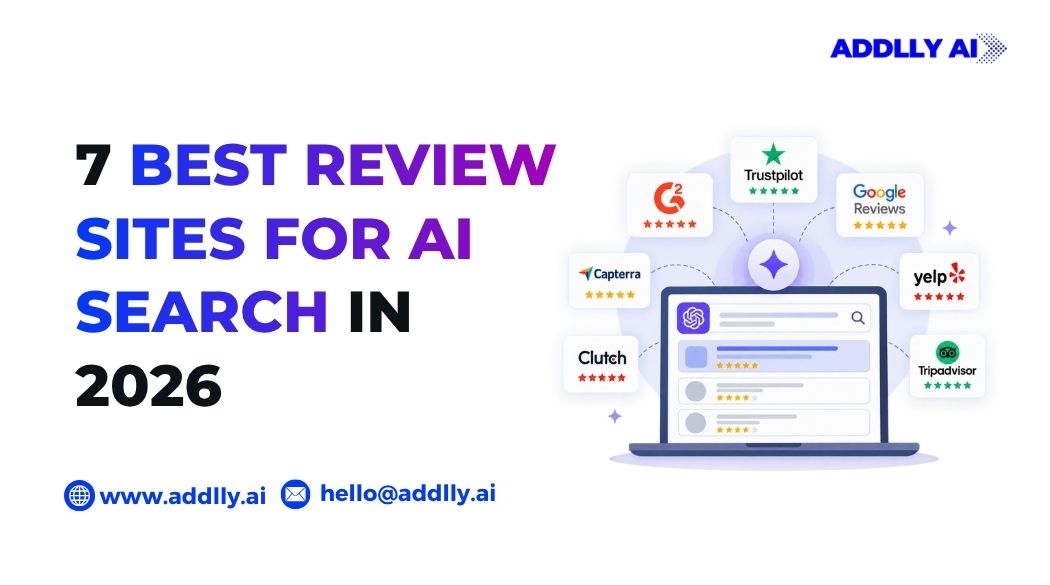
A brand can have hundreds of positive reviews and still be overlooked by an AI-generated recommendation. The issue is not simply how many reviews a business has, but where those reviews appear and whether AI search engines use those sources when forming an answer. The best review sites for AI search therefore depend on more than star ratings.
Review volume, platform authority, industry relevance, recency, and the consistency of brand mentions across multiple platforms can all shape the signals available to AI systems. Trustpilot may matter for one brand, while G2, Capterra, Google Reviews, Yelp, or an industry-specific platform may matter more for another. A GEO audit can reveal how these external sources contribute to your brand’s presence across AI-generated answers.
Quick Summary – Best Review Sites for AI Search
- Review volume, platform relevance, and recency can shape how often brands appear in AI search recommendations.
- The best review sites for AI search vary by industry, query intent, and AI engine, so no single platform works equally for every brand.
- AI engines compare review platforms with websites and other third-party sources rather than relying on one primary source for every answer.
- Complete, consistent review profiles give AI systems clearer information to interpret, compare, and potentially link to in generated answers.
- Building AI visibility requires more than review profiles, with relevant content, brand mentions, and external links contributing to a broader digital presence.
Which Are the Best Review Sites for AI Search?
The best review sites for AI search are not determined by star ratings alone. Their relevance can depend on review volume, recency, platform authority, industry relevance, and how frequently AI search engines retrieve and cite their pages.
1. Trustpilot
Trustpilot stands out among the best review sites for AI search because its public review profiles provide structured third-party information that AI systems can retrieve and cite when evaluating brands. Seer Interactive’s 2026 study of more than 800,000 AI responses found Trustpilot was the most frequently cited review platform across ChatGPT, Google AI Mode, Gemini, and Perplexity.
- Strong AI citation presence: Trustpilot was cited more than twice as often as the next most-cited review site in Seer’s study.
- Review volume matters: The study found a median AI citation rate of 1% for brands without a Trustpilot profile, compared with 54% for claimed profiles with a median of 13 reviews and 75% for active profiles with a median of 81 reviews.
- More than star ratings: AI systems can use Trustpilot data to surface review count, TrustScore, and recurring customer themes such as service quality, delivery, product quality, refunds, and trust concerns.
- Relevant across purchase stages: Seer found review and trust sites became substantially more prominent in AI citations as queries moved closer to purchase intent.
A strong Trustpilot presence can also contribute to broader AI search reputation managementby giving AI systems another source of third-party information about a brand.
2. G2
For B2B software, G2 is one of the most important review platforms for AI search because its peer reviews give AI systems structured information about products, categories, customer experiences, and competitive alternatives. G2’s 2026 research reports that 45% of B2B software buyers consider review-site citations the most confidence-inspiring signal in an AI answer.
- Strong AI citation presence: An independent analysis cited by G2 found G2 accounted for 22.4% of review-site citations across software-related queries on ChatGPT, Perplexity, and Google AI Mode.
- Review volume is significant: G2’s analysis across 500 categories found that products with deeper review foundations tended to receive more AI citations, while star ratings alone did not show the same relationship.
- Useful for software comparisons: G2 reviews give AI search engines information about product capabilities, customer satisfaction, use cases, alternatives, and recurring experiences that can contribute to AI-generated recommendations.
- A trust signal for B2B buyers: G2 reports that software review sites are the second-largest source influencing buyer shortlists, behind AI chatbots, making peer feedback particularly relevant during software evaluation.
- Relevant deeper in the funnel: Review platforms become more influential as software buyers move from discovery toward evaluation and purchase, making G2 particularly relevant for high-intent and complex queries.
G2’s role also connects to the broader question of how AI search engines decide which brands get seen, particularly when they evaluate third-party sources alongside a brand’s own website.
3. Capterra
For software buyers, Capterra is one of the best review sites for AI search because it organizes software by categories, business needs, features, and use cases. This gives AI search engines additional context when evaluating software options, comparing products, or generating recommendations for complex business queries.
- Software discovery: Capterra helps organize products around specific business needs, making its pages relevant to category and solution-based searches.
- Review volume matters: A larger base of customer reviews can provide AI systems with more evidence about user experiences, satisfaction, and recurring product themes.
- Category context: Capterra’s software categories help connect products with specific industries, functions, and use cases that may appear in AI-generated answers.
- Useful for comparisons: Product comparisons and alternatives can provide additional context when users ask AI tools to compare competing software.
- Third-party trust signals: Reviews, ratings, product information, and customer experiences create signals beyond a company’s own website, contributing to its broader AI visibility.
Capterra is particularly relevant when considering third-party citations and how external platforms can influence the information AI systems use when evaluating brands.
Further Reading: How to Use G2 and Capterra to Improve AI Search Visibility: 7 Practical Steps
4. Google Reviews
Google Reviews are especially relevant for local businesses because they sit within the broader Google ecosystem and are closely connected to business information, location, and customer feedback. For AI search, these reviews can provide context about customer satisfaction, service quality, and local reputation when AI systems generate recommendations.
- Local business visibility: Reviews associated with a Google Business Profile can provide important reputation signals for businesses serving specific locations.
- Review volume matters: A larger review count gives AI systems more customer experiences to assess when evaluating a business.
- Recency adds context: Recent customer reviews can help reflect the current quality of products or services rather than relying only on older feedback.
- Average rating is only part of the picture: AI systems can consider ratings alongside review volume, review content, business information, and other sources.
- Useful for local recommendations: Google Reviews can become particularly relevant when users ask AI tools for nearby businesses, services, restaurants, or other location-specific recommendations.
Customer reviews also form part of a brand’s user-generated content, giving AI systems additional real-world experiences beyond information published directly by the business.
5. Yelp
Yelp is particularly relevant among the best review sites for AI search for local businesses, especially restaurants and service providers. Its combination of customer reviews, business information, location data, and ratings gives AI-powered search engines additional context when generating local recommendations and conversational answers.
- Local search relevance: Yelp business pages provide information about location, services, categories, pricing, and customer experiences that can support AI recommendations.
- Online reviews: Detailed customer feedback gives AI models information about recurring experiences, service quality, and common customer concerns.
- Review volume: A high volume of reviews can provide a broader evidence base than a small number of ratings, particularly when AI systems evaluate competing businesses.
- Negative reviews matter: AI systems can encounter recurring complaints as well as positive experiences, making review sentiment part of the broader reputation picture.
- Useful for local recommendations: Yelp can become relevant when users ask AI platforms for restaurants, service providers, or businesses in a specific location.
- Multi-location brands: Consistent and complete business pages across locations can strengthen a brand’s digital presence when customers use AI directly for local recommendations.
For local businesses, Yelp should therefore be considered alongside Google Reviews, rather than treated as a standalone source of AI search visibility.
6. TripAdvisor
TripAdvisor is particularly relevant among the best review sites for AI search for travel, hospitality, tourism, and restaurant businesses. Its large volume of customer reviews, ratings, destination information, and business pages gives AI search models additional context when generating travel recommendations, comparing properties, or answering location-based queries.
- Travel-focused review platform: TripAdvisor provides detailed online reviews covering hotels, restaurants, attractions, and experiences, making it highly relevant to travel-related AI recommendations.
- Review volume provides context: A high volume of customer reviews can give AI systems more evidence about recurring experiences, service quality, and common strengths or concerns.
- Useful for AI recommendations: TripAdvisor pages can become relevant when users ask AI-powered search engines for hotels, restaurants, attractions, or travel experiences.
- Ratings are only one signal: Star ratings, review count, review recency, written feedback, and business information can collectively provide context about a brand.
- Local and destination intent: TripAdvisor’s business pages can support queries where users want recommendations within a particular destination or location.
- Third-party validation: As an independent review platform, TripAdvisor can contribute to the broader set of cited sources AI systems encounter when evaluating a business.
For travel and hospitality brands, tracking how these third-party sources appear in AI-generated answers canreveal gaps in AI search visibility across different platforms.
7. Clutch
Clutch is one of the best review sites for AI search for B2B service providers, including agencies, software development firms, IT companies, and consulting businesses. Its verified client reviews, service categories, project details, and company profiles give AI search engines structured third-party information when evaluating providers for recommendations. Clutch’s August 2026 research found that providers with 50+ reviews averaged roughly 27 times more AI citations than providers with no reviews.
- Strong B2B relevance: Clutch focuses on business services, making its review data particularly useful for AI queries involving agencies, consultants, technology companies, and other B2B providers.
- Verified reviews matter: Clutch says every review undergoes a human-led verification process, adding credibility to the customer feedback available to AI systems.
- Review volume is significant: Clutch’s 2026 analysis found that providers with 50+ reviews averaged roughly 27 times more AI citations than providers with no reviews.
- Structured business information: Profiles include services, industries, project details, client feedback, pricing information, and other business data that can help AI models understand what a provider actually does.
- Relevant to AI recommendations: Clutch reports that its provider data is increasingly being used in AI-driven discovery across tools such as ChatGPT, Perplexity, and Gemini.
- More than star ratings: Reviews contain details about challenges, solutions, results, and client experiences, giving AI systems richer context than an average rating alone.
For B2B brands, this makes Clutch particularly relevant to AI citationsand third-party visibility. Building a credible presence on platforms that AI systems can retrieve and reference can form part of a broader AI search citation strategy.
Industry-Specific Review Sites
Industry-specific review sites can be among the best review sites for AI search when buyers rely on specialized platforms to evaluate businesses. The right platform depends on the industry, audience, and type of search query. Recent research also shows that review platforms vary significantly by industry and buyer intent.
| Industry | Relevant Review Sites | Why They Matter for AI Search |
|---|---|---|
| SaaS & Software | TrustRadius, GetApp, Gartner Peer Insights | Provide product reviews, customer experiences, use cases, and comparison data for software-related queries. |
| Healthcare | Healthgrades, Zocdoc | Provide provider information, patient reviews, specialties, and location data for healthcare searches. |
| Legal Services | Avvo, Justia, FindLaw | Combine professional profiles, practice areas, reviews, and location information. |
| Home Services | Houzz, Angi, HomeAdvisor | Provide reviews alongside service categories, project information, and business profiles. |
| E-commerce | Trustpilot, Product Hunt, Shopify App Store | Give AI systems additional product, merchant, app, and customer-feedback signals. |
| Travel & Hospitality | TripAdvisor, Booking.com | Provide property information, ratings, customer reviews, and destination-specific context. |
| Professional Services | Clutch, GoodFirms | Offer client reviews, service categories, project information, and company profiles. |
How AI Search Engines Use the Best Review Sites for AI Search
Review sites can act as third-party sources that help AI systems understand a brand beyond its own website. Research across major AI engines shows that different systems retrieve and cite different mixes of review platforms, directories, first-party websites, and other sources.
1. They Retrieve Review Data From the Web
AI search engines such as ChatGPT, Gemini, Perplexity AI, and Google AI Overviews can retrieve information from the web when answering current queries. Review pages can therefore become part of the source set used to generate an answer, particularly for recommendation and comparison queries.
2. They Compare Multiple Sources
AI engines rarely rely on a single webpage when forming a recommendation. They can compare review sites, business pages, directories, publications, and other sources to build a broader picture of a brand, product, or service. Research from Yext found meaningful differences in the source mix used by ChatGPT, Gemini, Perplexity, and other AI systems.
3. They Look Beyond Traditional Search Rankings
Ranking well on traditional search engines does not automatically mean a brand will appear in an AI-generated answer. Research comparing Google Search with generative search found that the retrieved sources can differ substantially between traditional search and AI-powered search experiences.
This is one reason generative engine optimization has become a distinct consideration alongside traditional SEO.
4. They Use Reviews as Reputation Signals
Honest reviews, review volume, ratings, customer experiences, and recurring themes can provide AI systems with additional reputation signals. These signals can help an answer engine understand how customers perceive a business rather than relying only on claims published on the company’s own website.
5. They Extract Information From Structured Pages
AI crawlers and retrieval systems need accessible information that can be interpreted reliably. Structured data, clearly organized review information, product data, business details, and high quality content can make information easier for search systems to process. Google, for example, documents how review and AggregateRating structured data can support review snippets in Search.
6. They Use Reviews for Recommendations and Comparisons
When someone asks an AI system to compare products, choose a service provider, or recommend a business, review platforms can provide evidence about customer experiences. This becomes particularly relevant for complex queries where a user asks a follow-up question such as which option has better reviews, service, or customer satisfaction.
7. Different AI Engines Use Different Sources
The best AI search engines do not all retrieve information in the same way. Perplexity AI, ChatGPT, Gemini, Microsoft Copilot, and Google AI Overviews can surface different sources for the same query, meaning a review platform that appears frequently in one engine may have less visibility in another.
8. They Can Turn Third-Party Information Into AI Citations
When a review page is retrieved and used to support an AI-generated answer, the platform can become an AI citation source. Recent citation research shows that third-party domains can account for a substantial share of sources cited by AI engines, reinforcing why brands need to monitor their presence beyond their own websites.
This is where AI SEO overlaps with digital PR, review management, traditional SEO, and broader efforts to build a consistent digital presence across the web.
Don’t Miss: AI Search Ranking Factors: What Changed in 2026?
How to Choose and Optimize the Best Review Sites for AI Search
Choosing the best review sites for AI search requires more than creating profiles on every available platform. Businesses should prioritize platforms relevant to their industry, maintain accurate information, and build a consistent presence across the web so AI systems have reliable third-party sources to evaluate.
1. Prioritize Platforms Relevant to Your Industry
Start with the review sites that your customers already use when comparing businesses in your category. A software company may prioritize G2 and Capterra, while a hotel may focus on TripAdvisor and Booking.com. Industry relevance gives AI systems stronger context when matching your brand to specific queries.
2. Identify Where Competitors Appear
Search for competitors across ChatGPT, Gemini, Perplexity AI, Google AI Overviews, and other best AI search engines. Look for review platforms that repeatedly appear in citations and recommendations. This can reveal which external sources are already relevant to your category.
3. Complete Your Profiles
A partially completed profile gives AI crawlers less information to interpret. Include your business description, services, categories, products, locations, pricing details, and other relevant information. Consistent and complete profiles create a clearer information source for AI engines.
4. Keep Information Consistent Across Platforms
Your brand name, services, locations, product information, and other core details should remain consistent across review platforms and your website. This helps large language models connect information from multiple sources and reduces conflicting information about your business.
5. Build a Steady Flow of Honest Reviews
Focus on collecting honest reviews from real customers rather than simply pursuing a higher star rating. Review volume, recent customer experiences, and recurring themes can give AI systems more context when evaluating your brand against alternatives.
6. Respond to Reviews With Useful Information
Thoughtful responses can add context to your review profile. Address specific concerns, answer questions, and explain how issues were resolved instead of relying on generic responses. This can create a richer source of information around customer experiences.
7. Make Information Easy for AI Systems to Interpret
Clear descriptions, relevant categories, readable review content, and well-organized business information make profiles easier to interpret. On your own website, structured data can also help search systems understand business and review information, although structured data does not guarantee inclusion in AI-generated answers.
8. Align Review Profiles With Your Website
Your review profiles should reinforce, rather than contradict, the information published on your website. Product data, services, business descriptions, customer claims, and other important details should remain aligned across these sources.
This consistency supports both traditional SEO and generative engine optimization, giving AI engines multiple sources from which to understand your brand.
9. Monitor Your AI Search Presence
Profile optimization should be followed by regular monitoring. Check whether your brand appears in relevant queries across ChatGPT, Gemini, Perplexity AI, Microsoft Copilot, and Google AI Overviews. Track which review platforms are cited and whether competitors appear more frequently.
For brands managing multiple external sources, brand mentions vs backlinks can also help explain how third-party visibility contributes to broader search performance.
Final Words
Review sites are becoming an important part of how brands are understood in AI search. Trustpilot, G2, Capterra, Google Reviews, Yelp, TripAdvisor, Clutch, and industry-specific platforms give AI systems third-party information to evaluate alongside websites and other sources.
The best review sites for AI search depend on your industry, audience, competitors, and the sources AI engines reference. Consistent profiles, honest reviews, accurate business information, and relevant third-party mentions can give AI systems stronger context when generating answers and recommendations.
Businesses should also remember that appearing on a review site does not automatically mean that information becomes part of an AI model’s training data. AI systems may retrieve information from the live web when generating answers, making your broader digital presence increasingly important.
Addlly AI supports this broader strategy through its Social Media AI Agent, which helps teams create brand-aligned content across social and community platforms, and its AI Blog Writer, which produces structured, citation-friendly content for traditional and AI search.
Together, these tools help businesses build a consistent presence across the sources that shape modern AI search visibility.
FAQs About the Best Review Sites for AI Search
Which Review Sites Matter Most for AI Search?
The most relevant platforms depend on your industry, audience, and the sources AI engines use for your category. Trustpilot, G2, Capterra, Google Reviews, Yelp, TripAdvisor, and Clutch can all matter, but their visibility varies by query and AI platform. Recent research also shows that AI engines do not consistently cite the same review platforms.
Does Trustpilot Influence AI Search Results?
Trustpilot can contribute to AI search visibility because its profiles contain aggregated customer reviews, ratings, and business information. A 2026 study of AI responses across ChatGPT, Google AI Mode, Gemini, and Perplexity found Trustpilot was the most-cited review platform in that study.
Does G2 Matter for AI Search Visibility?
Yes, particularly for B2B software companies. G2 provides structured product information, customer reviews, categories, comparisons, and buyer feedback that can give AI systems additional context when answering software-related queries. Research has found G2 among the frequently cited review platforms in AI search.
Do Google Reviews Affect AI-Generated Recommendations?
Google Reviews can provide additional information about customer experiences, ratings, and local businesses. They can be particularly relevant when users ask AI systems for local recommendations, although the influence of Google Reviews can vary by query, location, and AI search engine.
How Many Review Sites Should a Business Be On?
There is no fixed number. Focus on the platforms that are relevant to your industry, customers, competitors, and AI search results. Maintaining a strong and accurate presence on several relevant platforms is generally more useful than creating incomplete profiles across dozens of unrelated review sites.
Can Negative Reviews Affect AI Search Visibility?
Negative reviews can become part of the information AI systems encounter when evaluating a brand. Recurring complaints may influence how an AI system describes customer experiences or compares businesses. The goal should be to address legitimate issues and maintain authentic customer feedback rather than attempting to eliminate negative opinions.
Do AI Search Engines Use Review Sites as Training Data?
Not necessarily. A review page appearing in an AI-generated answer does not prove that the page was included in an AI model’s training data. Many AI systems can retrieve information from the live web when answering queries, and recent research shows substantial variation in how ChatGPT, Gemini, Perplexity, and other engines search and cite web sources.