
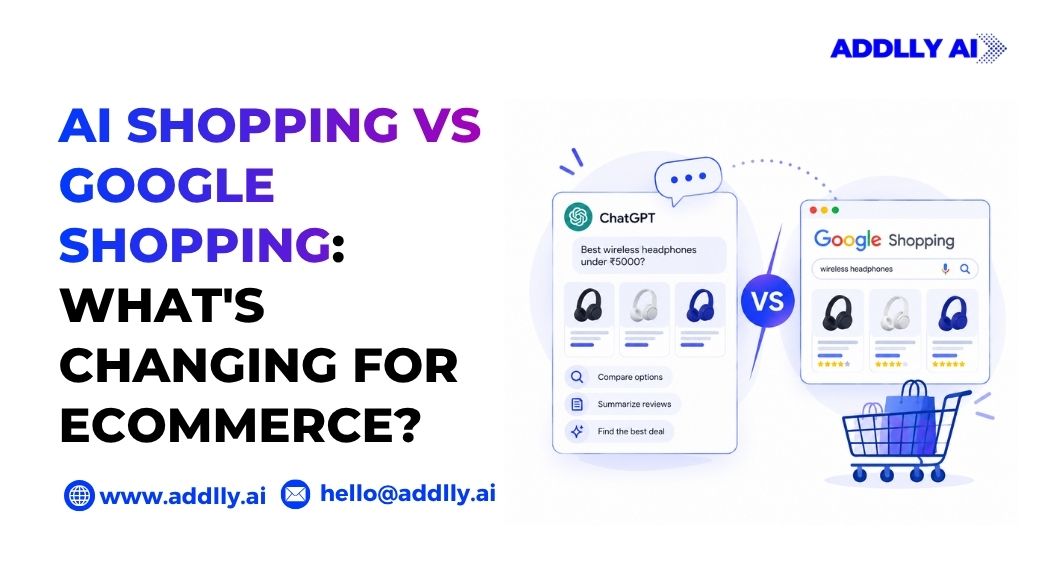
Google Shopping has been a go-to destination for online shoppers comparing products, prices, reviews, and retailers. But the rise of AI shopping assistants is changing how people discover and evaluate what to buy.
The shift becomes clearer when looking at AI Shopping vs Google Shopping. A shopper can now describe exactly what they need, ask for products within a specific budget, compare options, or get recommendations based on personal preferences. Google is also moving in this direction with AI Mode and Gemini-powered shopping features.
For ecommerce brands, this creates a new visibility challenge. Product feeds and Google Merchant Center still matter, but product data, structured information, reviews, and brand authority are becoming increasingly important across AI platforms.
That is where GEO Audit can help identify how visible a brand is across AI search.
Quick Summary – AI Shopping vs Google Shopping
- AI Shopping is making product discovery more conversational and personalized.
- Google Shopping remains important, but its experience is increasingly becoming AI-powered.
- Product data, descriptions, reviews, schema, pricing, and availability matter more for AI visibility.
- GEO helps ecommerce brands improve how their products are understood and recommended by AI systems.
- Agentic commerce is pushing shopping toward AI-assisted discovery, comparison, and purchasing.
What Is AI Shopping?
AI shopping is the use of AI shopping assistants and AI-powered platforms to help consumers discover, research, compare, and sometimes purchase products through conversational interactions. Instead of relying mainly on keywords and traditional search results, shoppers can describe what they need in natural language, ask follow-up questions, compare relevant products, and get recommendations based on factors such as budget, preferences, features, and availability.
It goes beyond ChatGPT. Google AI Mode, Gemini, Perplexity, Amazon Rufus, and other AI platforms are bringing similar capabilities into online shopping. These systems can combine product data, reviews, images, prices, and information from across the web to create more personalized shopping experiences. Some are also moving toward features such as visual search, virtual try-ons, price tracking, and agentic checkout.
For ecommerce brands, this changes how product discovery happens. A shopper may never visit a traditional search results page or browse dozens of product listings. They can ask an AI system for a recommendation and receive a shortlist with reasons behind each choice. That makes visibility across AI search increasingly important alongside traditional Google Shopping.
How Does Google Shopping Work Today?
Before looking at what AI Shopping changes, it helps to understand how the traditional Google Shopping system works. The process still revolves around structured product information, Google Merchant Center, product feeds, and the ability to match shoppers with relevant products.
Google Merchant Center and Product Feeds
Ecommerce brands can submit their products through Google Merchant Center, providing information such as product titles, descriptions, prices, images, availability, and product URLs. Google uses this information to understand the products and make them eligible for different shopping surfaces.
Product feeds give merchants more control over the information Google receives, particularly for stores with large or frequently changing catalogs. Accurate pricing, inventory, and product details are important because Google can use this information across its shopping ecosystem.
Shopping Results and Product Listings
When a shopper searches for a product, Google can surface relevant product listings across Google Search, the Shopping tab, Google Images, and other surfaces. Shoppers can compare images, prices, retailers, ratings, and other product details before deciding where to buy.
Shopping ads add another layer by giving merchants opportunities to promote products more prominently. This makes Google Shopping particularly effective when a consumer already has a clear product or category in mind.
Why Product Data Matters
The traditional Google Shopping model depends heavily on the quality and accuracy of product data. Titles need to clearly describe the product, while descriptions, pricing, availability, images, and structured data give Google more context to work with.
That same product information is becoming important beyond traditional search. As AI-powered search changes ecommerce product discovery, brands increasingly need to think about how their product pages and data can be understood by both search engines and AI systems. This is where GEO for eCommerce becomes relevant.
AI Shopping vs Google Shopping: What’s the Difference?
The biggest difference is where the shopping journey starts and how products are selected. Google Shopping is built around product feeds, search intent, and product listings, while AI shopping uses conversational queries to understand what a shopper needs and recommend relevant products.
The distinction is becoming less clear as Google itself adds AI-powered shopping features across Search, Gemini, and Shopping.
| Factor | Google Shopping | AI Shopping |
|---|---|---|
| Discovery | Search keywords and product queries | Natural language and conversational prompts |
| Product selection | Relevance, product data, search terms, and other Google signals | AI systems evaluate product data, reviews, features, and context |
| Results | Product listings, Shopping results, and ads | Recommendations, comparison tables, summaries, and product cards |
| Shopper intent | Often starts with a known product or category | Can start with an open-ended need or problem |
| Comparison | Shoppers compare listings themselves | AI can compare relevant products and explain differences |
| Personalization | Based on searches, browsing activity, and shopping preferences | Based on the shopper’s stated needs, preferences, budget, and context |
| Purchase journey | Search → product listing → merchant site → checkout | Conversation → recommendation → product details → purchase or checkout |
The important takeaway from AI Shopping vs Google Shopping is that ecommerce brands now have to consider two different paths to product discovery. And as Google’s own AI shopping features continue expanding, the two experiences will increasingly overlap.
The Biggest Shift: From Search Results to AI Recommendations
The biggest change in ecommerce discovery is happening before the shopper reaches a product page. In traditional search, users usually get a list of links or product listings and decide what to open. AI-powered shopping experiences can take on more of that evaluation by understanding the request, connecting different sources of product information, and narrowing the options into recommendations.
From Finding Products to Getting Recommendations
Consider the difference between these two searches:
- Traditional search: “women’s running shoes under $100”
- AI shopping: “I run four times a week, have flat feet, and need comfortable running shoes under $100. Which ones should I consider?”
The second query gives AI assistants much more context. Instead of relying mainly on keyword matching, AI can interpret the shopper’s needs and use product data, reviews, specifications, prices, and other details to build a relevant shortlist.
Google’s AI Mode shows how this can work in practice. A shopper searching for a cute travel bag, for example, can receive visual inspiration alongside product listings and information tailored to the shopping request. Google’s Shopping Graph and Google’s Gemini AI models help power these experiences.
Product Visibility Depends on More Than Search Rankings
A product can have strong visibility in Google Shopping and still be missing from an AI-generated recommendation. AI systems can use product descriptions, structured product attributes, reviews, images, and other information to understand what a product offers and whether it matches the shopper’s intent.
This also changes how ecommerce brands should think about content. A product description written only to target a collection of keywords may provide less useful context than one that clearly explains the product, its features, use cases, and ideal customer.
The same principle applies to visual information. Google’s AI shopping features can use images for product discovery and even support virtual try-on experiences across different body types.
That makes how to get your products recommended in ChatGPT increasingly relevant as AI assistants become part of product discovery.
Recommendations Can Influence the Shortlist
There is another important consequence: AI recommendations can influence the shortlist itself. When a shopper asks an AI platform which products are worth considering, the brands that appear in that initial answer have an advantage. The shopper may never search specifically for those brands or visit a conventional results page first.
This makes understanding how AI search engines decide which brands get seen increasingly important. Product relevance, structured information, authority, reviews, and third-party mentions can all contribute to how a brand is represented across AI search.
For ecommerce teams, the question is becoming broader than “Where do our products rank?” It is also: “When someone asks an AI assistant for a product like ours, are we part of the recommendation?”
That is a very different way of measuring product visibility. A GEO Audit can help brands identify how their products and brand are appearing across AI search experiences and where competitors may be gaining visibility instead.
Don’t Miss: GEO Audits for Product Pages: How Brands Earn AI Citations In 2026
How Product Discovery Is Changing
The way shoppers search for products is becoming more conversational. A traditional search often starts with a few keywords and returns a set of product listings to browse. AI shopping starts with the shopper’s situation, preferences, and intent, giving AI assistants more context to work with.
From Keywords to Conversational Intent
Consider a search for “running shoes for women.” Google can use those keywords to find relevant products. But a shopper might ask an AI assistant:
“I run outdoors four times a week, have flat feet, and want a lightweight pair under $100.”
That longer prompt gives AI systems much more information about the actual purchase intent. The system can use product data, product descriptions, reviews, prices, and other details to identify relevant products instead of relying primarily on keyword matching.
The same applies across categories. Someone looking for fashion may ask for a dress that works for a particular occasion and body type. Someone planning a trip might ask for a cute travel bag that fits under an airline seat and has enough space for a weekend. The query describes the problem first, and the product comes second.
Why This Matters for Ecommerce Brands
This shift changes what brands need to optimize. Product titles and descriptions still need to be clear, but ecommerce content also needs enough useful context for AI assistants to understand what a product does, who it is for, and when it makes sense as a recommendation.
That makes conversational intent an important part of AI search and GEO strategy. Brands that understand the questions shoppers are likely to ask can structure their product information around those real-world needs, making their products easier for AI systems to interpret and surface.
Why Product Data Matters More in AI Shopping
AI shopping relies on detailed product information to understand what a product is and whether it matches a shopper’s request. The more useful and structured the information is, the easier it becomes for AI systems to interpret product attributes, compare options, and provide accurate recommendations.
Structured Product Data
Important attributes such as brand, category, size, material, color, specifications, and features give AI systems the context they need to distinguish between similar products. Schema markup can help organize these details in a machine-readable format, making product information easier for search engines and AI systems to understand.
For ecommerce brands, this makes structured data an important part of AI search visibility. Product information should be consistent across the product page and other relevant sources, particularly when shoppers are asking AI assistants to compare specific features.
This is also where schema markup for AEO can play a role in making important information more accessible to answer engines and AI-powered search experiences.
Reviews and Product Descriptions
Reviews provide another layer of useful context. They can reveal how customers use a product, what they like about it, and where it may fall short. Detailed product descriptions can provide information about features, use cases, materials, compatibility, and other purchase details.
For AI shopping assistants, these different sources can work together to create a more complete understanding of a product. A recommendation becomes more useful when the AI can connect the product’s specifications with real customer experiences.
Pricing and Availability
Pricing and availability also matter because shoppers frequently include these requirements in their prompts. Someone might ask for a laptop under a specific budget or a jacket available in a particular size.
If prices, inventory, or other purchase details are outdated, the recommendation can quickly become irrelevant. Keeping this information accurate and consistent, therefore becomes an important part of preparing product pages for AI-powered shopping.
For ecommerce teams, the goal is to make product information clear, structured, complete, and current so both shoppers and AI systems can understand what each product offers.
Google Shopping Is Becoming AI Shopping Too
This is one of the most important changes in the current shopping landscape. Google Shopping is no longer limited to traditional product listings and keyword-based searches. Google is adding AI directly into the shopping journey through AI Mode, Gemini, visual discovery, comparison tools, and increasingly agentic purchasing features. In other words, the company behind one of the biggest traditional shopping channels is actively reshaping that channel with AI.
Google Is Bringing Gemini Into Shopping
Google’s AI-powered shopping experiences now connect Google’s Gemini AI models with the Shopping Graph, which contains tens of billions of product listings and regularly refreshed information on prices, inventory, and reviews. In AI Mode, shoppers can ask more detailed questions, receive product recommendations, compare options, and see information such as pricing and availability.
The experience can also include visual inspiration and shoppable images. A shopper looking for fashion, for example, can use images to explore similar products, while virtual try-on allows users to upload a photo and see how apparel may look on them.
From Search to Shopping to Checkout
Google is also moving further down the purchase journey. Its Gemini app now includes shopping features such as product listings, comparison tables, prices from across the web, and places to buy. Google is also rolling out Universal Cart and UCP-powered checkout, allowing eligible shoppers to complete purchases through Google surfaces using Google Pay.
This matters for ecommerce brands because Google Shopping and AI Shopping are increasingly sharing the same infrastructure. The Shopping Graph, product data, reviews, pricing, and inventory can now support both traditional shopping results and AI-driven recommendations.
For brands, that makes AI search visibility part of the Google Shopping conversation too. Optimizing only for product listings and keyword matching may leave a gap as shoppers increasingly use conversational queries, AI assistants, and visual discovery to decide what they want to buy.
AI Shopping and GEO: What Ecommerce Brands Need to Know
As AI shopping becomes part of product discovery, ecommerce visibility is expanding beyond traditional rankings and product listings. A shopper might search Google for a product today and ask ChatGPT, Gemini, or another AI assistant tomorrow. Each system can interpret the same product differently depending on the information it can access and the context of the query.
AI Shopping Creates a New Visibility Layer
GEO, or Generative Engine Optimization, focuses on making a brand’s content easier for AI systems to understand, retrieve, and reference. For ecommerce, that extends to product descriptions, product attributes, reviews, structured data, category pages, comparisons, and other information that helps AI systems understand what a product offers.
This is especially important as AI assistants become part of the shopping journey. If an AI system cannot clearly identify a product’s features, use cases, pricing, availability, or relevance to a particular shopper, it has less useful information to work with when generating a recommendation.
GEO and AIO Work Across the Product Journey
For ecommerce teams, GEO and AIO can work together across different stages of AI-powered product discovery. AIO focuses more specifically on visibility within AI-generated answers and search experiences, while GEO takes a broader view of how brands and products are understood across generative AI platforms.
That means ecommerce teams need to consider questions such as:
- Can AI systems clearly understand the product and its key attributes?
- Are product descriptions detailed enough to answer common shopping questions?
- Are pricing and availability details accurate?
- Do reviews and other sources reinforce the same product information?
- Can AI assistants connect the product with relevant shopper needs?
- Is structured data helping search engines and AI systems interpret the page?
This puts greater importance on the product detail page (PDP) itself. A well-structured PDP gives both shoppers and AI systems a clearer picture of the product, including its features, specifications, images, pricing, reviews, and purchase information. Addlly AI’s Product Detail Page AI Agent focuses on structuring these elements with SEO, schema, and GEO considerations in mind.
Will AI Shopping Replace Google Shopping?
No, at least not in the near term. The channels are converging. Google Shopping remains valuable for shoppers who already know what they want, with product listings, prices, reviews, and retailer information making it easy to compare options.
At the same time, Google is adding AI-powered shopping experiences through AI Mode, Gemini, and the Shopping Graph, bringing conversational discovery and product recommendations into the Google ecosystem.
For ecommerce brands, the smarter strategy is to prepare for both experiences. Google Shopping still depends heavily on accurate product feeds, Google Merchant Center, pricing, availability, and relevant product listings.
AI shopping adds another layer, where product descriptions, structured product data, reviews, and brand information can influence how AI assistants understand and recommend products. As these experiences continue to overlap, the distinction between AI Shopping vs Google Shopping will become less important than making sure products are visible across both.
What Should Ecommerce Brands Do Now?
Ecommerce brands can prepare for AI shopping without overhauling everything. The focus should be on making product information accurate, structured, and easy for both shoppers and AI assistants to understand.
- Improve product data: Keep titles, descriptions, attributes, prices, images, and availability accurate.
- Optimize product pages: Write detailed, useful descriptions that answer real shopper questions. This also supports product page GEO.
- Add schema: Use relevant product schema to help AI systems and search engines understand key product details.
- Think conversationally: Optimize for the longer, natural-language questions shoppers may ask AI tools.
- Build brand authority: Maintain consistent information across reviews, social platforms, communities, and other third-party sources.
- Track AI visibility: Regularly check whether your products appear in relevant AI search results and recommendations.
Interesting Read: Owned vs. Third-Party Citations: How to Grow Your AI Visibility 2026
The Future of Shopping Is AI-Assisted, Not Search-Only
Shopping is moving toward a model where AI helps consumers throughout the buying journey, from discovering products and comparing options to checking purchase details and completing a transaction. As AI assistants become better at understanding context and intent, shoppers will increasingly rely on them to handle parts of the research and decision-making process.
The next step is agentic commerce, where an AI system can go beyond recommendations and take action on a shopper’s behalf, such as finding the right product, checking availability, and securely completing a purchase. For ecommerce brands, this means product data, AI search visibility, and strong digital presence will become increasingly important.
This is where Addlly AI brings these pieces together. From GEO and AI search visibility to AI-powered ecommerce content and social media, Addlly helps brands prepare for how discovery and commerce are evolving.
FAQs – AI Shopping vs Google Shopping
1. What Is the Difference Between AI Shopping and Google Shopping?
Google Shopping primarily uses product feeds, search queries, and product listings to help shoppers find and compare products. AI shopping uses natural language and AI assistants to understand broader shopping intent, compare options, and provide personalized recommendations.
2. How Does AI Shopping Use Product Data?
AI shopping systems can use product descriptions, attributes, reviews, pricing, availability, images, and structured data to understand products and determine their relevance to a shopper’s request.
3. Why Is GEO Important for Ecommerce Brands?
GEO helps ecommerce brands improve their visibility across AI search and generative AI platforms. It focuses on making product and brand information easier for AI systems to understand, retrieve, and recommend.
4. How Can Ecommerce Brands Prepare for AI Shopping?
Brands should keep product data accurate, create detailed product descriptions, use relevant schema, optimize for conversational queries, maintain strong reviews and brand mentions, and track visibility across AI platforms.

