
What Makes Addlly AI an Enterprise AI Marketing Platform?
At an enterprise level, marketing operates as a continuous system that must balance scale, governance, visibility, and accountability. An enterprise AI marketing platform must support multi-team collaboration, structured workflows, and brand consistency, while also aligning with the current state of discovery across SEO, AI search visibility, and Generative Engine Optimization (GEO).
Platforms like Addlly AI are designed for this reality, enabling organisations to operationalise AI across marketing functions without losing control, coherence, or strategic focus.
What Is an Enterprise AI Marketing Platform?
An Enterprise AI Marketing Platform is not just a content tool or an AI prompt engine. It is a centralised, scalable, and secure environment designed to help large marketing teams manage complexity, maintain brand integrity, and drive consistent visibility across channels, regions, and AI search systems.
Unlike individual-use AI tools or one-off content generators, enterprise AI marketing platforms support the full lifecycle of marketing, from strategy and analysis to content creation, optimisation, governance, and publishing, within a unified, workflow-driven system.
What Makes an Enterprise AI Marketing Platform Enterprise-Grade?
An enterprise AI marketing platform is considered enterprise-grade when it is designed to support scale, governance, reliability, and accountability across large organisations.
At the enterprise level, marketing success depends on the following platform capabilities:
- Governance: The platform enforces brand rules, messaging standards, terminology, and compliance requirements consistently across teams, regions, and markets.
- Workflow Control: The platform uses structured workflows instead of free-form prompting, ensuring predictable, repeatable, and auditable outputs at scale.
- Visibility Intelligence: The platform supports SEO, GEO (Generative Engine Optimization), and AI search visibility as connected capabilities rather than isolated tasks.
- Security and Infrastructure: The platform provides role-based access controls, encrypted data handling, and deployment standards suitable for enterprise IT and compliance teams.
- Cross-Team Collaboration: The platform enables strategists, analysts, creators, editors, and approvers to work within a shared system without relying on disconnected tools or manual coordination.
These requirements become essential in global organisations, where fragmented AI usage can lead to brand inconsistency, visibility loss, and operational inefficiency.
AI Tools vs Enterprise AI Marketing Platforms
| Criteria | AI Tools or Prompt-Based Apps | Enterprise AI Marketing Platform |
|---|---|---|
| Designed for | Individual users or small teams | Large and cross-functional teams |
| Input model | Manual, free-form prompts | Structured, workflow-based inputs |
| Output consistency | Varies by user and prompt | Governed by brand-trained systems |
| Brand voice control | Manual and inconsistent | Centrally enforced |
| Data security and compliance | Limited or unclear | Enterprise-grade standards |
| Collaboration | Minimal | Multi-role and team-wide |
| Visibility optimisation | Often missing | Built-in SEO and GEO support |
| Scalability | Manual and fragmented | Designed for high-volume workflows |
Why Enterprises Need a Platform, Not Just an AI Tool
Modern enterprises are no longer focused on producing content faster alone. They need systems that allow them to:
- Scale content production across channels and markets without losing consistency.
- Maintain visibility in AI-led discovery environments such as ChatGPT, Gemini, Perplexity, and Copilot.
- Ensure content is interpreted accurately through strong entity clarity and structured narratives.
- Reduce dependency on agencies while retaining strategic and brand control.
- Align global teams around a single source of truth for planning, execution, and optimisation.
For these reasons, enterprises are moving away from isolated AI tools and toward AI marketing platforms that function as core marketing infrastructure.
Why Traditional AI Marketing Tools Break at Enterprise Scale?
Traditional AI marketing tools are often effective for individuals or small teams experimenting with automation. However, when applied to enterprise environments, these tools begin to fail. The reason is not the quality of the underlying AI models, but the lack of systems, governance, and structure required to support large-scale marketing operations.
Enterprise marketing introduces complexity that AI tools are not designed to handle. Multiple teams, regions, approval layers, compliance requirements, and long-term visibility goals place demands on AI systems that go far beyond generating text quickly.
1. Lack of Centralised Governance and Brand Control
One of the most common failures of traditional AI tools at enterprise scale is the absence of governance. These tools rely heavily on individual user inputs and free-form prompting, which makes brand consistency difficult to maintain across teams.
In large organisations, marketing content must follow defined rules around tone, terminology, positioning, and regulatory language. Without a central system to enforce these standards, AI-generated content varies widely depending on who uses the tool and how instructions are written.
Over time, this results in:
- Inconsistent brand voice across channels and regions
- Conflicting messaging between teams
- Increased review cycles and rework
- Higher risk of compliance and reputational issues
Enterprises require AI systems that embed brand intelligence and governance directly into the content creation process, rather than relying on manual checks after content is produced.
2. Fragmented Tools and Disconnected Workflows
Most traditional AI tools operate as standalone applications. One tool may assist with writing, another with SEO, another with analytics, and another with social publishing. These tools rarely share context, data, or intent.
For enterprise teams, this fragmentation creates inefficiency and loss of insight. Strategy, analysis, content creation, optimisation, and publishing become disconnected tasks handled in separate systems. Information must be manually transferred between tools, increasing the risk of errors and inconsistencies.
As marketing operations scale, this fragmentation leads to:
- Siloed decision-making
- Redundant work across teams
- Slower execution despite automation
- Difficulty tracing how strategy translates into execution
Enterprises need connected workflows where insights flow seamlessly from analysis to planning to execution, all within a single system.
3. Unpredictable Outputs and No Auditability
Traditional AI tools rely on free-form prompting, which introduces variability in output quality. Even small changes in phrasing can produce significantly different results. While this may be acceptable for experimentation, it becomes a liability in enterprise environments.
Enterprises require predictability. Content must meet quality standards consistently, regardless of who initiates the task. They also need to understand how outputs were generated, especially when content is reviewed by legal, compliance, or senior stakeholders.
Without structured workflows and audit trails, organisations face:
- Difficulty explaining or justifying AI-generated content
- Limited traceability from input to output
- Inconsistent results across similar tasks
- Reduced trust in AI systems
Auditability and repeatability are essential for enterprise adoption, yet they are largely absent in prompt-based AI tools.
Visibility Gaps in AI-Led Discovery Environments
Many traditional AI tools focus on content generation without accounting for how that content is discovered, interpreted, or referenced by search engines and AI systems. Enterprises today must optimise not only for traditional SEO, but also for AI-led discovery environments.
AI-driven systems evaluate content differently. They prioritise entity clarity, contextual completeness, structured explanations, and consistent narratives. Content produced without these considerations may be readable for humans but invisible or misinterpreted by AI search engines.
This creates visibility gaps where:
- Brands do not appear in AI-generated answers
- Competitors are referenced instead
- Content fails to support Generative Engine Optimization
- SEO and AI visibility efforts operate independently
Enterprises cannot afford visibility to be an afterthought. It must be embedded into content workflows from the beginning.
Poor Support for Cross-Functional and Global Teams
Enterprise marketing involves more than writers and editors. Strategy teams, analysts, regional marketers, legal reviewers, and compliance stakeholders all contribute to the content lifecycle.
Traditional AI tools are not designed for this level of collaboration. They often lack role-based access, review workflows, version control, and shared context. As a result, teams rely on external documents, messaging apps, and manual coordination to manage approvals and feedback.
This increases operational friction and slows down delivery, particularly in global organisations managing multiple markets and languages.
Inability to Scale Reliably With Organisational Growth
Finally, many AI tools struggle to scale reliably as usage increases. Enterprises require systems that can support high-volume content production without performance degradation, data risks, or operational instability.
As organisations grow, AI systems must handle:
- Increased content volume
- More users and roles
- Multiple regions and languages
- Higher compliance and security expectations
Tools built for individual productivity often fail under these conditions. Enterprises need platforms engineered for reliability, scalability, and long-term operational use.
Why Does Addlly AI Use Workflows Instead of Prompts?
Most AI marketing tools are designed around prompting. They assume that better instructions will produce better outputs. This approach places the burden of accuracy, consistency, and quality on individual users. While this may work for experimentation, it fails in enterprise environments where teams require reliable no-prompt AI systems that operate consistently regardless of who is using the tool.
Addlly AI is built on a fundamentally different philosophy. The platform is designed around systems, not prompts.
In enterprise marketing, outcomes should not depend on who writes the prompt or how instructions are phrased. They should depend on structured inputs, shared intelligence, and repeatable workflows. Addlly AI treats AI as part of marketing infrastructure rather than a creative shortcut, enabling AI tools that work without prompts to function at scale.
From Prompt Dependency to Structured Intelligence

Prompt-based tools require users to repeatedly explain context. Brand voice, positioning, product details, audience expectations, and visibility goals must be restated every time content is generated. This leads to inconsistency, fragmented knowledge, and loss of institutional context across teams.
Addlly AI replaces prompt dependency with workflow-driven AI systems built on structured intelligence. The platform uses predefined workflows, guided inputs, and a centralised brand brain so that context is always present and applied automatically.
This shift enables:
- Predictable outputs regardless of user
- Reduced learning curve for teams
- Consistent application of brand and strategy
- Lower risk of misalignment or hallucination
The system carries the intelligence, not the individual user.
Agentic Workflow Design for Enterprise Marketing
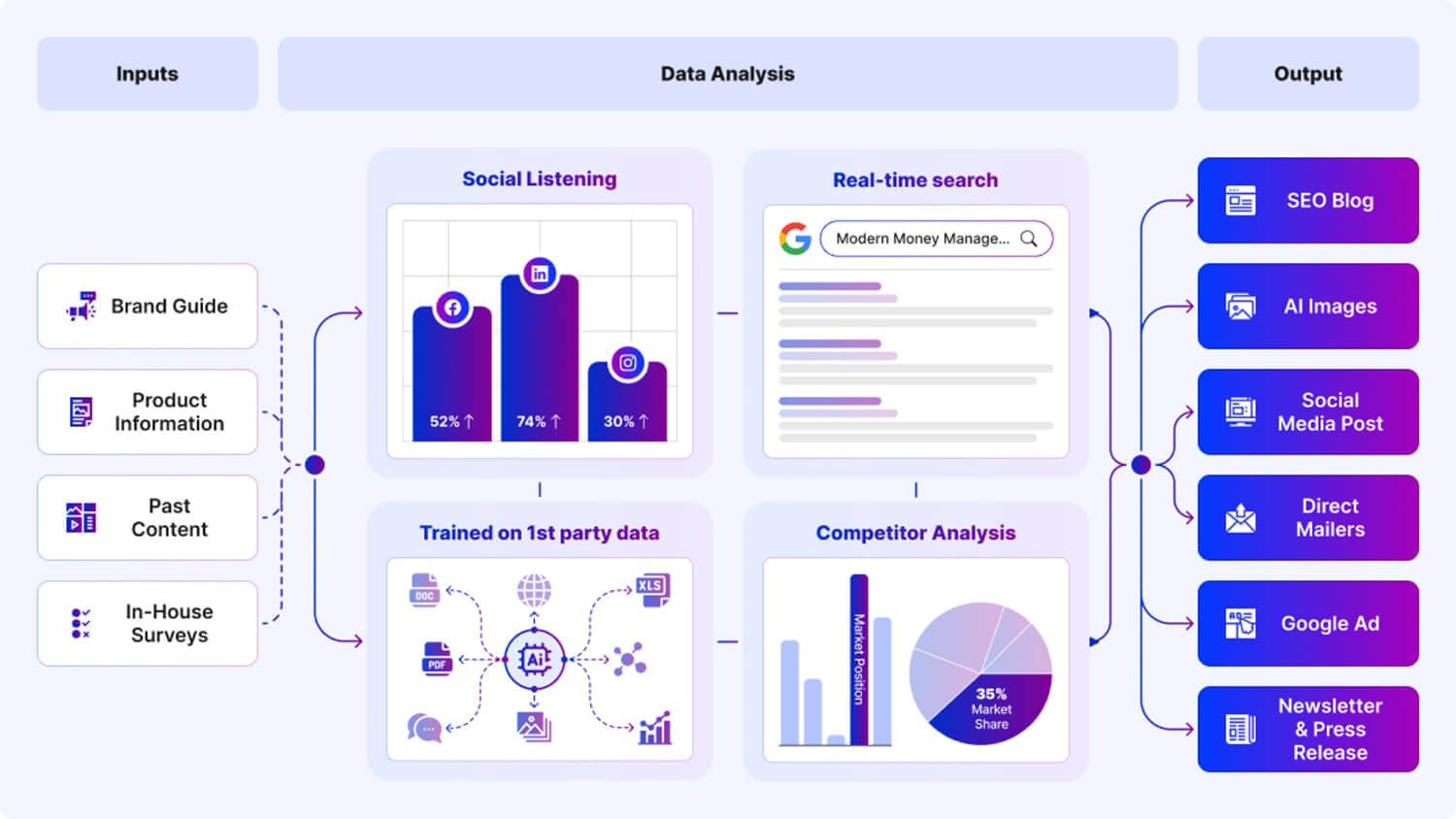
Enterprise marketing is not a single action. It is a sequence of decisions that move from insight to planning to execution and optimisation. Addlly AI is designed around this reality using AI agentic workflows that connect each stage into a continuous system.
Instead of isolated actions, the platform supports:
- Strategy development based on inputs and signals
- Analysis-driven decision-making
- Content creation aligned with visibility requirements
- Continuous optimisation based on performance feedback
Each step feeds the next. This workflow-first approach ensures that marketing efforts compound over time rather than reset with each new task, which is essential for human-in-the-loop AI workflows where governance and oversight matter.
Shared Brand Brain as a Single Source of Truth
At the core of Addlly AI’s philosophy is the shared brand brain. This is where brand voice, terminology, positioning, product narratives, and strategic priorities are stored and maintained.
By centralising brand intelligence, the platform ensures that:
- Every agent works from the same context
- Brand rules are enforced automatically
- Content remains consistent across channels and regions
- Updates to messaging propagate across workflows
This level of coordination is critical for enterprises managing multiple teams, markets, or product lines through governed AI systems rather than ad hoc usage.
Systems That Support AI Visibility by Design
Addlly AI’s philosophy recognises that visibility is no longer limited to traditional search engines. Modern discovery depends on AI search visibility, where AI-driven systems evaluate content based on structure, clarity, entities, and contextual completeness.
Rather than treating SEO, the shift from SEO to GEO, and answer-focused discovery as post-production tasks, the platform integrates Generative Engine Optimization (GEO) and answer engine optimization directly into workflows. Content is structured from the beginning to be interpretable by both humans and AI systems.
This systems-based approach ensures that:
- Content aligns with search intent and AI interpretation patterns
- Entity relationships are clear and consistent
- Visibility efforts are scalable and measurable
- Visibility becomes a platform capability, not an afterthought.
Visibility becomes a platform capability, not an afterthought.
Designed for Reliability, Not Experimentation
Many AI tools are built for exploration and novelty. Addlly AI is built for operational reliability.
Enterprises need systems they can trust for ongoing execution, not tools that behave unpredictably. By prioritising structure, governance, and repeatability, Addlly AI enables teams to move from experimentation to dependable, production-ready AI marketing.
The result is a platform that supports long-term strategy, sustained visibility, and consistent execution across the organisation.
What Platform Layers Make Addlly AI Enterprise-Grade?
An enterprise AI marketing platform is defined by its architecture, not by the number of tools it includes. At enterprise scale, reliability, governance, and consistency depend on how intelligence is stored, how work flows through the system, and how different capabilities operate together.
Addlly AI is built on three core platform layers that enable structured execution, coordinated intelligence, and long-term scalability across teams, regions, and channels.
Enterprise-Grade Architecture
Built for Scale, Security, and Success

Enterprise Security
Your data stays protected with advanced encryption and authentication. Never used to train third-party models.

Scalable Cloud Infrastructure
Auto-scaling architecture delivers consistent performance as your needs grow.

LLM-Agnostic AI
Works with OpenAI, Anthropic, Meta Llama, and more, so you always use the best model for the job.
What Is the Shared Brand Brain in Addlly AI?
The Shared Brand Brain is the central intelligence layer of Addlly AI. It stores, governs, and applies brand knowledge so that every workflow and our AI agent for marketing operates from the same source of truth.
This layer centralises critical brand information, including brand voice and tone guidelines, approved terminology, positioning frameworks, product narratives, and strategic messaging priorities. By consolidating this intelligence into a single system, Addlly AI removes reliance on individual memory, scattered documents, or repeated explanations.
Because brand context is always present, the platform ensures that content created across teams and markets remains consistent, accurate, and aligned with organisational standards. Governance is enforced by design rather than through manual review at every step.
For enterprise organisations operating across multiple regions or product lines, the shared brand brain allows global consistency while still supporting local execution. Updates to brand strategy or messaging automatically propagate through workflows, reducing the risk of brand drift at scale.
How Does Addlly AI’s Structured Workflow Engine Work?
The Structured Workflow Engine defines how marketing work moves through Addlly AI from start to finish. Instead of isolated actions or one-off tasks, the platform follows a connected sequence that reflects real enterprise marketing operations.
Workflows typically progress through strategy definition, analysis and insight generation, content creation, optimisation for SEO and AI visibility, and publishing. Each stage is informed by the previous one, ensuring continuity and clarity throughout the process.
This workflow-driven design delivers predictability and repeatability. Inputs are structured, expectations are clear, and outputs follow consistent quality and visibility standards. As a result, teams spend less time correcting misaligned drafts or reworking content due to missing context.
By embedding structure into execution, Addlly AI reduces approval friction, shortens review cycles, and enables marketing efforts to compound over time rather than resetting with each new task. This is critical for enterprises managing high-volume, multi-channel content operations.
How Does Addlly AI Orchestrate Multiple AI Agents?
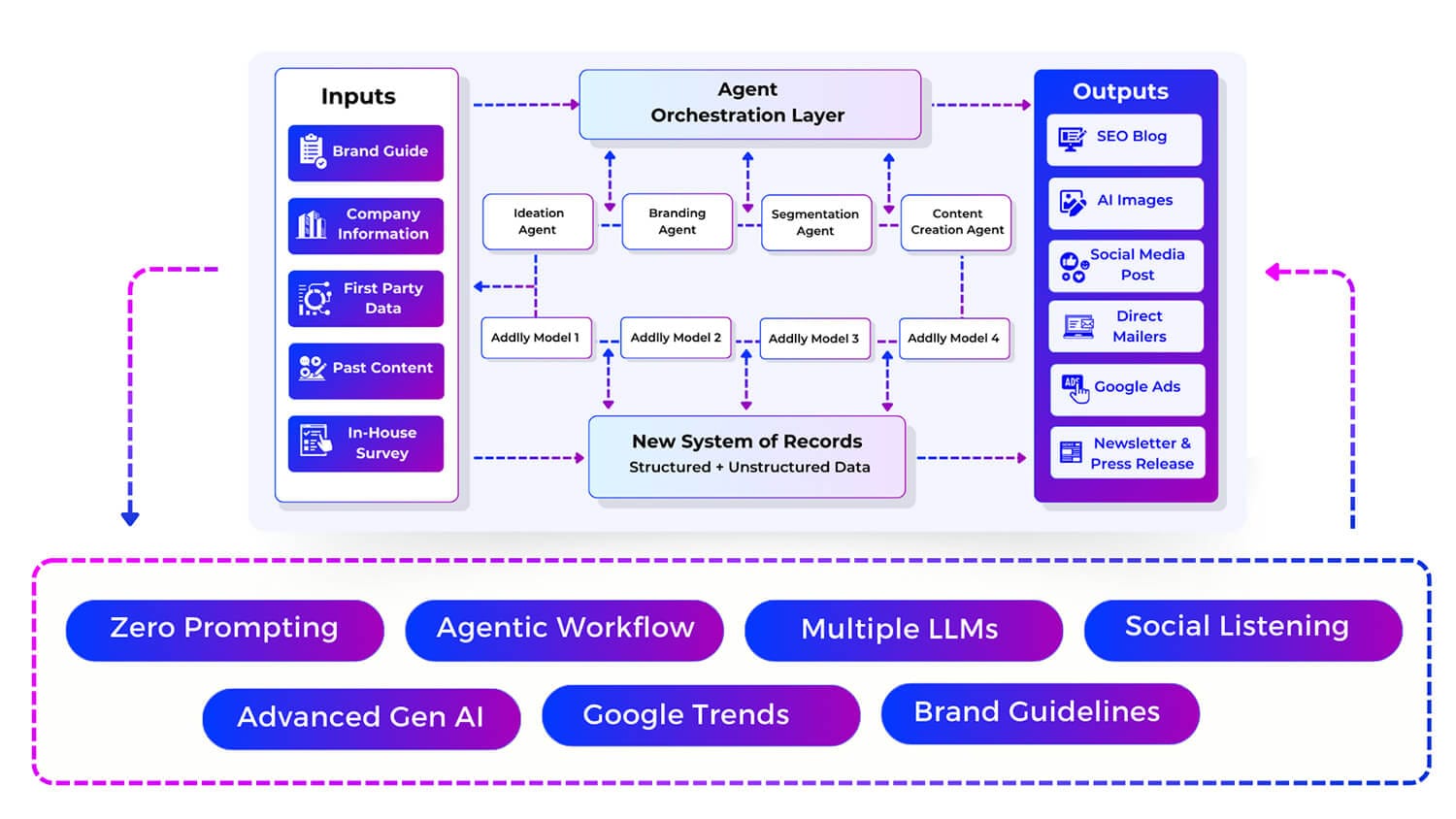
The Agent Orchestration Layer coordinates how different AI agents operate together within Addlly AI. Rather than functioning as standalone tools, agents collaborate within a shared system governed by the same workflows and brand intelligence.
Each agent has a defined responsibility, such as strategy development, analysis, optimisation, or content creation. The orchestration layer ensures that outputs from one agent become structured inputs for the next, eliminating siloed execution and duplicated effort.
Because all agents draw from the shared brand brain and operate within the same workflow logic, decision-making remains aligned across the platform. Strategy informs execution, analysis guides optimisation, and content is produced with full context and constraints.
For enterprise teams, this orchestration creates a single system that supports multiple responsibilities simultaneously. AI behaves as a coordinated marketing operation rather than a collection of disconnected tools, providing visibility into how decisions flow from planning to execution.
Why These Platform Layers Matter for Enterprise AI Marketing
Together, these platform layers form the foundation of Addlly AI as an enterprise-grade system:
The shared brand brain ensures consistency and governance. The structured workflow engine ensures reliability and scalability. The agent orchestration layer ensures coordination and efficiency.
This architecture allows enterprises to deploy AI across marketing operations with confidence, knowing that control, clarity, and long-term visibility are built into the system itself.
How Does Addlly AI Ensure Enterprise-Grade Governance, Security, and Compliance?
Enterprise adoption of AI depends on trust. Beyond performance and speed, organisations must understand how data is handled, how access is controlled, and how AI systems behave under regulatory and operational constraints.
Addlly AI is designed to meet enterprise governance and security expectations by embedding control, transparency, and compliance into the platform architecture itself. This ensures AI can be deployed responsibly across large teams and regulated environments.
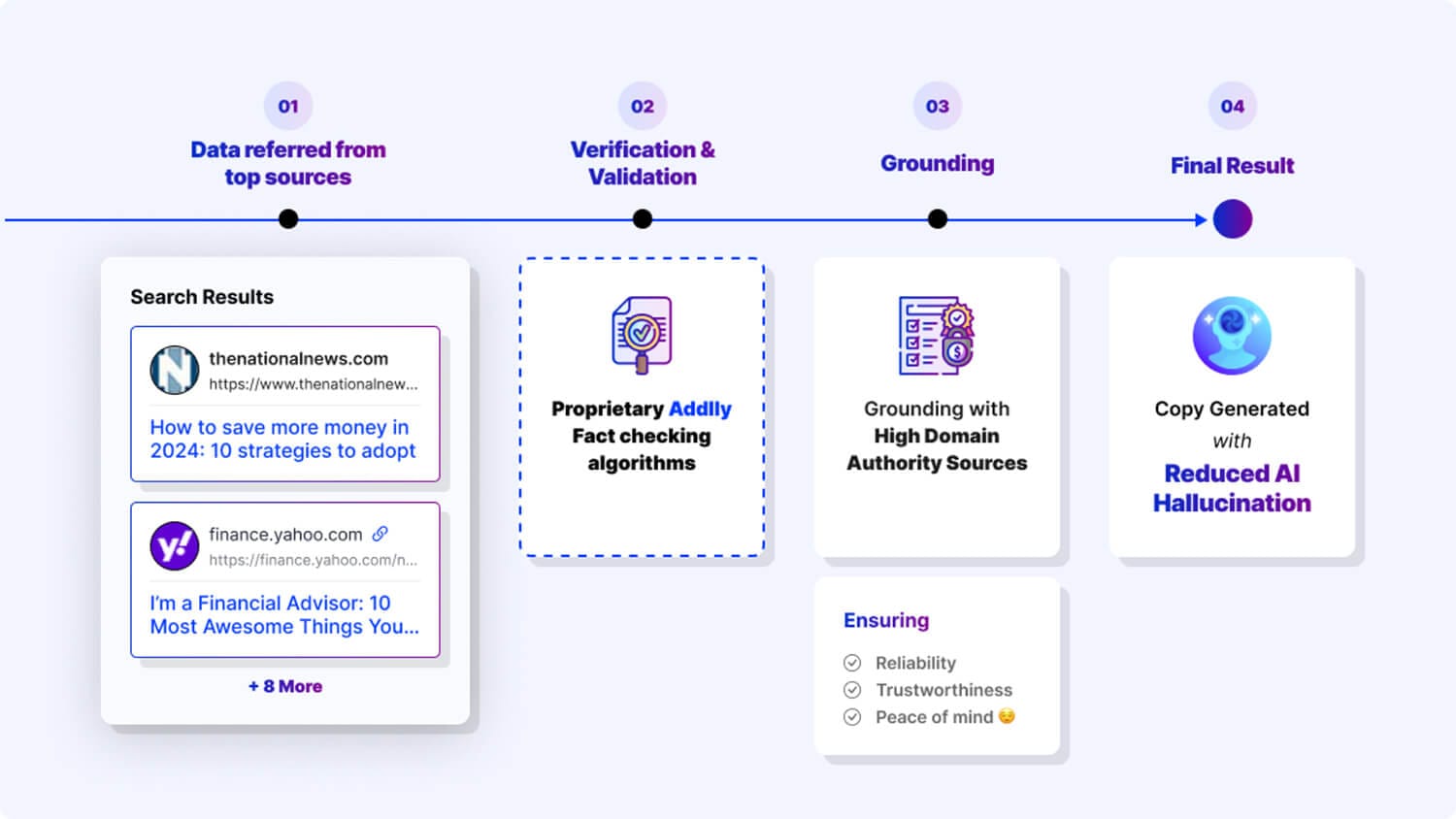
What Data Security Principles Does Addlly AI Follow?
Addlly AI is built with enterprise data protection as a core requirement. Customer data is handled with strict controls across storage, processing, and access.
Key security principles include:
- Encrypted data handling during processing and storage.
- Secure infrastructure designed for enterprise workloads.
- Isolation of customer environments to prevent data leakage.
- Clear boundaries around how data is accessed and used.
These principles ensure that sensitive brand, campaign, and customer information remains protected throughout AI-driven workflows.
How Does Role-Based Access Control Work in Addlly AI?
Enterprise marketing involves multiple stakeholders with different responsibilities. Addlly AI supports role-based access control so that users only interact with the parts of the system relevant to their role.
This allows organisations to:
- Limit access to sensitive brand or strategic data
- Separate responsibilities between strategy, execution, and review
- Support legal and compliance oversight without workflow disruption
- Maintain accountability across teams and regions
Role-based access ensures that governance scales alongside team size and organisational complexity.
How Does Addlly AI Manage AI Model Usage Boundaries?
Addlly AI is designed with clear model usage boundaries. The platform uses large language models as execution components, not as uncontrolled decision-makers.
This means:
- Models are selected based on task requirements.
- AI operates within predefined workflows and constraints.
- Outputs are governed by brand intelligence and system rules.
- Human oversight can be maintained where required.
By controlling how and where models are used, Addlly AI reduces unpredictability and supports responsible AI deployment in enterprise settings.
Does Addlly AI Train AI Models on Customer Data?
No. Customer data is not used to train third-party AI models. Brand content, inputs, and outputs remain the property of the customer and are processed solely to deliver platform functionality. This boundary is essential for enterprises that must protect proprietary information, intellectual property, and regulated data.
This approach supports:
- Confidentiality requirements
- Legal and contractual obligations
- Compliance with internal data governance policies
Is Addlly AI Suitable for Regulated Industries?
Addlly AI is designed to support organisations operating in regulated industries such as finance, healthcare, technology, and public sector environments.
The platform’s emphasis on governance, auditability, and controlled workflows makes it suitable for teams that must meet:
- Regulatory compliance standards
- Internal risk management policies
- Formal review and approval processes
By prioritising control and transparency, Addlly AI enables enterprises to adopt AI without compromising compliance or accountability.
Why Governance and Security Matter for Enterprise AI Marketing?
For enterprises, AI is not just a productivity tool. It becomes part of operational infrastructure. Governance, security, and compliance are what make that adoption sustainable.
By embedding these principles into the platform, Addlly AI allows organisations to scale AI usage with confidence, ensuring that marketing innovation does not come at the expense of control, trust, or regulatory responsibility.
Addlly AI Capabilities That Support Operational AI Marketing
When organisations move from pilots to production, the following agents become central to day-to-day execution and long-term efficiency:
- Media Strategy AI Agent: Translates business goals, launches, and campaigns into structured content strategies that can be reused, adapted, and scaled across quarters without restarting planning cycles.
- AI SEO Audit Tool: Continuously evaluates SEO performance and content gaps, helping teams prioritise optimisation work based on measurable impact rather than assumptions.
- GEO Audit Tool: Assesses how the brand appears inside AI-generated answers and discovery systems, giving leadership visibility into whether AI investments improve real-world AI search presence.
- SEO AI Agent: Enables consistent, scalable production and optimisation of search-focused content, reducing reliance on agencies and specialist headcount.
- GEO AI Agent: Creates and restructures content specifically for AI-led discovery environments, supporting long-term visibility as search behaviour shifts beyond traditional SERPs.
- Social Media AI Agent: Supports always-on social publishing by generating platform-specific content and repurposing long-form assets, without increasing operational overhead.
- Newsletter AI Agent: Enables consistent, structured email communication for updates, education, and announcements, helping teams maintain cadence without manual drafting effort.
Together, these agents replace fragmented experimentation with a unified operating model where AI contributes predictably to visibility, content velocity, and execution efficiency.
Why This Shift Matters to Leadership Teams?
At the leadership level, the question is no longer whether AI can generate content. The question is whether AI can be trusted as part of core marketing operations.
By embedding AI into repeatable workflows and measurable systems, Addlly AI enables:
- Lower marginal cost as output scales
- Reduced dependency on external agencies
- Clear performance visibility across SEO, GEO, and content
- Predictable ROI that supports long-term planning
- This is where AI stops being an experiment and becomes infrastructure.
This is where AI stops being an experiment and becomes infrastructure.
Summary
Enterprise marketing requires systems, not shortcuts. Teams need AI that can scale execution, maintain governance, and deliver consistent visibility across both traditional search and AI-driven discovery.
Addlly AI is built to meet these needs. It operates as a unified platform that connects strategy, analysis, content creation, optimisation, and publishing through structured workflows and shared brand intelligence.
By embedding governance, repeatability, and AI visibility into the platform itself, Addlly AI allows enterprises to move beyond experimentation and adopt AI as a long-term marketing infrastructure.
The result is predictable outcomes, reduced operational friction, and AI that supports growth without compromising control.