
What Makes Addlly AI an Enterprise AI Marketing Platform?
An enterprise AI marketing platform is a structured system that helps large marketing teams plan, create, optimize, and manage content operations using AI while maintaining governance, consistency, and visibility.
Unlike standalone AI tools, these platforms support the full marketing workflow, from strategy and analysis to content creation and optimization. They also ensure content is structured for both traditional search and AI-driven discovery environments, including Generative Engine Optimization (GEO) and AI search visibility.
What Makes Addlly AI Enterprise-Grade?
Addlly AI is designed to support scale, governance, reliability, and accountability across large marketing organisations. The platform provides the infrastructure enterprises need to manage AI-driven marketing operations while maintaining brand consistency and visibility across search and AI discovery environments.
Key enterprise capabilities include:
-
Governance
Addlly AI enforces brand rules, messaging standards, terminology, and compliance requirements across teams, regions, and markets through a shared brand intelligence system. -
Workflow Control
The platform uses structured workflows rather than free-form prompting, enabling predictable, repeatable, and auditable outputs across marketing activities. -
Visibility Intelligence
Addlly AI integrates SEO, Generative Engine Optimization (GEO), and AI search visibility so that content is structured for both search engines and AI-generated answers. -
Security and Infrastructure
The platform provides role-based access control, secure data handling, and enterprise-ready infrastructure aligned with organisational IT and compliance requirements. -
Cross-Team Collaboration
Strategists, analysts, creators, editors, and reviewers work within a shared environment, allowing teams to coordinate marketing execution without relying on fragmented tools or manual processes.
These capabilities allow enterprises to scale AI-driven marketing while maintaining operational control, consistent brand messaging, and long-term visibility across digital and AI-driven discovery systems.
How Enterprise AI Marketing Platforms Differ from AI Tools
| Criteria | AI Tools or Prompt-Based Apps | Enterprise AI Marketing Platform |
|---|---|---|
| Designed for | Individual users or small teams | Large and cross-functional teams |
| Input model | Manual, free-form prompts | Structured, workflow-based inputs |
| Output consistency | Varies by user and prompt | Governed by brand-trained systems |
| Brand voice control | Manual and inconsistent | Centrally enforced |
| Data security and compliance | Limited or unclear | Enterprise-grade standards |
| Collaboration | Minimal | Multi-role and team-wide |
| Visibility optimisation | Often missing or manual | Integrated SEO, GEO, and AI search visibility |
| Scalability | Limited to individual usage | Designed for enterprise-scale marketing operations |
Why Does Addlly AI Use Agentic Workflows Instead of Prompts?
Most AI marketing tools rely on prompting, where users must repeatedly explain context such as brand voice, positioning, audience, and objectives. While this works for experimentation, it becomes difficult to manage in enterprise environments where teams require consistent outputs across users, regions, and campaigns.
Addlly AI is built around agentic workflows rather than prompt dependency. Marketing tasks are executed through structured workflows where inputs, brand intelligence, and visibility requirements are already embedded in the system. This allows teams to generate content and insights without repeatedly writing instructions.
From Prompt Dependency to Structured Intelligence
Prompt-based tools require context to be re-entered every time work begins. This creates fragmented knowledge and inconsistent outputs across teams.
Addlly AI replaces this model with workflow-driven AI systems supported by a shared brand brain. Brand voice, terminology, positioning, and product narratives are stored centrally so that every workflow operates with the same context.
This enables:
- Predictable outputs regardless of who initiates the task
- Consistent application of brand and strategy
- Lower risk of misalignment or hallucination
- Faster onboarding for new team members
In this model, the system carries the intelligence rather than the individual user.
Agentic Workflows for Enterprise Marketing
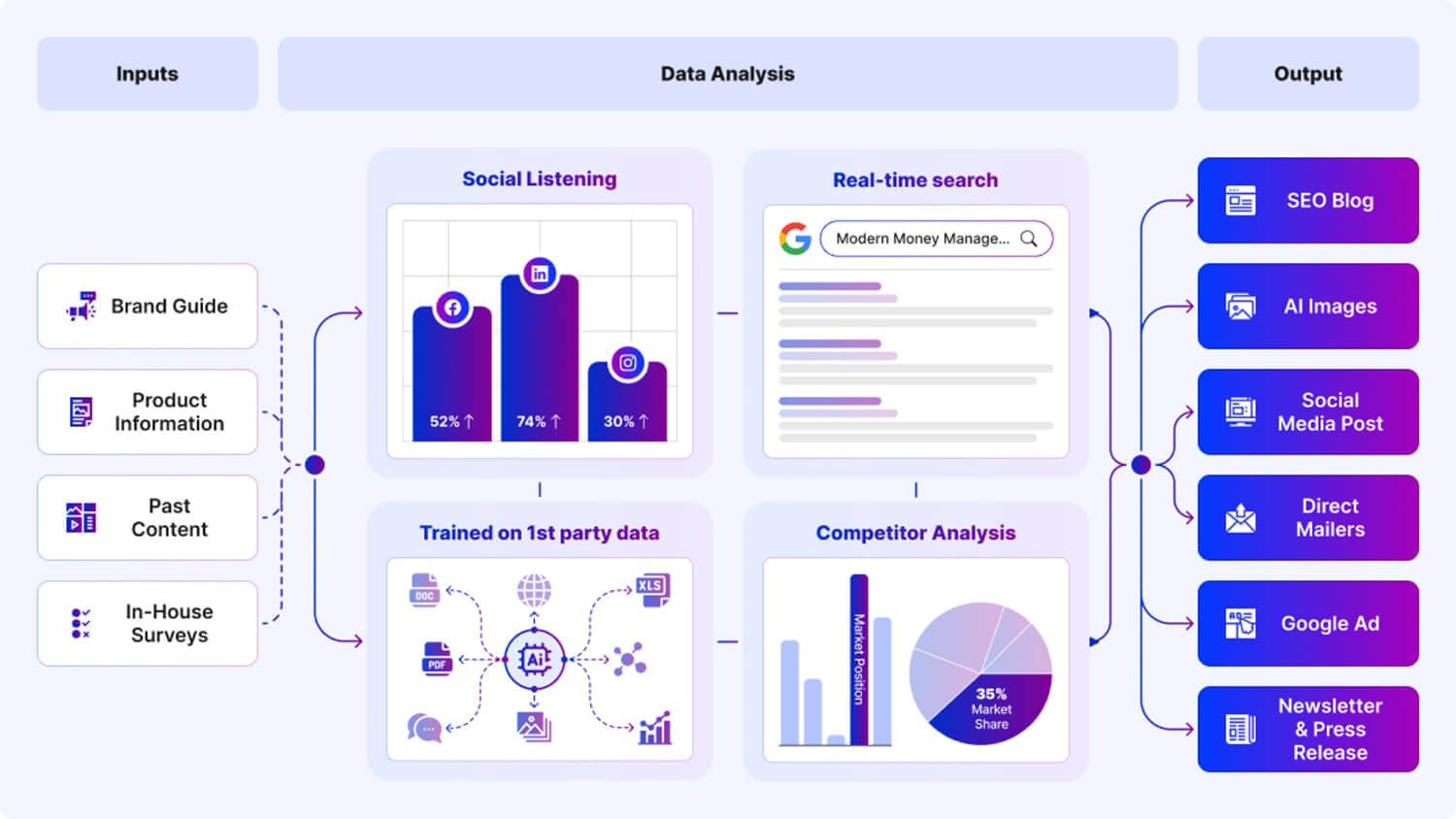
Enterprise marketing is not a single action. It is a sequence of decisions that move from insight to planning, execution, and optimisation.
Addlly AI connects these stages through AI agentic workflows that support:
- Strategy development based on inputs and signals
- Analysis-driven decision making
- Content creation aligned with SEO and GEO requirements
- Continuous optimisation based on performance signals
Because each step feeds the next, marketing execution becomes a coordinated system rather than isolated tasks.
AI Visibility Built Into the Workflow
Addlly AI also integrates Generative Engine Optimization (GEO) and AI search visibility directly into its workflows.
Content is structured from the beginning so that AI systems can interpret entities, context, and relationships accurately. This ensures that content supports both traditional search rankings and citation within AI-generated answers.
By embedding visibility logic into the workflow itself, Addlly AI helps enterprises scale content production while maintaining long-term discoverability across both search engines and AI-driven discovery systems.
What Platform Layers Make Addlly AI Enterprise-Grade?
Addlly AI is built as a structured platform rather than a collection of disconnected tools. Its enterprise capabilities are supported by core system layers that coordinate intelligence, workflows, and execution across marketing operations.
These platform layers ensure that teams can scale AI-driven marketing while maintaining governance, consistency, and visibility across search and AI discovery environments.
Enterprise-Grade Architecture
Built for Scale, Security, and Success

Enterprise Security
Your data stays protected with advanced encryption and authentication. Never used to train third-party models.

Scalable Cloud Infrastructure
Auto-scaling architecture delivers consistent performance as your needs grow.

LLM-Agnostic AI
Works with OpenAI, Anthropic, Meta Llama, and more, so you always use the best model for the job.
The core layers that define Addlly AI’s enterprise architecture include:
- Shared Brand Brain – A centralised intelligence layer that stores brand voice, terminology, positioning, and messaging so every workflow operates with consistent context.
- Agentic Workflow Engine – Structured workflows that guide marketing tasks from strategy and analysis to content creation and optimisation.
- AI Agent Orchestration Layer – A coordination system that allows multiple AI agents to operate together within the same workflow, ensuring outputs from one stage inform the next.
Together, these layers enable Addlly AI to function as an integrated marketing infrastructure where intelligence, execution, and visibility optimisation operate within a single governed system.
How Does Addlly AI’s Agentic Workflow Engine Work?
The Agentic Workflow Engine in Addlly AI structures how marketing tasks move from strategy to execution. Instead of isolated prompts or one-off actions, the platform follows a guided sequence where each stage builds on the previous one.
Workflows typically begin with strategic inputs and analysis, followed by content creation, optimization for SEO and Generative Engine Optimization (GEO), and publishing. Because each step operates within a defined workflow, the system maintains context, applies brand intelligence, and ensures outputs remain consistent across teams.
This approach improves predictability and reduces the need for repeated instructions. Teams can execute marketing activities through guided processes where insights, brand rules, and visibility requirements are already embedded into the workflow.
How Does Addlly AI Orchestrate Multiple AI Agents?
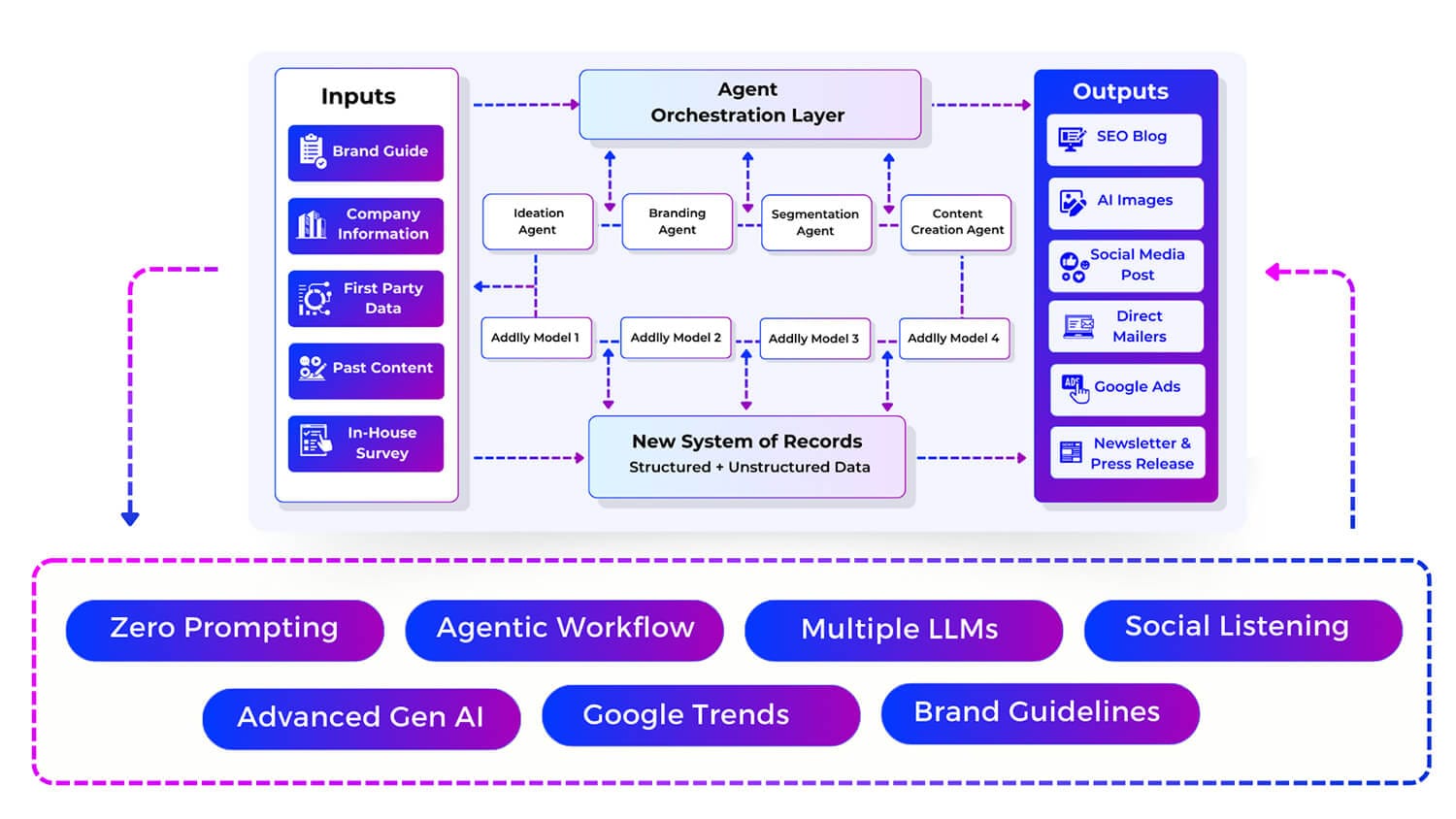
Addlly AI uses an orchestration layer to coordinate how multiple AI agents operate within the platform. Instead of functioning as separate tools, agents work together within shared workflows and brand intelligence.
Each agent performs a specific role, such as strategy development, analysis, SEO, and GEO optimization, or content creation. The orchestration layer connects these roles so that outputs from one agent become structured inputs for the next stage.
Because all agents operate within the same workflows and draw from the shared brand brain, marketing execution remains aligned across teams. This coordination allows enterprises to run multiple AI-driven tasks within a single system while maintaining consistency, visibility, and operational control.
How Does Addlly AI Ensure Enterprise Governance and Security?
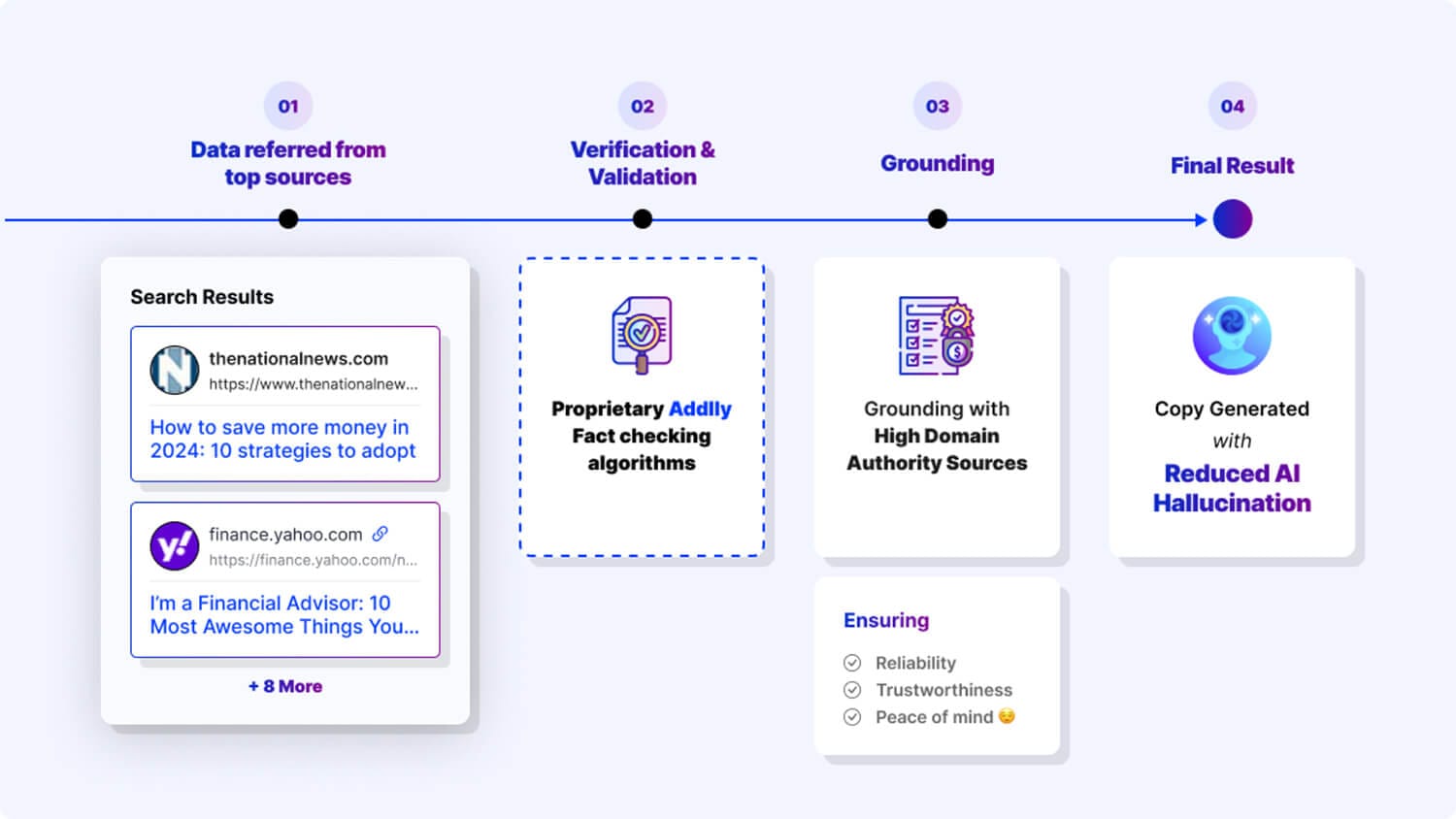
Enterprise adoption of AI depends on trust. Beyond performance and speed, organisations must understand how data is handled, how access is controlled, and how AI systems behave under regulatory and operational constraints.
Addlly AI is designed to meet enterprise governance and security expectations by embedding control, transparency, and compliance into the platform architecture itself. This ensures AI can be deployed responsibly across large teams and regulated environments.
Addlly AI Capabilities That Support Operational AI Marketing
When organisations move from pilots to production, the following agents become central to day-to-day execution and long-term efficiency:
- Media Strategy AI Agent: Translates business goals, launches, and campaigns into structured content strategies that can be reused, adapted, and scaled across quarters without restarting planning cycles.
- AI SEO Audit Tool: Continuously evaluates SEO performance and content gaps, helping teams prioritise optimisation work based on measurable impact rather than assumptions.
- GEO Audit Tool: Assesses how the brand appears inside AI-generated answers and discovery systems, giving leadership visibility into whether AI investments improve real-world AI search presence.
- SEO AI Agent: Enables consistent, scalable production and optimisation of search-focused content, reducing reliance on agencies and specialist headcount.
- GEO AI Agent: Creates and restructures content specifically for AI-led discovery environments, supporting long-term visibility as search behaviour shifts beyond traditional SERPs.
- Social Media AI Agent: Supports always-on social publishing by generating platform-specific content and repurposing long-form assets, without increasing operational overhead.
- Newsletter AI Agent: Enables consistent, structured email communication for updates, education, and announcements, helping teams maintain cadence without manual drafting effort.
Together, these agents replace fragmented experimentation with a unified operating model where AI contributes predictably to visibility, content velocity, and execution efficiency.
Addlly AI Capabilities That Support Operational AI Marketing
Addlly AI includes specialised AI agents that support different stages of enterprise marketing execution. Each agent operates within the platform’s shared workflows and brand intelligence, enabling teams to plan, create, optimise, and distribute content while maintaining consistency and AI search visibility.
Key capabilities include:
-
Media Strategy AI Agent
Transforms business goals, campaigns, and product updates into structured content strategies that can be reused and scaled across channels and planning cycles. -
SEO AI Agent
Supports the creation and optimisation of search-focused content while maintaining alignment with brand voice, search intent, and entity clarity. -
GEO AI Agent
Structures and refines content specifically for AI-driven discovery environments, helping brands improve visibility in AI-generated answers. -
AI SEO Audit Tool
Evaluates website SEO performance and identifies content gaps that may affect search rankings and discoverability. -
GEO Audit Tool
Analyzes how a brand appears within AI-generated responses and discovery systems, helping teams understand citation presence and AI visibility gaps. -
AI Search Visibility Checker
Measures how frequently a brand or topic appears across AI search platforms, providing insights into AI-driven discoverability. -
AI Schema Markup Generator
Generates structured schema markup to help search engines and AI systems interpret content entities, relationships, and context more accurately. -
Social Media AI Agent
Generates and adapts content for different social platforms, enabling consistent publishing without increasing operational workload. - Newsletter AI Agent Supports structured email communication by generating newsletters and updates aligned with brand messaging and content strategy.
Together, these capabilities allow marketing teams to move from fragmented AI usage to a coordinated system where strategy, content creation, optimisation, and AI visibility operate within a single platform.
Summary
Enterprise marketing requires structured systems that can scale execution, maintain governance, and support visibility across both traditional search and AI-driven discovery environments.
Addlly AI is designed as an enterprise platform that connects strategy, analysis, content creation, optimisation, and distribution through agentic workflows and shared brand intelligence. This approach allows marketing teams to coordinate work across channels while maintaining brand consistency and operational control.
By embedding SEO, Generative Engine Optimization (GEO), and AI search visibility into its workflows, Addlly AI helps organisations move beyond isolated AI tools and adopt AI as a reliable marketing infrastructure. The result is scalable execution, clearer visibility insights, and marketing operations that remain aligned as teams and content demands grow.