
What is Addlly AI Workflow?
The Addlly AI workflow is how Addlly AI turns your brand’s materials into usable marketing outputs, without losing brand voice, consistency, or speed. It connects research, creation, optimization, and review into one clear path.
Instead of starting every asset from scratch, Addlly AI uses a structured process that pulls in the right context first. That means fewer generic drafts, less message drift across channels, and fewer last-minute rewrites when something feels off.
In this guide, you’ll learn what the Addlly AI workflow includes, how each step works, and what you should expect at the end of a workflow run.
What Should You Understand Before You Start?
Before running the Addlly AI workflow, it’s helpful to treat it like a system with inputs, steps, and outputs, rather than a single prompt. The clearer your goal and source materials are, the more consistent your results will be, especially when you are creating for multiple channels and trying to support GEO (Generative Engine Optimization) and SEO at the same time.
What Does “Workflow” Mean in Addlly AI?
In Addlly AI, a workflow is the end-to-end process that takes your source information and turns it into content you can publish, send, or repurpose.
A workflow helps you:
- Keep your content consistent across all digital channels
- Build content that supports Good AI visibility, GEO, and SEO Strategy.
What is Included in the Addlly AI Workflow?
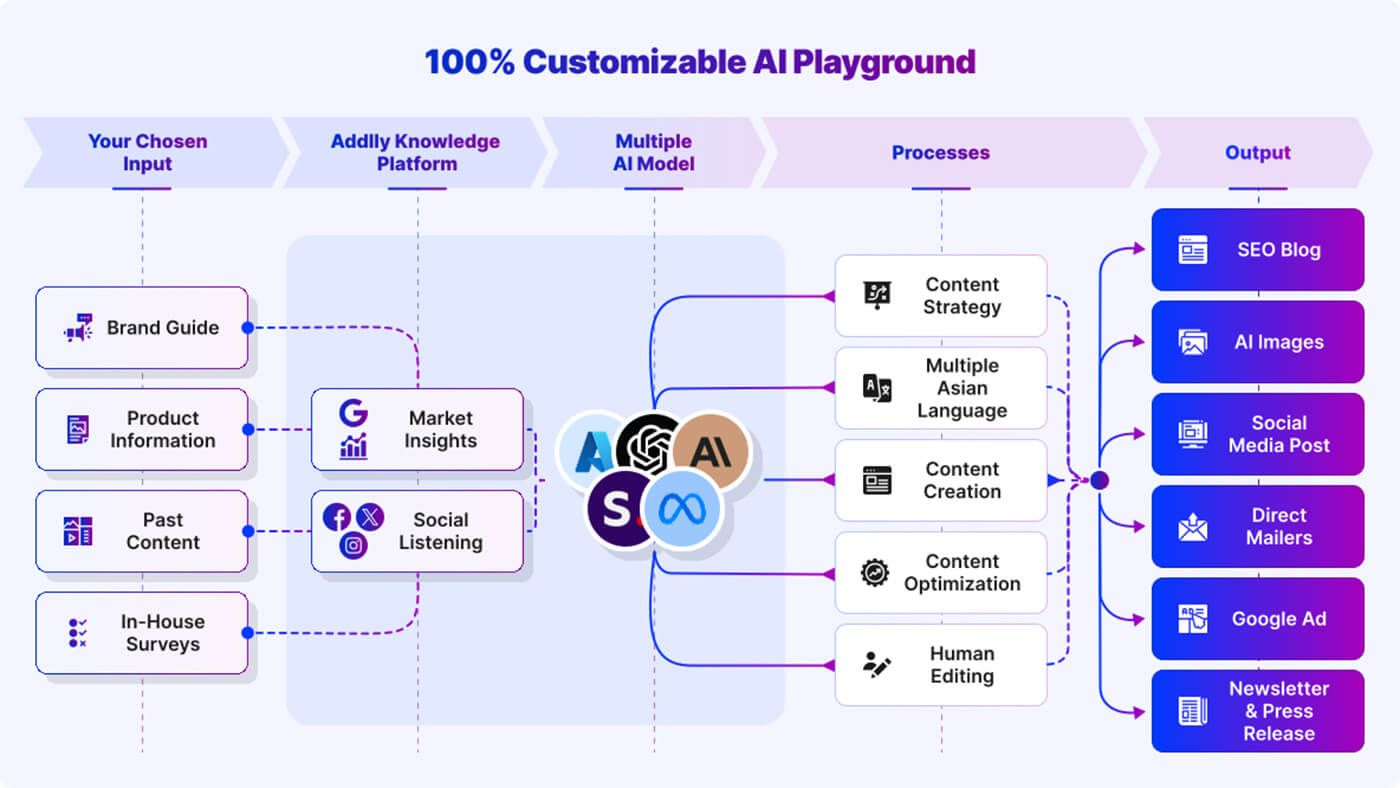
The Addlly AI workflow combines inputs, research signals, AI model execution, and quality steps so outputs are easier to trust and easier to ship.
It includes:
- Inputs, like a Brand Guide, Product Information, and existing content
- Knowledge signals from brand analysis training modules
- Multiple AI models used for different tasks
- Content processes like strategy, creation, optimization, and human editing
- Output generation for formats like blogs, social posts, emails, and ads
What Does “DONE” Look Like at the End of a Workflow Run?
A workflow run is “done” when the output matches the intended channel and is ready for your next internal step, whether that is editing, approvals, publishing, or iteration.
- Outputs that follow the format you selected
- Messaging aligned with your Brand Guide and Product Information
- A clear next action, like publishing, repurposing, or generating schema
Why Should Marketers Use This Workflow?
The Addlly AI workflow brings the right context forward, then applies strategy, creation, optimization, and review in a consistent order.
Marketers use the Addlly AI workflow because it helps:
- Reduce rework by grounding drafts in brand and product inputs
- Improve Your Brand’s AI visibility by pairing content creation with GEO and SEO signals
- Move faster without sacrificing structure or quality checks
Step 1: Choosing Your Input
Step 1 in the Addlly AI workflow is where you set the foundation for everything that follows. Addlly AI can only stay accurate and on-brand if it has the right context up front, so this step is less about adding more information and more about adding the most useful information for the content you want to create.
What Types of Inputs Can You Use?
The Addlly AI workflow starts with inputs from your own brand. This is because your output quality depends on what you feed into the system. Strong inputs reduce generic writing, improve consistency, and make it easier to generate content that sounds like your team wrote it.
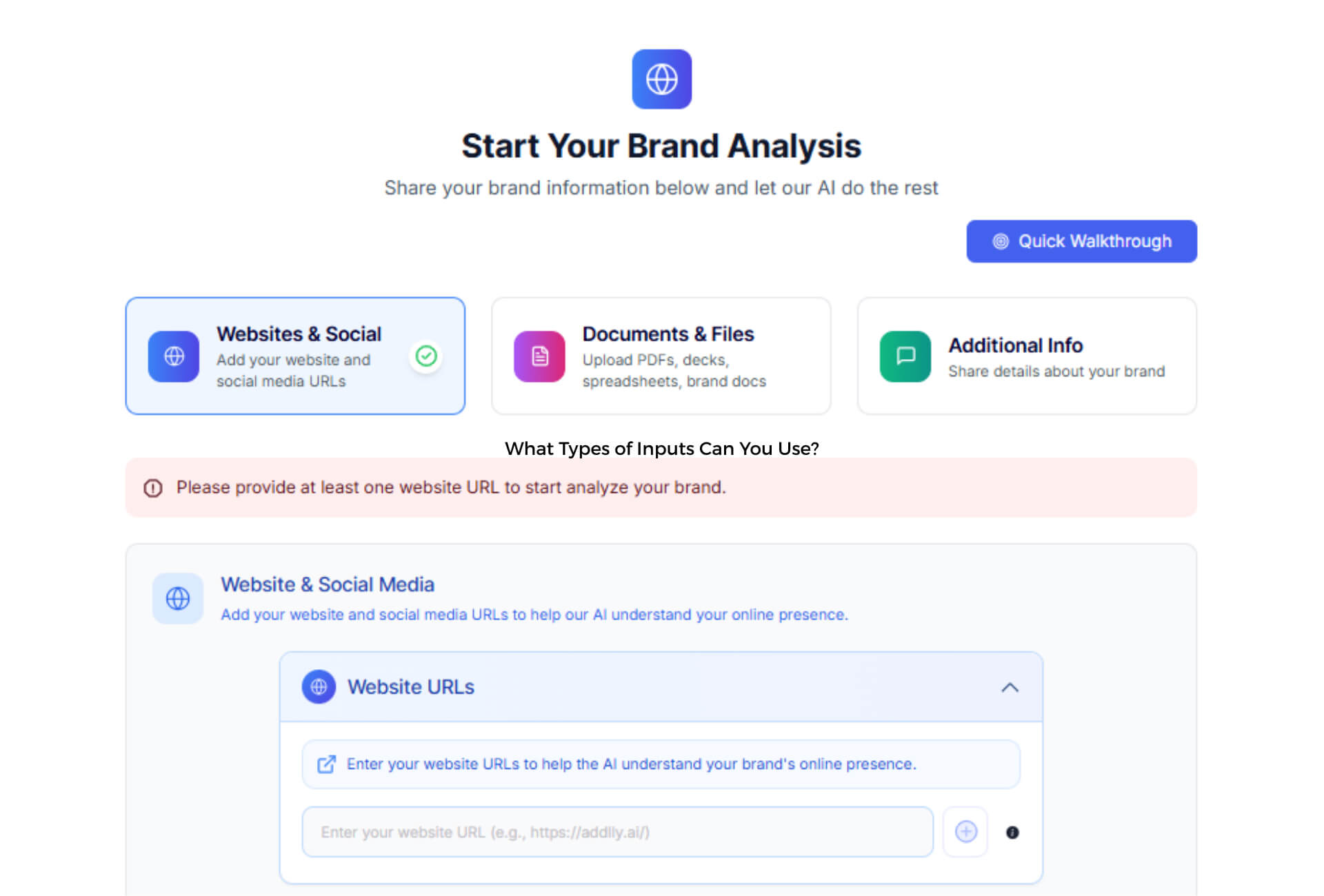
Brand Guide:
Submit a brand guide when brand voice and tone matter, especially across multiple writers, regions, or channels.
- Define voice and tone rules
- Include approved phrases and terminology
- Add examples of “good” and “not good” writing
- List brand claims that are allowed vs not allowed
Product Information:
Submit product information when you want content that highlights what makes your product different and avoids vague benefits.
- Provide core features and how they work
- Explain primary use cases and target customers
- Include proof points like results, metrics, or differentiators
- Add pricing, packaging, and key limitations if relevant
Blogs and Articles:
Use blogs and articles when you want new content to match your existing style, structure, and messaging patterns.
- Share top-performing pages and posts
- Include recent content that reflects current positioning
- Highlight internal linking preferences and key topic themes
- Add examples that represent different formats like blogs, landing pages, and case studies
In-House Surveys:
Use in-house surveys when you want your content to reflect real customer language, objections, and buying criteria.
- Capture the words customers actually use
- Surface common questions and hesitation points
- Identify the top reasons customers choose you or choose alternatives
- Add segment details like industry, role, and region
What Makes a “GOOD” Input Set?
A good input set is current, specific, and aligned. If inputs conflict, the output will drift.
A good input set should:
- Match your current positioning and product reality
- Use consistent naming for products, features, and categories
- Include concrete examples, not just general descriptions
What are the Common Input Mistakes to Avoid?
Most issues in the Addlly AI workflow show up when the inputs are unclear, outdated, or contradictory.
Avoid:
- Mixing multiple sources that disagree on positioning
- Uploading old content that no longer reflects your offer
- Sharing vague product notes without proof points or examples
Step 2: Brand Analysis Training Modules
Step 2 in the Addlly AI workflow is where your inputs get turned into decision-ready context. Instead of jumping straight into drafting, this step adds the signals that help Addlly AI choose better topics, shape stronger positioning, and spot what needs to be fixed before you publish.
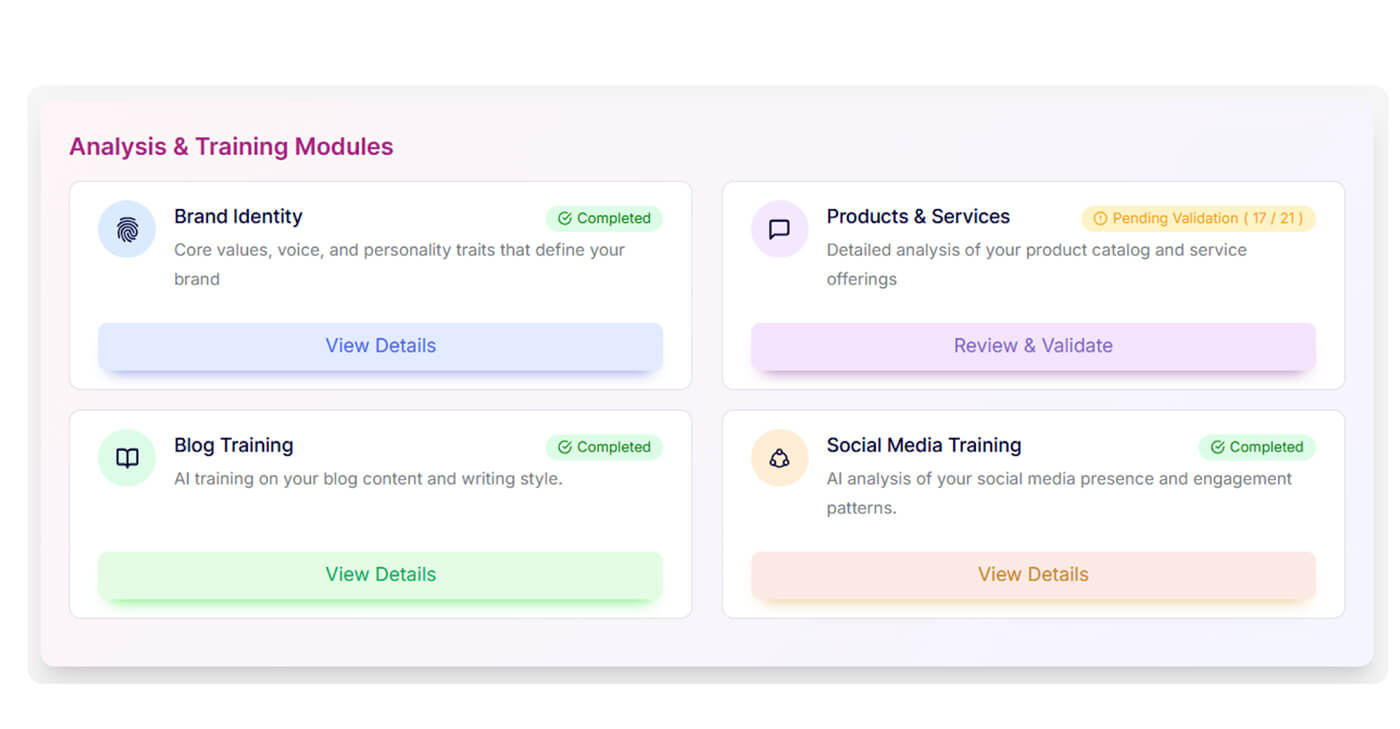
What do the Brand Analysis Training Modules do with Your Inputs?
The brand analysis training modules turn your inputs into usable context before content gets created. Instead of treating your Brand Guide, Product Information, and source content as static documents, they help extract the details that shape what gets written and how it gets positioned.
They help you:
- Build stronger briefs using real signals, not assumptions
- Reduce gaps in messaging and topic coverage
- Make content decisions that support GEO and SEO results
What are Market Insights and How are They Used?
Market Insights help ground content in what is happening in your category, what buyers care about, and how demand is shifting. This keeps strategy and messaging from being based only on internal opinions.
Market Insights can support:
- Topic selection that matches current interest
- Angles that align with buyer priorities
- Messaging that reflects category language and intent
What is Social Listening and What Does it Contribute?
Turn ideas into content execution in just minutes. Whether it’s a product launch, feature announcement, or seasonal campaign, our Media Strategy AI Agent handles the heavy lifting so you can focus on what matters.
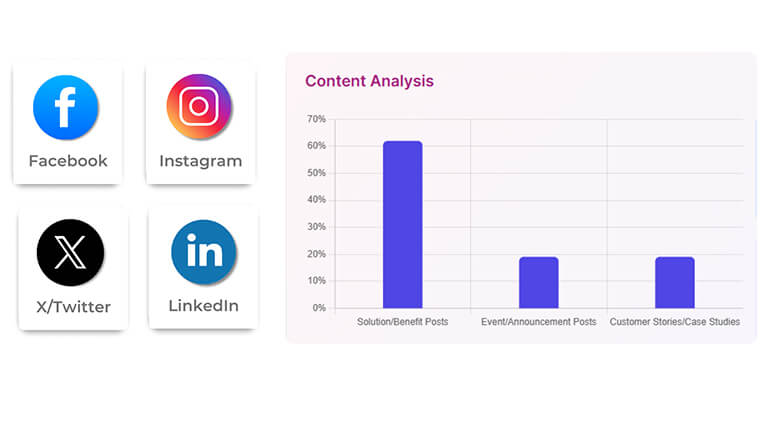
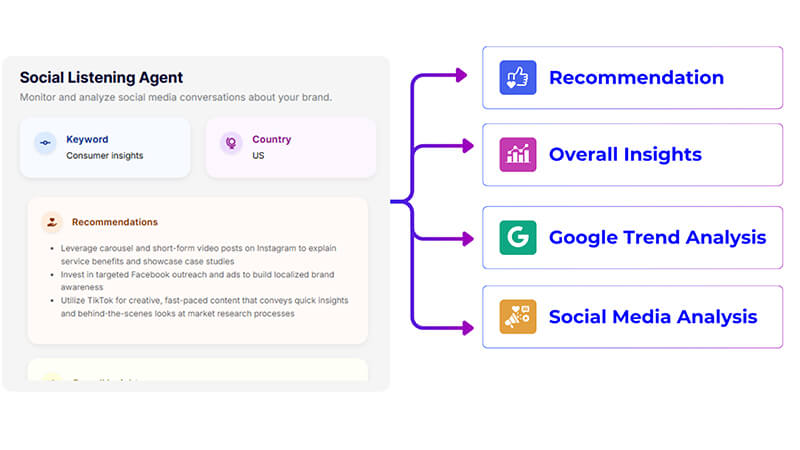
Track mentions, topics, and trends. Convert market signals into SEO blogs topics, GEO questions, and social media post ideas that grow organic reach.
Social Listening captures what people are saying publicly, how they describe problems, and what they compare. It is useful for finding content angles that match real conversations, not just internal assumptions.
Social Listening helps you:
- Identify recurring questions and objections
- Spot sentiment patterns around your category
- Pull language you can reuse in content, ads, and emails
- Feed workflows supported by Addlly AI’s Social Listening AI Agent
What is Real-time Search Used for?
Real-time Search helps you understand what users are actively looking for and what content is currently being surfaced. It is useful when you want your content to match real question-based behavior and current SERP patterns.
Real-time Search supports:
- Better alignment to search intent
- Stronger structure based on what is ranking now
- More accurate competitive comparisons
What is Competitor Analysis Used for?
Competitor Analysis looks at how others position similar offerings, what topics they cover, and how they structure their pages. The goal is not to copy, but to find gaps and build clearer differentiation.
Competitor Analysis helps you:
- Spot missing topics and weak coverage areas
- Clarify how your product is different
- Avoid repeating the same generic claims
What are GEO and SEO Audits Used for?
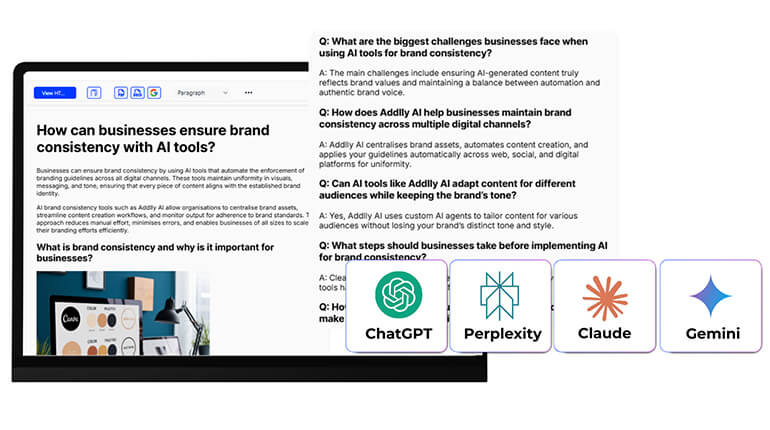
See where your brand appears in AI answers across ChatGPT, Gemini, Perplexity, and Copilot. Benchmark competitors. Act on gaps.
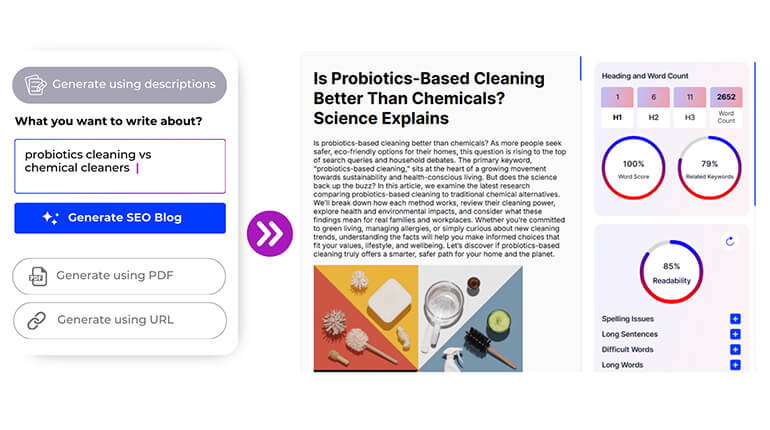
Check your website’s SEO performance in minutes. This AI agent suggests keywords, meta titles and descriptions, and site structure. Get a prioritized list to lift rankings and search visibility.
GEO and SEO audits help identify why content might not perform well in AI search and traditional search. They surface issues tied to structure, clarity, entity coverage, and missing sections that limit discoverability.
GEO and SEO audits help you:
- Find visibility blockers and content gaps
- Improve how AI systems and search engines interpret your pages
- Create a focused list of fixes for updates and rewrites
- Support workflows connected to Addlly AI’s GEO Audit Tool, AI SEO Audit Tool, and AI GEO Agent.
Step 3: Utilize Multiple AI Models
Step 3 in the Addlly AI workflow is about choosing the right engine for each part of the job. Content creation is a series of tasks, and different models perform better depending on whether you need structure, tone, variation, or refinement.
Why Does Addlly AI Use More Than One Model?
Different parts of the Addlly AI workflow require different strengths. Some tasks need tighter reasoning and structured output. Others need tone, fluency, or format-specific writing. Using multiple models lets Addlly AI match the model to the job instead of forcing one approach for everything.
Multiple models help you:
- Improve output quality across different content types
- Keep structure consistent while still sounding natural
- Generate variations without losing the core message
What Should You Expect from a Model-based Generation?
Model-based generation works best when your inputs are clear and current. When the workflow is grounded in a strong Brand Guide and Product Information, outputs become more specific, more consistent, and easier to review.
You should expect:
- Faster first drafts with fewer generic sections
- More consistent voice across assets
- Cleaner structure that is easier to edit and approve
Step 4: Content Processes
Step 4 in the Addlly AI workflow is where raw generation becomes usable marketing content. This step adds the structure and quality controls that keep content aligned with your goals, readable for humans, and optimized for AI search engines and Traditional search engines.
What is Content Strategy in this Workflow?
Content Strategy sets the direction before anything gets written. It clarifies what you are trying to achieve, who the content is for, and what the content needs to include to be useful and discoverable.
Content Strategy helps you:
- Define the goal, audience, and intent
- Choose the right format for the job, like blog, email, social, or ads
- Set a clear angle so the draft does not wander
- Connect planning workflows supported by Addlly AI’s Media Strategy AI Agent
What Does Multiple Asian Languages Support Include?
Multiple Asian Languages support helps you produce localized versions when you need to reach audiences across different markets. The focus is on keeping meaning and intent consistent, while adjusting phrasing and tone so it reads naturally.
This support helps you:
- Create localized content for different Asian markets
- Maintain consistent terminology across regions
- Reduce translation drift that changes the message
What Happens During Content Creation?
Content Creation is where the workflow produces the first draft based on your inputs and knowledge signals. This stage follows the strategy direction and uses the right model for the content type you selected.
Content Creation helps you:
- Turn inputs into structured drafts with clear sections
- Maintain brand voice and terminology standards
- Produce multiple versions for testing when needed
- Support workflows connected to Addlly AI’s SEO AI Agent, Social Media AI Agent, and Newsletter AI Agent
What Happens During Content Optimization?
Content Optimization refines the draft so it is clearer, more relevant, and better aligned with how people search and how AI systems summarize. It focuses on structure, entities, intent matching, and readability.
Content Optimization helps you:
- Strengthen headings and section flow
- Improve clarity and reduce fluff
- Align content with GEO and SEO expectations
- Prepare content for audit-driven fixes and updates
What Does Human Editing Cover?
Human Editing adds a quality layer before publishing. It catches issues models can miss, especially around accuracy, claims, tone, and nuance. It also ensures the final output matches your internal standards.
Human Editing helps you:
- Verify facts and remove unsupported claims
- Tighten tone and remove off-brand phrasing
- Improve readability and flow
- Produce a publish-ready final version
Step 5: Output Generation
Step 5 in the Addlly AI workflow is where everything gets packaged into the format you actually need to publish. By this point, the content has already been shaped by strategy, refined through optimization, and checked for quality, so outputs are created to match real channel constraints instead of being forced into a template later.
What Output Types Can Addlly AI Produce?
Output Generation is where the Addlly AI workflow produces channel-ready assets based on the strategy, inputs, and optimization steps. The output format matters because each channel has different constraints, and each one needs a different structure to perform well.
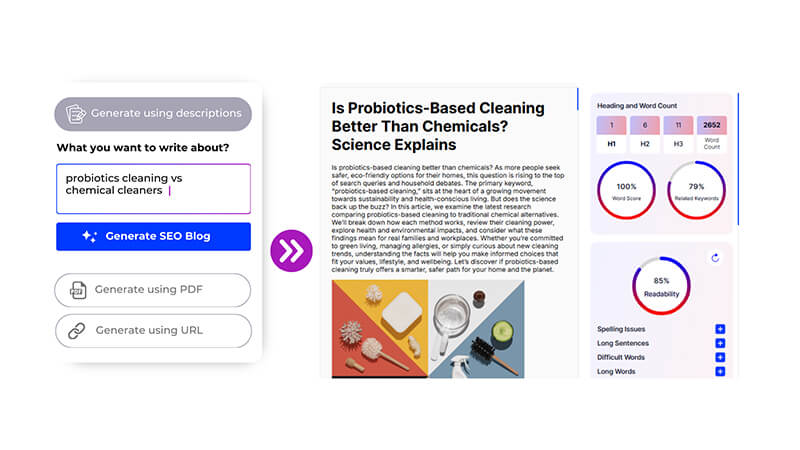
SEO Friendly Blog Posts
Blog posts are structured for search intent and readability, with sections that make it easier for users and AI systems to understand the page.
- Support long-form discovery and topic authority
- Align with workflows supported by Addlly AI’s SEO AI Agent and AI SEO Audit
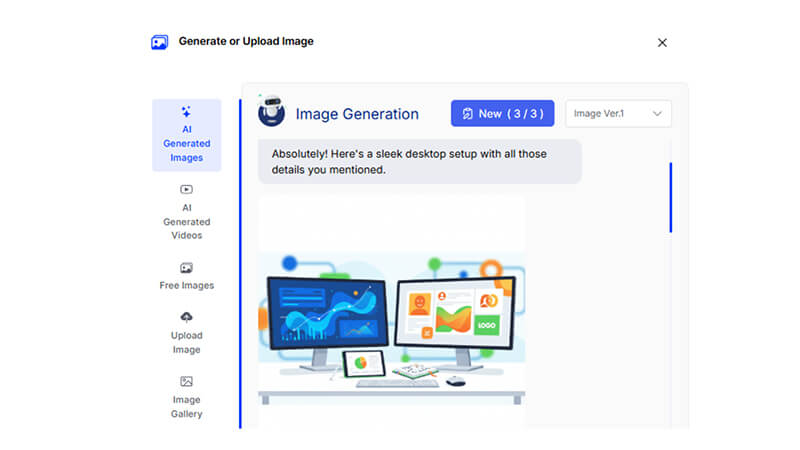
AI Images
AI Images support the content visually, especially for blogs, landing pages, and social media. They help keep creative aligned with the message and reduce the need to source visuals separately.
- Create visuals that match the content angle and theme
- Support faster iteration for campaigns and variants
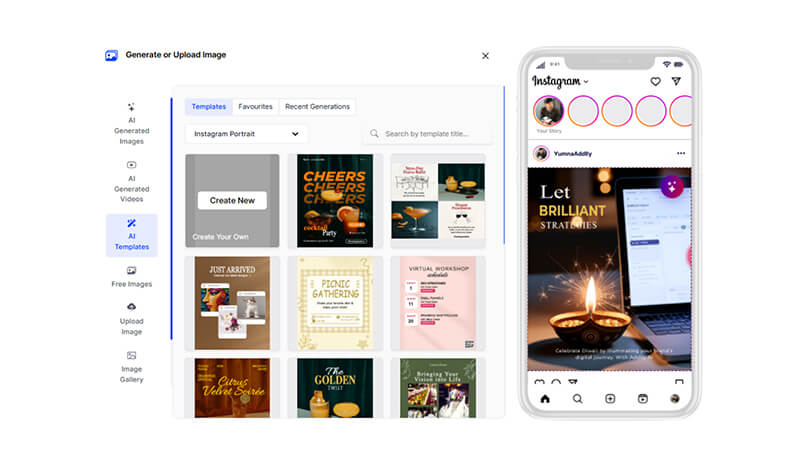
Social Media Posts
Social Media Posts are written to fit platform constraints, testing formats, and message clarity. They are useful when you need variations quickly without drifting from the core positioning.
- Provide multiple post angles and formats for testing
- Align with workflows supported by Addlly AI’s Social Media AI Agent
Direct Mailers
Direct Mailers are designed for email-style outreach, promotions, and segmented messaging. They prioritize clarity, relevance, and clear calls to action.
- Support campaign sequences and audience variations
- Align with workflows supported by Addlly AI’s Newsletter AI Agent
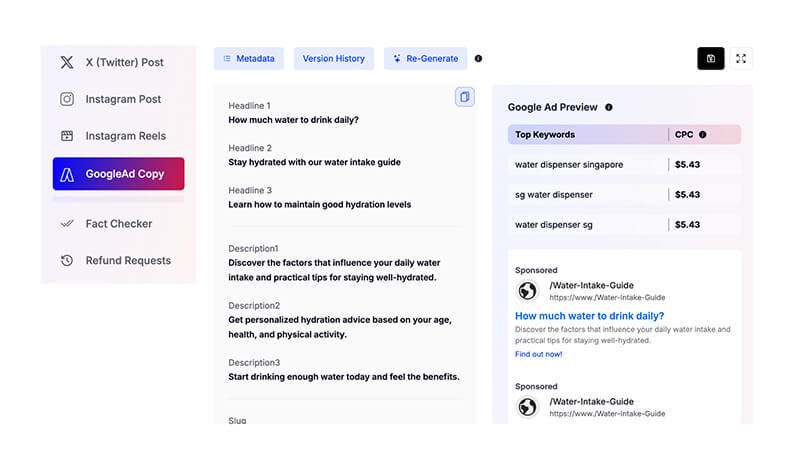
Google Ads
Google Ads outputs focus on short-form messaging that maps to intent and landing page context. They help teams test value props and messaging angles quickly.
- Generate multiple ad variations for testing
- Keep language aligned with product and campaign goals
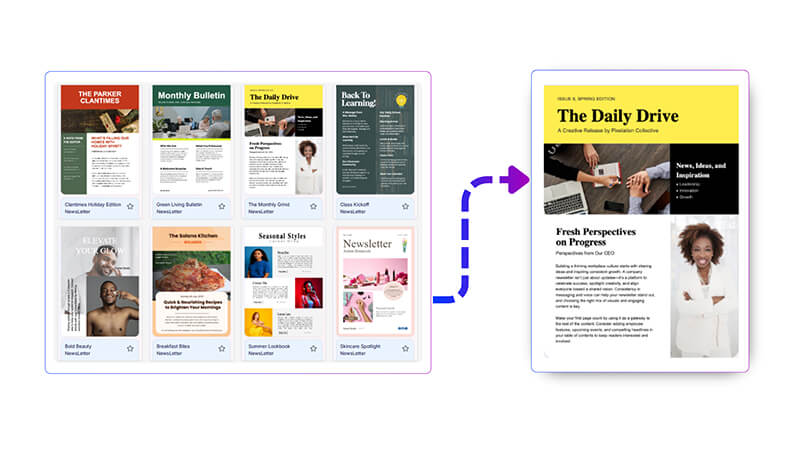
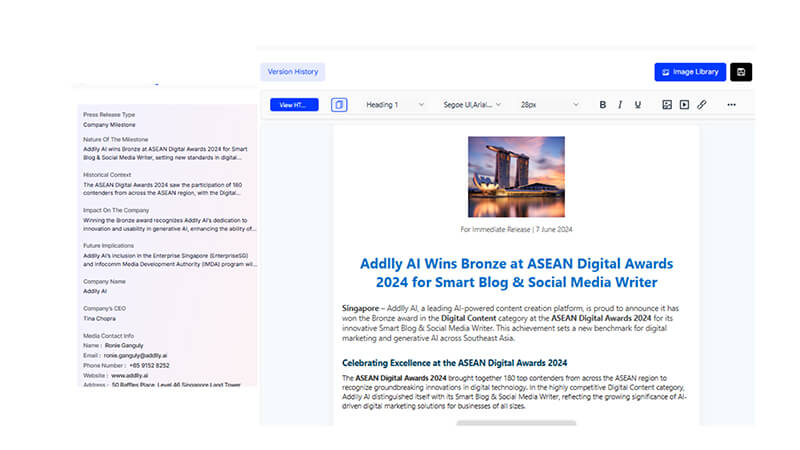
Newsletters and Press Releases
Newsletters and Press Releases provide structured communication for updates, launches, and ongoing engagement. They help maintain consistent messaging across announcements and recurring sends.
- Support consistent cadence and theme-based planning
- Align with workflows supported by Addlly AI’s Newsletter AI Agent
How do Addlly AI’s AI Agents Fit into the Marketing Workflow?
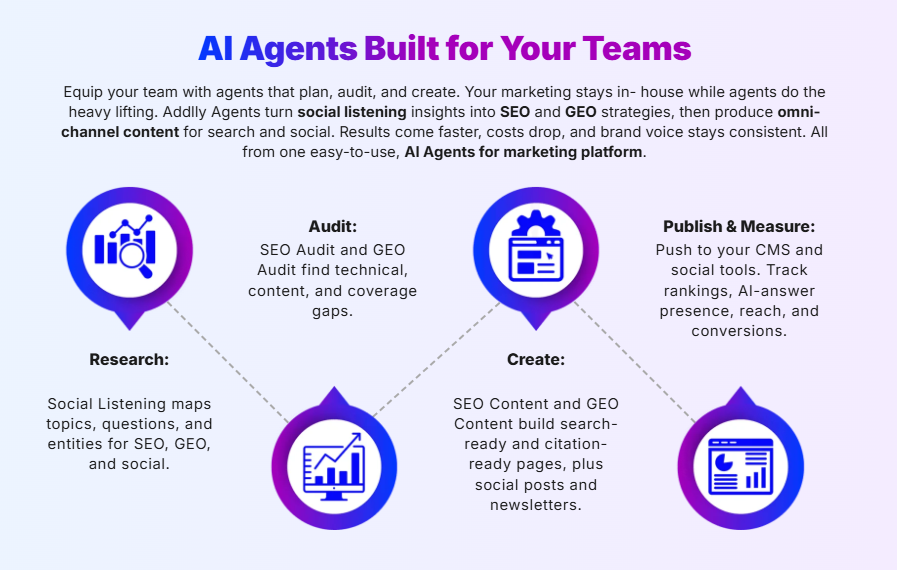
Addlly AI’s AI agents plug into different parts of the Addlly AI workflow depending on what you are trying to do. Some agents help you understand what is missing, like audits and social listening. Others help you create, optimize, and ship content in the right format.
Step 1 is about getting the right context into the workflow. While Step 1 is input-led, planning support can still guide what you should include and what to avoid.
Addlly AI agents commonly connected to Step 1:
- Media Strategy AI Agent
Step 2 is where your context gets enriched with research signals and visibility checks. This is where audits and listening help shape what gets written and what gets fixed.
Addlly AI agents commonly connected to Step 2:
- Social Listening AI Agent
- GEO Audit Agent
- SEO Audit Agent
Step 4 is where strategy becomes drafts, and drafts become refined assets. This is where creation agents and channel-specific agents do most of the work.
Addlly AI agents commonly connected to Step 4:
- SEO AI Agent
- GEO AI Agent
- Social Media AI Agent
- Newsletter AI Agent
- Media Strategy AI Agent
Step 5 focuses on channel-ready deliverables and visibility-ready structure. This is where format-specific outputs and structured markup can be produced when needed.
Addlly AI agents commonly connected to Step 5:
- AI Schema Markup Generator
- Shopify AI Agent
What Should Users Do To Get Better Results from the Addlly AI Workflow?
The Addlly AI workflow works best when your inputs are clear, your goal is specific, and your review process is consistent. Most quality issues are avoidable if you set the workflow up with the right context and treat outputs as drafts that still need a final human pass.
What Best Practices Improve Output Quality?
A few simple habits make a noticeable difference in output relevance and consistency.
Best practices include:
- Provide one clear goal per run, like “rank for a topic” or “announce a feature”
- Use a Brand Guide with examples of tone, style, and wording you want repeated
- Add Product Information that includes proof points and differentiators
- Include recent Blogs and Articles that reflect your current positioning
What Quality Checks Should Happen Before Publishing?
Before you ship anything, quality checks should confirm the content is accurate, aligned, and ready for the channel it will be used on.
Quality checks should include:
- Confirm claims match approved messaging and do not overreach
- Verify product details, pricing references, and comparisons
- Check tone and terminology against the Brand Guide
- Ensure the format fits the channel, like email length or ad constraints
- Confirm headings and structure match the intent and topic focus
What Should You Do if the Workflow Results Feel Off?
When an output feels wrong, the issue usually comes from inputs, conflicting context, or an unclear goal. The fastest fix is rarely “regenerate again.” It is tightening the information Addlly AI is using to make decisions.
What are Common Issues and Quick Fixes?
Most problems fall into a few patterns. Each one has a clear adjustment you can make before the next run.
Common issues and fixes:
- Vague output: Add clearer Product Information and a more specific goal
- Off-brand tone: Expand the Brand Guide with examples and forbidden phrasing
- Weak differentiation: Add competitor notes and the proof points that set you apart
- Low relevance: Add In-House Surveys or real customer questions and objections
- Inconsistent messaging: Remove outdated or conflicting source documents
- Repetitive sections: Add tighter structure guidance and preferred headings
- Overconfident claims: Add a list of approved claims and required disclaimers if needed
What Should You Remember About the Addlly AI Workflow?
The Addlly AI workflow is most effective when you treat it as a system, not a one-off content generator. Each step builds on the last, so better inputs and better signals lead to better drafts, cleaner optimization, and fewer revisions.
What is the Simplest Way to Explain it?
The simplest explanation is that Addlly AI helps you move from context to content in a consistent order, with research and quality steps built in.
A simple way to remember the flow:
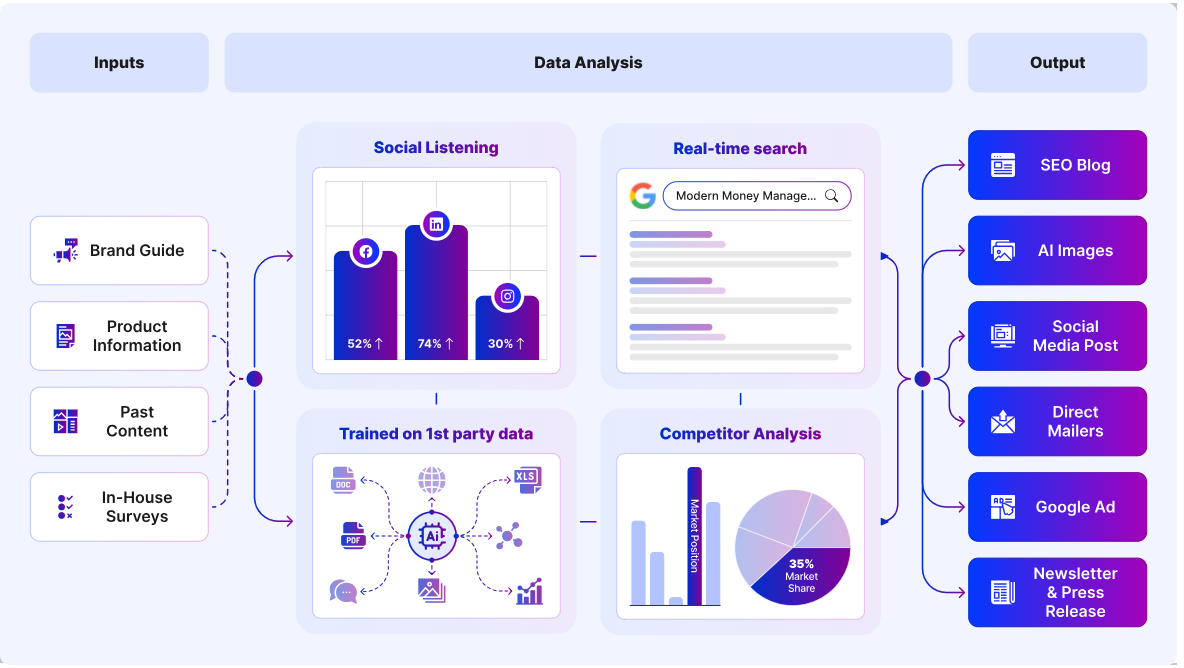
- Start with strong inputs that reflect your brand and product reality
- Use brand analysis training modules to enrich context and spot gaps
- Apply multiple AI models based on the task and output type
- Run strategy, creation, optimization, and human editing in sequence
- Generate channel-ready outputs you can publish or repurpose
Summary
The Addlly AI workflow is best used as a repeatable system, not a one-time content generator. When you start with clear inputs and let the brand analysis training modules add context, you get drafts that are easier to trust, easier to improve, and less likely to drift off-brand or off-topic.
If you want a simple mental check, focus on the order: set the right inputs first, enrich the context, then create, optimize, and apply human editing before you ship. That sequence is what keeps speed from turning into rework, and it helps your final outputs fit real channels while supporting GEO and SEO goals.