
How Addlly AI Replaces Your SEO Copywriting Agency
Many businesses rely on external agencies to handle SEO copywriting and content creation. Over time, this approach can become slow, expensive, and difficult to scale. This guide explains how modern AI-driven workflows can replace traditional agency-led SEO and search visibility processes. It is written for marketing teams, SEO professionals, and business owners who want greater control over their content production. By the end, you will understand how Addlly AI can manage SEO research, content creation, optimization, and distribution while improving visibility across search engines and AI-driven discovery platforms.
What Is Addlly AI and How Does It Replace an SEO Agency?
Addlly AI is a content marketing platform designed to help businesses create, optimize, and distribute content for visibility across SEO, Generative Engine Optimization (GEO), and AI-driven discovery channels. It uses specialized AI agents trained on a brand’s guidelines, knowledge base, and historical content to automate workflows that are traditionally handled by external agencies.
Modern SEO requires more than keyword placement and blog writing. It involves research, planning, creation, optimization, and distribution, all aligned with how search engines and AI answer platforms surface content. Managing these steps through an external agency often leads to slower turnaround times, higher costs, and limited scalability.
Addlly AI consolidates this entire workflow into a single system. Instead of relying on multiple agency roles and manual coordination, businesses can use AI agents to manage strategy, writing, optimization, and distribution in-house, enabling faster execution and greater consistency.
Why Addlly AI’s SEO Audit Is Different
Column
Brand Visibility in AI
Content Opportunities
Competitor
Benchmarking
Prioritization
Content Output
Ease of Use
Addlly’s AI SEO Audit Tool
Traditional SEO Audit Tools
AI-Driven Brand Analysis across ChatGPT, Perplexity, Claude, AI Overviews.
Only checks Google rankings
Full-Funnel Content Intelligence (awareness → purchase)
Limited keyword gap reports
Live SERP Insights with top 10 competitor analysis
Generic SERP snapshots
Action Plans Ranked by Impact & ROI
Long, unranked task lists
On-Brand Content Generation (rewrites, CTAs, schema)
Reports only, no content
Automated, prompt-free, consultant-grade insights
Requires manual SEO expertise
Addlly’s AI SEO Audit Tool
Traditional SEO Audit Tools
Brand Visibility in AI
AI-Driven Brand Analysis across ChatGPT, Perplexity, Claude, AI Overviews
Only checks Google rankings
Content Opportunities
Full-Funnel Content Intelligence (awareness → purchase)
Limited keyword gap reports
Competitor Benchmarking
Live SERP Insights with top 10 competitor analysis
Generic SERP snapshots
Prioritization
Action Plans Ranked by Impact & ROI
Long, unranked task lists
Content Output
On-Brand Content Generation (rewrites, CTAs, schema)
Reports only, no content
Ease of Use
Automated, prompt-free, consultant-grade insights
Requires manual SEO expertise
How Does Addlly AI Set Up a Brand-Trained Agent for SEO and GEO Content?
Before generating any content, Addlly AI creates a dedicated agent trained specifically on your brand. Instead of relying on generic prompts, the platform uses your first-party knowledge so every output reflects your voice, messaging, and positioning. The setup is straightforward and typically follows four steps:
-
1. Upload brand knowledge
Add brand guidelines, website content, past blogs, product or service details, and messaging frameworks. -
2. Define tone and style
Configure voice, writing preferences, terminology, and content standards the agent should follow. -
3. Train the agent on historical content
The system learns patterns from your existing materials to understand how your brand communicates. -
4. Generate brand-aligned content automatically
Once trained, the agent applies these rules consistently across SEO blogs, metadata, optimization tasks, and distribution.
This one-time setup removes the need for repeated briefs or agency-style onboarding and ensures every piece of SEO and GEO content stays consistent as you scale.
How Does Addlly AI Replace Agency-Led SEO Strategy?
Traditional agencies build SEO strategies through manual audits and periodic planning. Addlly AI replaces this with continuous, data-driven strategy generation that adapts to changing search behavior, including AI answers.
Key strategy functions handled by Addlly AI include:
- Identifying content opportunities based on AI search trends
- Mapping topics to SEO and GEO objectives
- Aligning content with answer-engine visibility
- Reducing reliance on static, agency-created plans
This approach reflects the shift from traditional SEO to Generative Engine Optimization, where strategy must adapt to AI-driven discovery.
How Does Addlly AI Replace SEO Blog Writing Work?
SEO agencies typically rely on writers, editors, and detailed briefs to understand a brand’s tone, messaging, and positioning before producing content. Each new writer must repeatedly learn these guidelines, which slows production and often leads to inconsistencies.
Addlly AI replaces this manual process by creating a brand-trained SEO AI Agent. The agent is configured using your brand guidelines, past content, product information, and tone preferences, allowing it to generate content that stays aligned with your voice from the start. Instead of briefing writers every time, teams train the agent once and let it execute SEO copywriting tasks consistently.
Once trained, the SEO AI Agent can:
- Generate long-form SEO blogs
- Create structured outlines aligned with search intent
- Produce meta titles and descriptions automatically
- Maintain consistent tone and messaging across content
- Scale output without additional writers or revision cycles
This shifts SEO copywriting from manual drafting and editing to a repeatable, brand-aligned workflow.
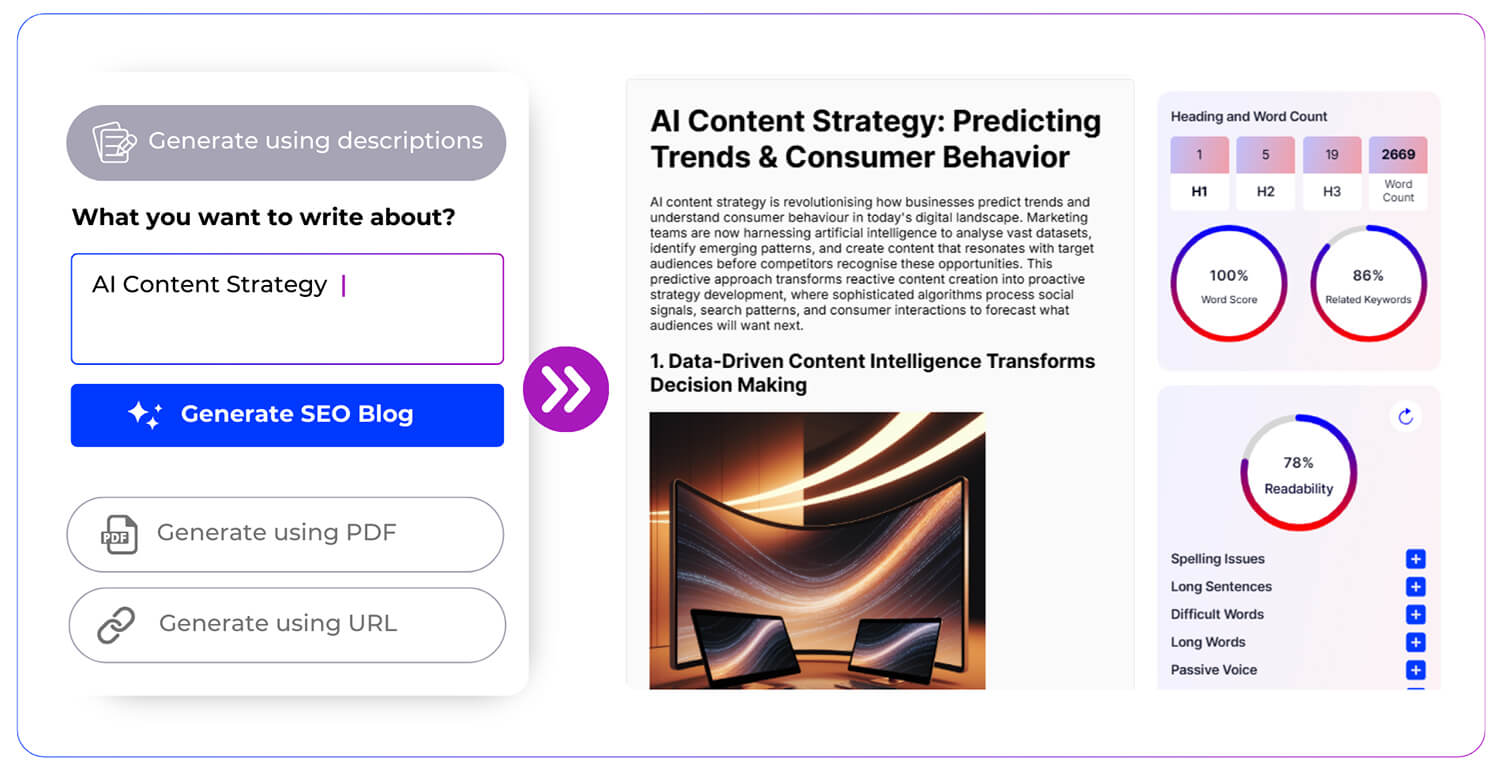
This allows businesses to create content similar to what agencies deliver, but with far greater speed and control, especially when AI content is designed to rank in search engines.
How Does Addlly AI Handle SEO and GEO Optimization?
Most agencies still focus on traditional ranking signals. Addlly AI integrates optimization directly into the content workflow, including visibility in AI-generated answers.
Optimization capabilities include:
- SEO optimization during content creation
- GEO-focused checks for AI answer visibility
- Structure and clarity improvements for AI parsing
- Alignment with how answer engines select sources
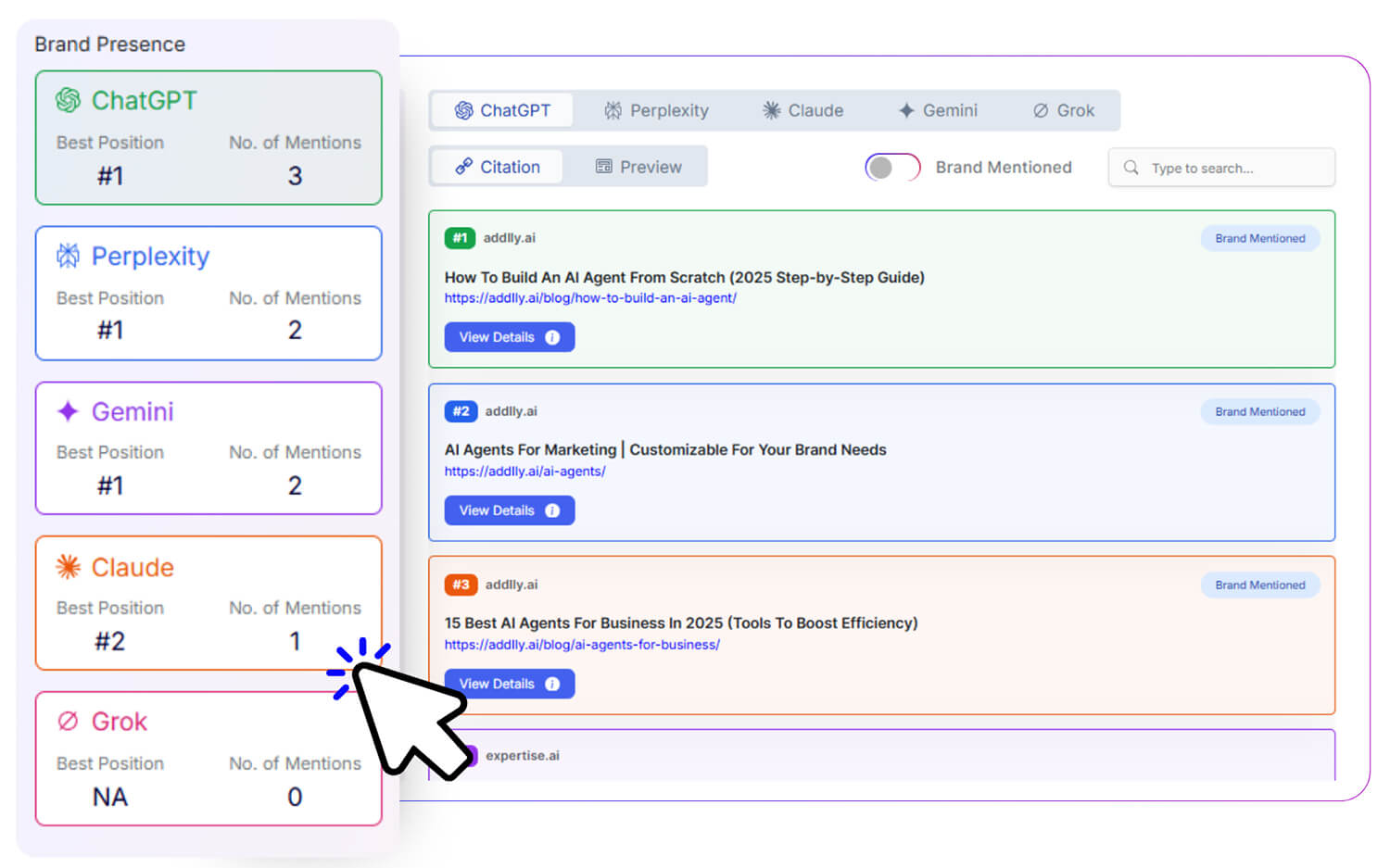
This helps businesses prepare content not only for Google rankings, but also for how AI search engines decide which brands get seen.
How Does Addlly AI Replace Ongoing Agency Dependency?
Agencies require ongoing retainers to maintain output. Addlly AI replaces this dependency by enabling teams to publish consistently without external coordination.
With Addlly AI, businesses can:
- Create content on demand
- Scale output without increasing headcount
- Reduce turnaround time from weeks to hours
- Maintain full ownership of SEO workflows
This shift supports brands that want long-term visibility as AI search changes how users discover content, rather than relying on fixed agency schedules.
Which SEO Copywriting Tasks Can Be Automated Without an Agency?
SEO copywriting agencies typically break work into multiple tasks handled by different specialists. When businesses move away from agencies, these tasks do not disappear. They simply shift from manual, people-heavy workflows to automated systems. The table below outlines the core SEO copywriting tasks traditionally handled by agencies and how they can be managed without external support.
| SEO Copywriting Task | How the Task Is Traditionally Handled by Agencies | How the Task Can Be Automated In-House |
|---|---|---|
| Keyword research | SEO strategists manually research keywords, analyze intent, and update lists periodically | Keywords and topics are identified continuously based on search behavior and content gaps |
| Topic planning | Monthly or quarterly content calendars are created and locked in advance | Content plans adjust dynamically based on performance and visibility needs |
| SEO blog writing | Writers create drafts using briefs and revision cycles | Long-form content is generated directly from structured inputs |
| Metadata creation | Titles and descriptions are written manually for each page | Metadata is generated alongside content creation |
| Content optimization | SEO specialists optimize content after writing | Optimization happens as part of the writing process |
| AI and GEO readiness | Often not included in agency workflows | Content is structured for visibility in AI-generated answers |
| Content distribution | Treated as a separate service or add-on | Repurposing and distribution are built into the workflow |
This shift removes the dependency on multiple agency roles while preserving the full SEO copywriting process. It also allows teams to move faster, scale output, and adapt to changes in search behavior without renegotiating contracts or timelines.
To understand why this shift matters as search evolves beyond blue links, see how search engines are moving from traditional results to AI-driven answers.
How Can Businesses Replace an SEO Copywriting Agency with Addlly AI: Your Step-by-Step Guide
Once businesses decide to replace their SEO copywriting agency, the next step is shifting execution in-house. Traditionally, agencies handled strategy, writing, optimization, and distribution through separate teams and manual coordination. Addlly AI consolidates these same responsibilities into specialized AI agents within one platform. Instead of outsourcing tasks, teams replace each agency function directly with an automated workflow.
The transition typically happens in the following stages.
Step 1: Replace Agency Keyword Research and Planning
What agencies did earlier: Agencies conducted periodic keyword research, created static content calendars, and delivered strategy documents every month or quarter. Updates depended on manual audits and meetings.
How Addlly AI improves it: Addlly AI replaces this process with continuous, always-on discovery using the SEO AI Agent, which automatically identifies keyword opportunities, builds topic clusters, and aligns plans with search intent in real time.
At this stage, teams can:
- Discover keywords and topics dynamically
- Map content to intent without manual spreadsheets
- Adjust priorities instantly
- Remove dependency on agency research cycles
Planning becomes ongoing rather than periodic.
Step 2: Replace Agency SEO and GEO Content Creation
What agencies did earlier: Writers created drafts manually using briefs, followed by multiple revisions and approvals. Turnaround times often stretched across weeks.
How Addlly AI improves it: Teams generate structured, search-optimized content directly using the AI Blog Writer., which produces long-form blogs, outlines, and metadata within the same workflow.
This enables teams to:
- Produce SEO and GEO blogs at scale
- Maintain consistent structure automatically
- Generate titles and descriptions instantly
- Reduce drafting and revision delays
Content creation shifts from manual production to guided generation.
Step 3: Replace Agency SEO and GEO Optimization
What agencies did earlier: After writing, agencies ran SEO checks, audits, and revisions as separate steps. Optimization often happened late and required back-and-forth edits.
How Addlly AI improves it: Addlly AI integrates optimization directly into the process using the GEO Audit tool and AI GEO Agent, ensuring content is prepared for both traditional rankings and AI answer visibility from the start.
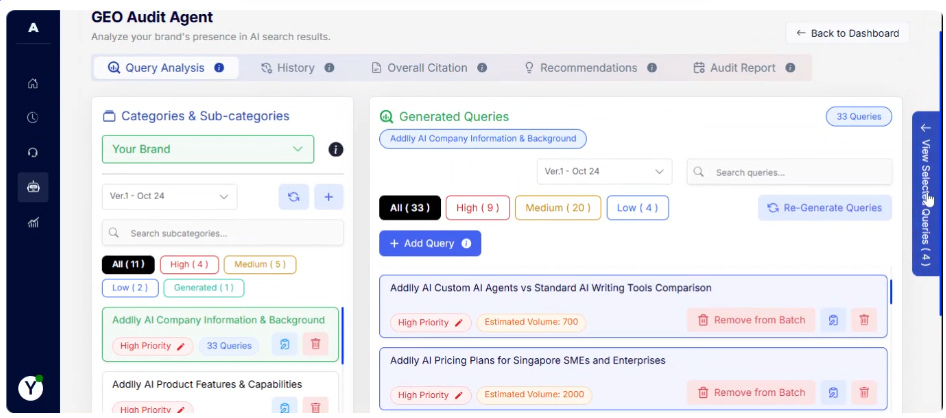
Teams can:
- Audit content for AI readiness automatically
- Improve structure for AI parsing and citation
- Align with Generative Engine Optimization requirements
- Eliminate post-publish fixes
Optimization becomes proactive instead of reactive.
Step 4: Replace Agency-Led Content Distribution
What agencies did earlier: Distribution was treated as an add-on service. Social posts and newsletters were created separately, often days or weeks after publishing.
How Addlly AI improves it: Addlly AI embeds distribution directly into the workflow through the Social Media AI Agent and Newsletter AI Agent, allowing instant repurposing of every piece of content.
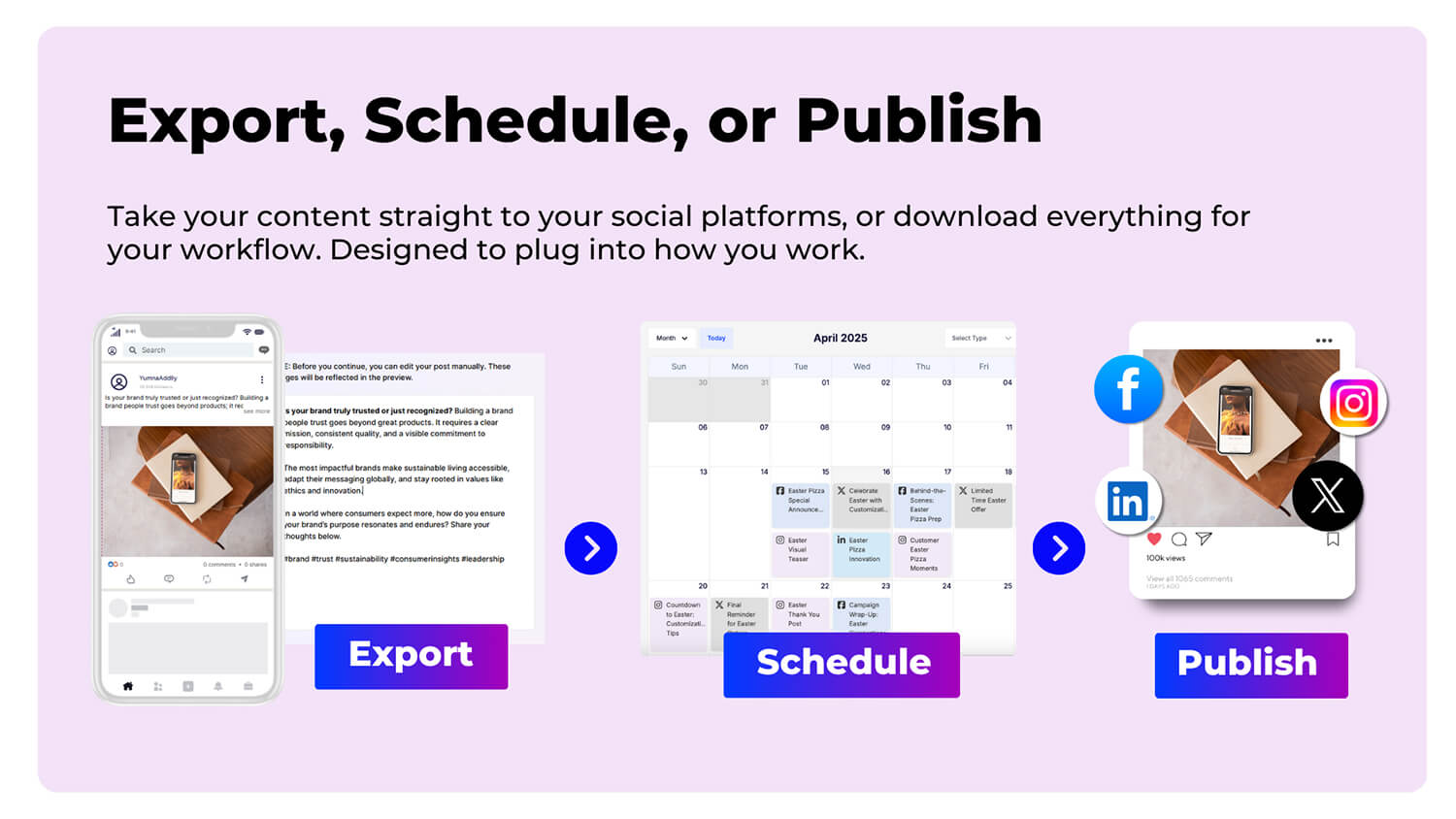
Teams can:
- Convert blogs into social posts automatically
- Generate newsletter-ready content
- Maintain consistent messaging across channels
- Publish and promote simultaneously
Distribution becomes integrated, not delayed.
Step 5: Publish, Monitor, and Improve Continuously
What agencies did earlier: Performance reviews were delivered monthly, limiting how quickly teams could adapt.
How Addlly AI improves it: With planning, creation, and optimization inside one system, teams can iterate continuously instead of waiting for reports.
Teams can:
- Publish on a consistent schedule
- Track visibility and performance signals
- Update content based on real-time insights
- Scale output without renegotiating contracts
Over time, this creates a self-sustaining SEO and GEO workflow that no longer depends on external agencies.

AI-Driven Brand Analysis
Check how your brand is cited across ChatGPT, Perplexity, Claude, and AI Overviews.

Full-Funnel Content Intelligence
Find opportunities at every stage of the funnel, awareness, consideration, purchase.

Live SERP Insights
Analyze the top 10 competitors in your space and learn what makes them rank.


On-Brand Content Generation
Publish-ready rewrites, CTAs, and schema markup tailored to your voice.
Conclusion
This guide shows that replacing an SEO copywriting agency is primarily a workflow decision, not a quality trade-off. Traditional agency models introduce delays, rising costs, and limited scalability as content needs grow.
By moving keyword research, content planning, writing, optimization, and distribution in-house, teams gain faster turnaround, clearer ownership, and greater flexibility. As search shifts toward AI-driven discovery, structured and continuously optimized content becomes essential.
An in-house workflow supported by a unified system like Addlly AI allows businesses to maintain consistent SEO output without ongoing agency dependency.