How Addlly AI’s GEO Suite Supports Visibility Across AI Search Platforms
The Addlly AI GEO Suite helps brands improve visibility across AI search platforms such as ChatGPT, Perplexity, and Google AI Overviews, where answers are generated, and sources are cited rather than simply listed as links.
As discovery shifts toward AI-generated responses, strong SEO performance alone does not guarantee visibility. The GEO Suite enables teams to analyze how AI systems interpret their content and create structured, citation-ready content that increases the likelihood of being referenced inside AI-generated answers.
Amplify AI Search Visibility (GEO)
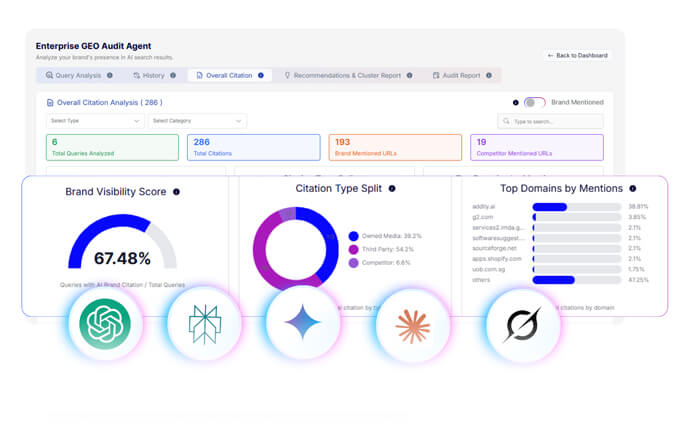
GEO Audit AI Tool
Runs a full AI search visibility audit across platforms like ChatGPT, Gemini, and Perplexity, compares you with competitors, and identifies where you’re missing citations.
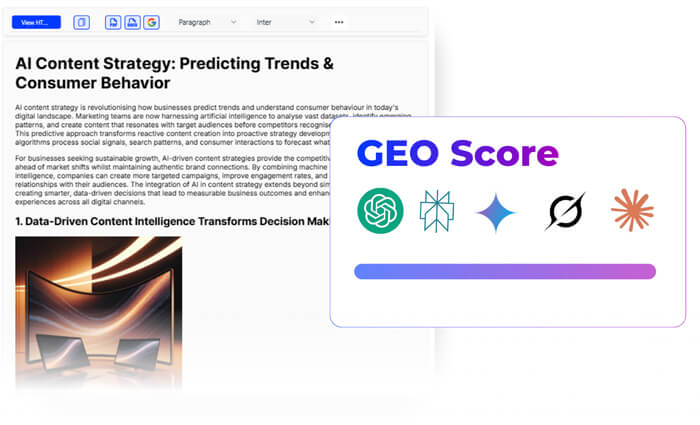
GEO Rewrite AI Agent
Optimizes and refreshes existing copy so it’s SEO-friendly and AI-search ready, making every update count for rankings and citations.
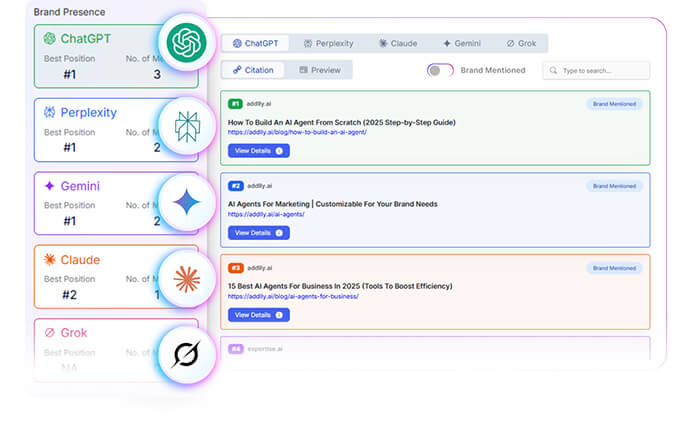
GEO AI Agent
Creates brand-focused, citation-ready content designed to appear in AI-powered search results and close visibility gaps.
How AI Search Platforms Select Sources?
-
Clarity
Content that directly answers a question with concise explanations is easier for AI systems to summarize and reuse. -
Authority
Brands that consistently publish reliable, topic-focused content are more likely to be recognized as credible sources. -
Structure
Well-organized pages with headings, lists, and structured formatting make it easier for AI systems to interpret and extract information.
Because of this shift, content visibility increasingly depends on how well information can be interpreted and cited inside AI-generated answers rather than where a page ranks in traditional search results.
Why Conventional SEO Alone Is Not Enough for AI Search?
Conventional SEO focuses on helping search engines crawl, index, and rank pages within search results. While these signals remain important, they do not fully determine whether content appears inside AI-generated answers.
AI search platforms interpret information differently. Instead of ranking links, they synthesize responses from sources that are easy to understand, extract, and trust. Pages that rely heavily on keywords or long, unstructured text may rank well in search engines but still be overlooked by AI systems.
To appear in AI-generated responses, content must also provide clear entities, structured explanations, and topic-focused coverage that machines can interpret reliably. This is where Generative Engine Optimization complements traditional SEO by ensuring content is not only indexed but also understandable and citable by AI systems.
How to Rank in ChatGPT Search Results?
ChatGPT does not rank websites the way Google does. It generates a direct answer by combining information from sources it considers clear, trustworthy, and easy to interpret. This means your goal is not to chase positions on a results page, but to make your content structured enough to be extracted and cited inside the response itself.
In practice, improving visibility often comes down to strengthening your brand’s presence and associations across the web. Content that consistently explains what you do, where you fit, and how you help makes it easier for the model to recognize and reference you. The same ideas show up when working on getting your brand mentioned in ChatGPT, where entity clarity and topical authority play a bigger role than classic on-page tricks.
To improve your chances of being included, focus on:
- Writing answer-first paragraphs that address one question at a time
- Using headings, lists, and tables to make information easy to extract
- Building multiple related articles around the same topic to establish authority
- Keeping claims specific and factual rather than promotional
When your content is easy for a human to skim and understand, it is usually easier for ChatGPT to reuse as well. Visibility follows clarity.
What Addlly AI Can Do for You to Rank in ChatGPT?
Applying these practices manually can take time, especially when teams are juggling research, writing, and optimization across multiple articles. Addlly AI simplifies this process by turning ChatGPT visibility into a structured workflow rather than a series of one-off tasks.
It helps you:
-
Identify visibility gaps
Run a GEO Audit to uncover pages that are hard for AI systems to interpret or cite. -
Create AI-ready content faster
Use the AI GEO Agent to generate structured, answer-first content designed for extraction and summarization. -
Publish consistently with clarity
The AI Blog Writer produces well-formatted, citation-friendly posts that align with how answer engines process information. -
Align SEO with GEO
The SEO AI Agent ensures your content performs across both traditional rankings and AI-generated responses.
With the right structure in place, improving ChatGPT visibility becomes systematic instead of manual.
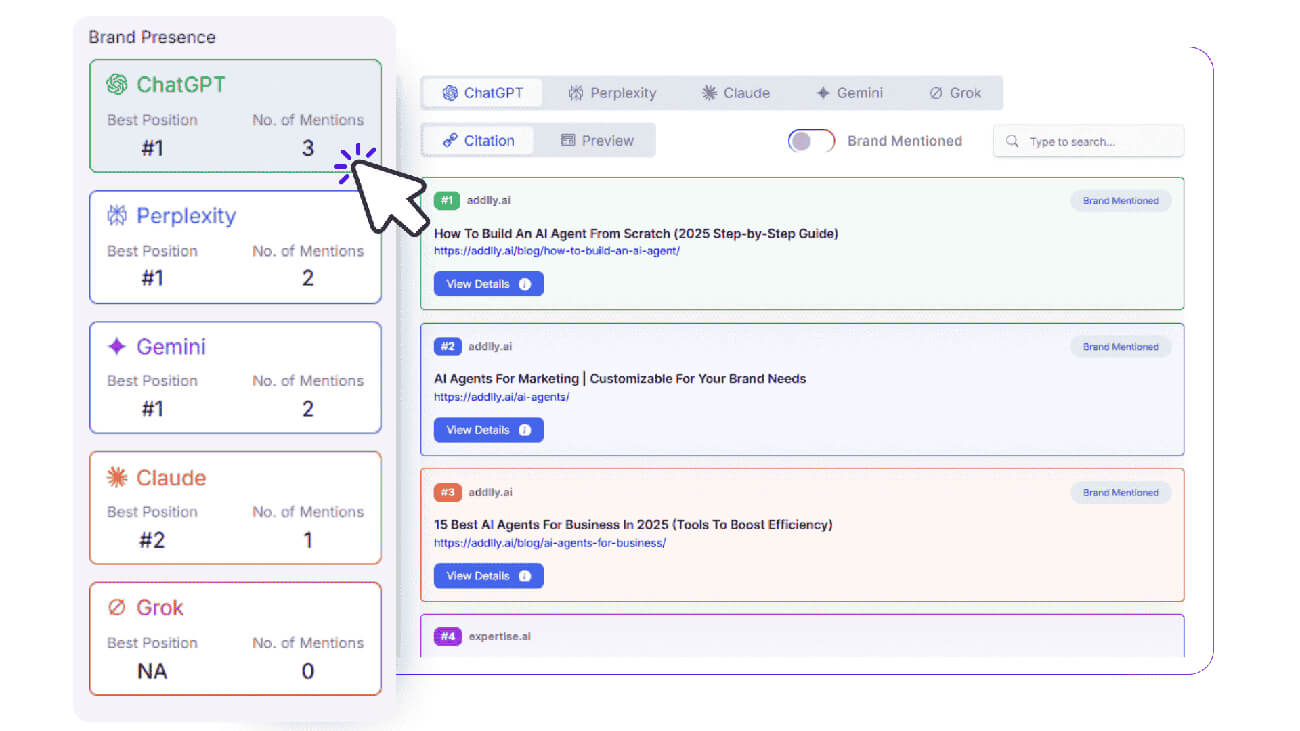
How to Show Up in Perplexity AI?
Perplexity behaves differently from most AI tools because it shows its sources alongside every answer. Instead of generating a response without attribution, it cites the pages it pulls information from.
This makes visibility more transparent and, in many ways, more measurable.
If your page is clear and authoritative, it gets cited. If it is vague or generic, it is skipped.
Unlike traditional SEO, where ranking position drives clicks, Perplexity rewards credibility and structure. It tends to favor content that explains a topic thoroughly, presents facts cleanly, and comes from domains that consistently publish useful, focused material. These patterns are easy to notice when comparing tools in Perplexity AI vs ChatGPT, where Perplexity leans more heavily on explicit citations and sources.
Because every answer links back to references, your content must do two things well: communicate expertise and be easy to extract.
To improve your chances of appearing as a cited source:
- Write complete, self-contained explanations rather than surface-level summaries
- Support claims with specifics, examples, or data
- Organize content with descriptive headings so sections can stand alone
- Publish multiple articles on the same topic to build authority
- Maintain consistent terminology for your brand, products, and categories
It also helps to think beyond your own website. Perplexity often pulls from discussions, reviews, and third-party mentions. Strategies commonly used in monitoring and tracking brand mentions in AI answers can reveal where your brand is already being referenced and where visibility gaps exist.
In short, Perplexity rewards sources that look credible enough to cite publicly. The clearer and more trustworthy your content appears, the more likely it is to be included.
What Addlly AI Can Do for You to Show Up in Perplexity AI?
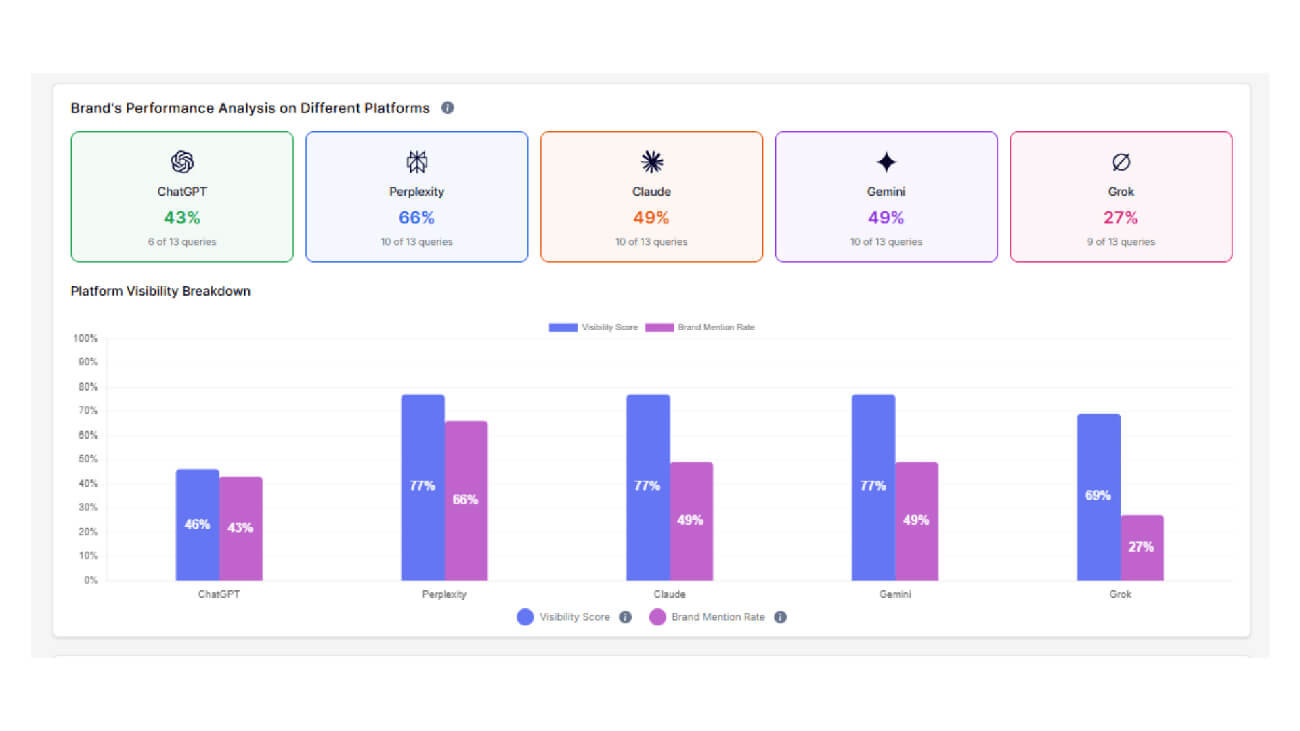
Managing citations across owned content and external mentions can be time-consuming. Addlly AI helps teams standardize and scale this process so authority signals are built consistently rather than manually.
It helps you:
-
Audit citation readiness
Identify pages that lack depth, structure, or clarity that prevent Perplexity from citing them. -
Create authoritative content faster
Generate well-researched, structured articles that are easier to reference and extract. -
Maintain topical coverage
Plan and publish related content clusters so your brand becomes a consistent source within a category. -
Track brand visibility
Monitor where your brand appears across AI answers and uncover missed opportunities.
How to Appear in Google AI Overviews?
Google AI Overviews blend generative answers directly into the search results page. Instead of showing only blue links, Google summarizes information from multiple sources and presents a compiled response at the top, often before users scroll.
This means your content may influence the answer even when users never visit your page.
Unlike ChatGPT or Perplexity, Google still relies heavily on its traditional search infrastructure. Rankings, authority, and technical SEO continue to matter, but they are no longer enough on their own. Pages must also be structured in a way that Google can easily interpret, extract, and summarize.
In many ways, this is where classic SEO and GEO overlap.
Content that performs well in AI Overviews typically:
- Answers specific questions directly and early
- Uses clear headings that match search intent
- Includes structured data and schema markup
- Demonstrates topical depth across related articles
- Avoids filler and overly promotional language
Technical clarity plays a bigger role here than in most AI tools. Proper formatting and schema help Google understand what each section represents, which is why the role of schema markup in AI search visibility has become increasingly important for teams optimizing for AI-driven results.
It also helps to think in terms of complete topic coverage rather than isolated posts. Publishing clusters of related content strengthens authority and improves your chances of being selected as a source, similar to the practices outlined in how to rank in AI Overviews, where structure and comprehensiveness directly affect inclusion.
At a practical level, if Google can quickly identify what your page explains and trust the information, it is far more likely to feature it inside the generated summary.
What Addlly AI Can Do for You to Appear in Google AI Overviews?
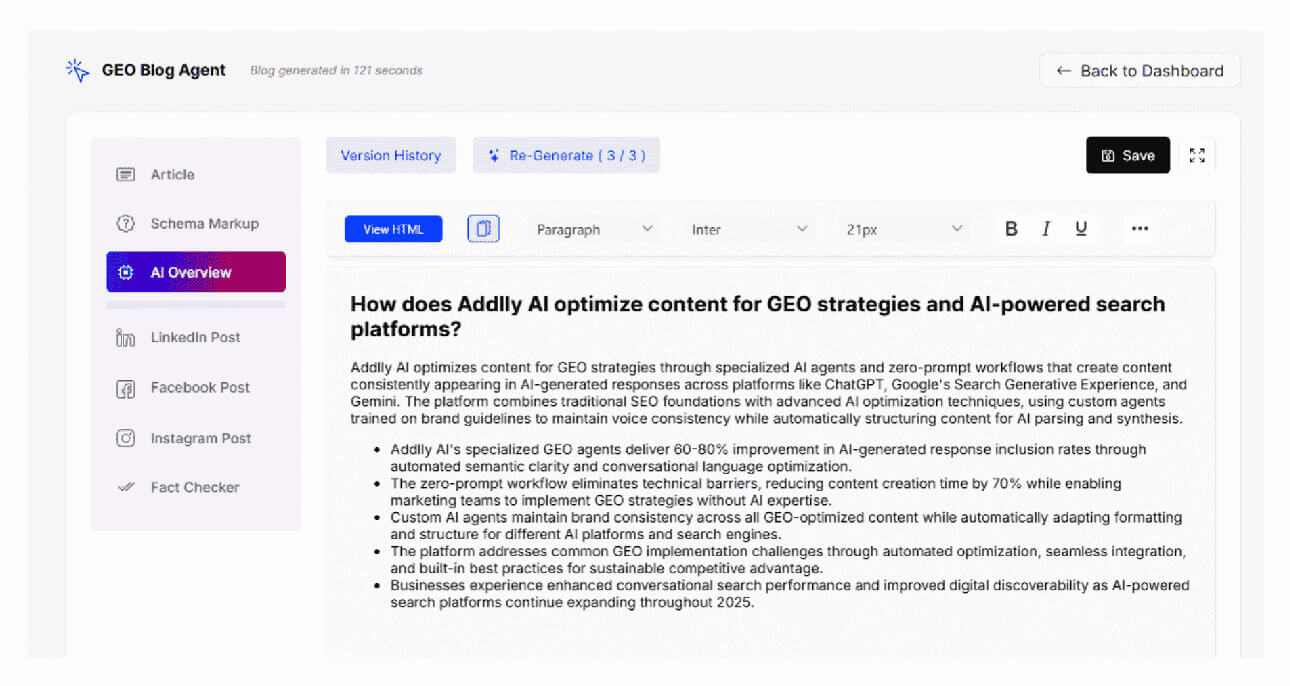
Balancing traditional SEO requirements with an AI-ready structure can create extra work for marketing teams. Addlly AI helps combine both into a single workflow so content is optimized for rankings and AI summaries at the same time.
It helps you:
-
Run structured audits
Detect technical and content gaps that limit eligibility for AI Overviews. -
Generate schema-friendly, well-formatted content
Produce pages that are easier for Google to parse and summarize. -
Align SEO and GEO together
Ensure content performs across search results and AI-generated answers without separate processes. -
Scale publishing consistently
Maintain topic depth and freshness across clusters that strengthen authority signals.
Addlly AI’s GEO Suite Capabilities
The Addlly AI GEO Suite includes specialised tools that help marketing teams analyse AI visibility, optimise content for citation, and publish AI-ready content consistently. These capabilities work together to improve how brands appear across AI-generated search experiences.
-
GEO Audit Tool
Evaluates a website’s readiness for AI search visibility by analysing entity clarity, content structure, and machine readability. The audit identifies pages that are difficult for AI systems to interpret or cite. -
AI GEO Agent
Generates and optimizes content specifically for AI-driven discovery environments. The agent structures content with answer-first explanations, clear entities, and formats that improve citation probability. -
AI Blog Writer
Produces well-structured, citation-friendly articles designed for AI discoverability while maintaining brand voice and content consistency.
Together, these capabilities help teams move from manual optimisation to a repeatable workflow for improving AI search visibility.
Summary
AI search platforms are changing how information is discovered. Instead of browsing a list of links, users increasingly rely on generated answers that summarize and cite sources directly. In this environment, visibility depends on whether the content is structured clearly enough for AI systems to interpret and reference.
The Addlly AI GEO Suite helps brands improve their presence across platforms such as ChatGPT, Perplexity, and Google AI Overviews. By combining GEO analysis, AI-ready content creation, and structured optimization workflows, the platform enables teams to strengthen AI search visibility and increase the likelihood of being cited in AI-generated answers.