
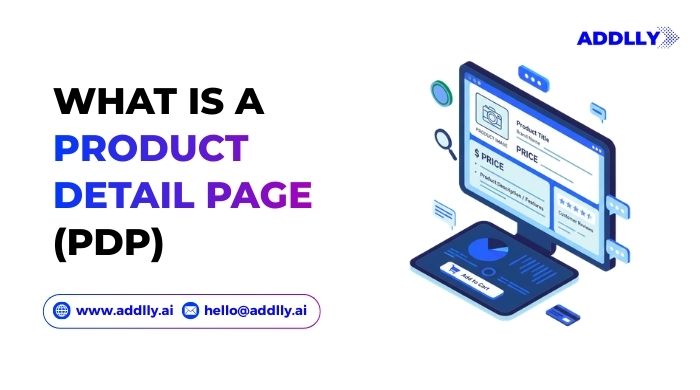
A shopper lands on your website, clicks on a product, and pauses for a moment. The page in front of them must answer every question they have. What is this product? How does it work? Why should they trust it? That page is called a Product Detail Page (PDP).
In ecommerce, the PDP is where curiosity turns into purchase decisions. It brings together product descriptions, images, pricing, reviews, and purchase options in one place.
But in 2026, a PDP does more than convince buyers. It also helps search engines and AI systems understand your products. A well-structured product page can influence conversions, search rankings, and even whether AI assistants recommend your product to shoppers.
Quick Summary – What is a Product Detail Page
- A product detail page (PDP) ai agent provides complete information about a specific product to help customers make an informed buying decision.
- Effective product detail pages combine clear product descriptions, high-quality images, and key product specifications to improve customer understanding.
- Elements like customer reviews, shipping information, and social proof help build trust and increase conversion rates.
- Optimizing product pages with relevant keywords, structured product data, and mobile optimization improves search visibility.
What Is a Product Detail Page (PDP) in Ecommerce?
A product detail page (PDP) is the web page on an ecommerce site that shows complete information about a specific product. It helps potential customers understand the product’s features, price, specifications, and shipping information so they can make an informed buying decision.
Unlike a product listing page, which displays multiple products, a PDP focuses on one specific product and presents all the relevant details needed before purchase.
Most product detail pages typically include:
- Product title with a descriptive title and relevant keywords
- Product description explaining key features and important details
- High-quality images showing the product from different or multiple angles
- Product specifications such as size, materials, or care instructions
- Pricing and shipping information, including shipping costs and options
- Customer reviews and star ratings that add social proof
When website visitors click a product from a product listing page or search results on an ecommerce platform, they land on this detail page to explore the product in depth. For ecommerce brands, a well-structured PDP improves customer experience, helps search engines understand product data, and supports broader strategies around AI search visibility.
Further Reading: How To Get Your Products Mentioned in ChatGPT for Maximum Visibility
Why Is a Product Detail Page Important for Ecommerce Conversions?
A product detail page (PDP) is where browsing turns into buying. While product listing pages help shoppers discover multiple products, the PDP is the page where potential customers evaluate a specific product, review its features, and decide whether to move forward with the purchase.
When the page presents clear information, compelling product imagery, and trustworthy signals, it reduces uncertainty and encourages customers to take action.
Helps Customers Make an Informed Buying Decision
A well-structured product detail page provides all the relevant details shoppers need before purchasing. Clear product descriptions, product specifications, and key features help potential buyers understand exactly what they are purchasing.
When product pages include important details such as materials, care instructions, and product costs, they reduce confusion and prevent mismatched expectations.
Builds Trust Through Social Proof
Trust plays a major role in ecommerce purchases. Elements such as customer reviews, star ratings, and feedback from other customers act as social proof and reassure potential buyers about the quality of the product.
These signals help ecommerce brands enhance trust and make new customers more confident about purchasing from the website.
Improves Conversion Rates and Customer Experience
An effective product detail page improves conversion rates by presenting information clearly and guiding visitors toward the purchase decision. High-resolution images, visual content from multiple angles, and interactive elements allow customers to examine the product closely.
At the same time, details like shipping options, shipping costs, and delivery information make the purchasing process transparent and smooth.
Supports Search Visibility for Product Pages
Product pages also play an important role in how products are discovered online. Search engines analyze product data, relevant keywords, and structured information to understand the product and match it with user queries.
As ecommerce discovery increasingly happens through AI-driven search, structured product information becomes even more important. This is closely connected to how AI search engines decide which brands get seen, where product information and clear content structure influence visibility across modern search systems.
What Are the Essential Elements of a High-Converting Product Detail Page?
An effective product detail page combines clear product information, compelling visual content, and trust signals that help potential customers evaluate a product quickly. When these elements are structured well, they improve customer experience, support informed buying decisions, and lead to higher conversion rates on an ecommerce site.
1. Product Title and Brief Description
The product title is often the first thing customers notice on a product detail page. A clear descriptive title helps visitors immediately understand what the product is and improves discoverability through relevant keywords.
Along with the title, a brief description highlights the standout features and key attributes of the product so website visitors can quickly grasp its value before reading the full product description.
2. Detailed Product Description and Key Features
A strong product description explains the product in depth while emphasizing its key features and important details. Clear and structured descriptions help potential buyers understand the product better and reduce confusion.
Effective product descriptions usually include:
- Key features and standout features
- Product specifications such as size, dimensions, or materials
- Care instructions or sustainable materials
- Other attributes that help customers evaluate the product
Clear descriptions also help search engines interpret product data and match product pages with relevant queries, which is why structured ecommerce content plays an important role in broader strategies around AI search visibility and topics like generative engine optimization.
3. High Quality Images and Visual Content
Images are one of the most important elements of a great product detail page because customers cannot physically examine the product.
Effective product pages often include:
- High resolution images showing the product clearly
- Images from different angles or multiple angles
- Close-up shots highlighting important details
- Visual content such as product videos or interactive elements
Compelling product imagery helps potential buyers understand the product better and builds confidence before purchase.
4. Pricing, Shipping Information, and Product Costs
Transparent pricing helps avoid friction during the buying process. A good PDP clearly displays product costs, along with shipping information and available shipping options.
Customers should easily find:
- Product price and discounts
- Shipping costs and delivery timelines
- Shipping options and return policies
Clear shipping information prevents mismatched expectations and improves the overall customer experience.
5. Customer Reviews and Social Proof
Customer reviews and star ratings provide social proof that strongly influences purchase decisions. Feedback from other customers helps new customers evaluate whether the product meets their expectations.
These trust signals enhance credibility and encourage potential buyers to move forward with the purchase.
6. Cross-Sell Suggestions and Personalized Recommendations
Many ecommerce brands add cross sell sections or personalized recommendations to product pages to increase average order value.
These sections often recommend:
- Related products from the same product categories
- Complementary items frequently purchased together
- Products based on browsing behavior
This approach not only increases revenue but also improves product discovery. As AI-driven shopping experiences evolve, structured product information and clear product pages are becoming increasingly important in how products appear in modern search systems, a shift discussed in areas such as how AI search engines decide which brands get seen.
What Is the Difference Between a Product Detail Page (PDP) and a Product Listing Page (PLP)?
In ecommerce, product listing pages (PLPs) and product detail pages (PDPs) serve different purposes, but they work together to guide customers through the shopping journey. While a PLP helps users discover multiple products within a category, the PDP focuses on providing detailed information about a specific product.
Understanding this difference is important because both page types influence customer experience, product discovery, and conversion rates.
What Is a Product Listing Page?
A product listing page displays a collection of products within a specific category on an ecommerce site. It helps website visitors browse through multiple products and compare options before selecting one to explore further.
Typical elements of a product listing page include:
- Product thumbnails or small product images
- Product title and brief description
- Product price or price range
- Filters for product categories, size, color, or other attributes
- Sorting options for price, popularity, or ratings
When customers click on one of these products, they are directed to the product detail page where they can view all the relevant details.
PDP vs PLP: Key Differences
| Feature | Product Listing Page (PLP) | Product Detail Page (PDP) |
|---|---|---|
| Purpose | Helps users browse multiple products | Provides detailed information about a specific product |
| Content | Short product summaries | Detailed product description and specifications |
| Visuals | Small product thumbnails | High quality images and visual content |
| Customer decision stage | Discovery and comparison | Evaluation and purchase decision |
| Key goal | Encourage product exploration | Drive conversions and purchases |
How PDPs and PLPs Work Together?
In most ecommerce platforms, the shopping journey typically begins on category pages or product listing pages, where users browse different products. From there, they click on a product that interests them and land on the product detail page to explore the product in depth.
A well-structured ecommerce site ensures that these pages work together seamlessly. Clear navigation, search bar functionality, and logical product categories help customers move easily between PLPs and PDPs, improving both click-through rate and conversion rates.
How Do You Optimize a Product Detail Page for SEO and AI Search?
Creating a great product detail page is only half the job. To attract website visitors and potential customers, the page must also be optimized so search engines and AI-driven search systems can clearly understand the product.
Effective content optimization ensures that product pages appear in search results, improve click through rate, and help ecommerce brands stay visible as AI-powered discovery continues to grow.
Use Clear Product Data and Relevant Keywords
Search engines rely on structured product data to understand what a page is about. A well-optimized PDP should naturally include relevant keywords in the product title, product description, and key sections of the page.
Important information such as product specifications, key features, materials, and product categories helps search engines connect the product with relevant queries. Clear and structured product information also improves how pages are interpreted by AI search systems.
Optimize Product Images and Visual Content
Images are not only important for customers but also for search visibility. Optimized product images help search engines understand the visual context of the product while improving page performance.
Best practices include:
- Using high resolution images with descriptive file names
- Showing products from multiple angles or different angles
- Adding alt text that describes the product and its key features
- Ensuring images load quickly on both desktop and mobile devices
Fast loading times improve both customer experience and conversion rates, especially for mobile users.
Improve Mobile Optimization and Page Performance
A large percentage of ecommerce traffic now comes from mobile users. This means every product detail page should be designed with mobile optimization in mind.
Key factors include:
- Fast page loading times
- Clear layout and readable product descriptions
- Easy-to-click call-to-action buttons
- Responsive product images and visual content
Pages that load quickly and work well on mobile devices often achieve higher engagement and better conversion outcomes.
Strengthen Product Pages With Structured Data and Technical Audits
Beyond content, technical optimization also plays a role in improving the visibility of product pages. Elements such as schema markup, structured product information, and proper page indexing help search engines interpret ecommerce pages more accurately.
Many ecommerce brands regularly run technical checks using tools like an AI-powered SEO audit tool to identify issues related to page structure, metadata, and search visibility.
Optimize Product Pages for AI Discovery
As AI-powered search systems become more common, ecommerce brands are beginning to optimize product pages not just for traditional search engines but also for AI-driven discovery.
This includes structuring product information clearly, ensuring product descriptions contain meaningful details, and building brand authority across the web. Tools like the GEO AI Agent are increasingly used by brands to help their products appear in AI-generated answers and recommendations.
What Makes a Product Detail Page High-Performing in 2026?
Customer expectations from ecommerce pages are higher than ever. A high-performing product detail page today must combine clarity, speed, visual storytelling, and trust signals. When these elements work together, they help potential buyers evaluate a product quickly and move toward purchase without friction.
In 2026, successful ecommerce brands focus on a few key principles when designing product pages.
Mobile-First Experience
More than half of ecommerce traffic now comes from mobile devices, which makes mobile optimization essential. Product pages that are difficult to navigate on smaller screens often lose potential customers before they even explore the product.
A mobile-first PDP typically focuses on:
- Fast loading times and optimized visual content
- Readable product descriptions with bullet points
- Clear product images that adjust across screen sizes
- Prominent add-to-cart buttons for quick purchase
When pages perform well on mobile devices, they improve both customer experience and conversion rates.
Rich Visual Content and Interactive Exploration
Since customers cannot physically interact with products online, strong visual content becomes essential. A great product detail page uses images and interactive elements to help visitors understand the product better.
Effective PDPs often include:
- High resolution product images
- Images showing the product from multiple angles
- Close-up visuals highlighting key features
- Product videos or demonstration clips
This type of compelling product imagery helps reduce uncertainty and supports informed buying decisions.
Personalization and Product Discovery
Modern ecommerce platforms increasingly use personalized recommendations to help customers discover relevant products.
Instead of showing static suggestions, many sites now display:
- Related products within the same product categories
- Cross sell recommendations based on browsing behavior
- Frequently bought together product bundles
These features not only improve product discovery but can also increase average order value.
Building Trust Through Transparency
Trust remains one of the most important drivers of ecommerce purchases. Small details on product pages can significantly influence whether potential buyers feel confident about ordering.
Important trust-building elements include:
- Customer reviews and star ratings
- Transparent shipping information and shipping costs
- Clear return policies and delivery expectations
- Accurate product descriptions that prevent mismatched expectations
As ecommerce continues to evolve alongside AI-powered discovery, product pages are also becoming important sources of information for AI search systems.
Don’t Miss: From Search Engines to Answer Engines: What Marketers Should Know
What Are the Most Common Product Detail Page Mistakes to Avoid?
Even strong ecommerce sites sometimes make small mistakes on their product detail pages that affect customer experience and conversions. Addressing these issues can help ecommerce brands improve trust, reduce friction, and encourage customers to move toward purchase.
| Common PDP Mistake | Why It Matters | How to Fix It |
|---|---|---|
| Thin or vague product descriptions | Customers lack enough information to make an informed buying decision | Write a detailed product description covering key features, materials, and product specifications |
| Poor quality product images | Low-quality visuals reduce trust and make products harder to evaluate | Use high resolution images and show products from multiple angles |
| Hidden shipping costs or unclear shipping information | Unexpected costs often lead to cart abandonment | Clearly display shipping costs, delivery timelines, and shipping options |
| Missing customer reviews and star ratings | Lack of social proof can reduce buyer confidence | Add customer reviews and feedback from other customers |
| Slow loading times or poor mobile optimization | Mobile users may leave the page before exploring the product | Optimize images, improve loading times, and ensure mobile-friendly layouts |
Final Words
A product detail page is more than just a place to display a product. It is where potential buyers evaluate features, compare options, and decide whether to purchase. When a PDP presents clear product descriptions, high quality images, transparent shipping information, and social proof, it builds trust and improves conversion rates.
For ecommerce brands managing many product pages, maintaining consistent and well-optimized product content can be challenging. This is where AI-powered platforms like Addlly AI are becoming useful, helping teams structure product information, optimize content for search visibility, and create scalable product pages that perform well across both search engines and emerging AI discovery platforms.
FAQs – What is a Product Detail Page (PDP)
What Should a Good Product Detail Page Include?
A strong product detail page usually includes a clear product title, detailed product description, high quality images, product specifications, pricing, shipping options, and customer reviews. These elements help potential buyers understand the product and encourage them to complete a purchase.
What Is the Difference Between a Product Listing Page and a Product Detail Page?
A product listing page (PLP) displays multiple products within a category so customers can browse and compare options. A product detail page focuses on one specific product and presents all the relevant details needed before making a purchase.
How Can Addlly AI Help Create Better Product Detail Pages?
Addlly AI helps ecommerce teams generate structured product descriptions, highlight key product features, and optimize product pages for search visibility. This allows brands to create consistent and scalable product detail pages across large ecommerce catalogs.
Does Addlly AI Help Optimize Product Pages for AI Search?
Yes. Addlly AI helps structure product content, organize product data, and optimize pages so they are easier for search engines and AI systems to understand, improving the chances of products appearing in modern AI-driven search experiences.

