
How to Optimize Existing Content with Addlly AI
Optimizing existing content helps improve pages that no longer match current search intent, keyword coverage, or content depth. Instead of starting from scratch, you can refresh the content you already have and strengthen the pages that are most likely to regain visibility. Addlly AI helps you do this by connecting audit findings with rewrite and optimization workflows in one platform.
This process supports more than traditional SEO. Stronger structure, clearer topic coverage, and updated language can also help create a better foundation for GEO and AI visibility. This guide walks you through identifying weak pages, improving them with Addlly AI, and rechecking performance after your updates go live.
Why Does Optimizing Existing Content Matter?
Over time, even strong pages can lose visibility. Search behavior changes, competitor pages improve, and older content may no longer match users’ expectations. When that happens, rankings and traffic can decline even if the page once performed well.
Existing pages often lose performance because:
- Search intent changes
- Keywords shift
- Content becomes thin or outdated
- Competitors publish more complete content
- Page structure no longer supports current relevance
Refreshing existing content can help you:
- Recover lost rankings
- Improve topic authority
- Increase traffic without creating a new page
- Focus updates on the pages that matter most
This also helps build a stronger foundation for AI visibility, as clearer structure and deeper topic coverage make content easier to interpret across search and AI-driven discovery workflows.
How Do You Optimize Content Using Addlly AI?
1. Run an SEO Audit in Addlly AI
Start by running an SEO audit on your site or on the specific pages you want to review. This helps identify which pages have weak keywords, thin content, poor structure, or other issues that may be affecting performance. Optimization works best when it starts with audit findings rather than guesswork.
2. Review Priority Pages in Your Audit Report
Once the audit is complete, review the pages flagged as highest priority. These often include:
- Blogs with low content depth
- Pages missing important keywords
- Posts with weak or unclear headers
- Content that no longer matches the current intent
These are the best places to begin because they are the pages most likely to benefit from an update.
3. Open the Rewrite Agent
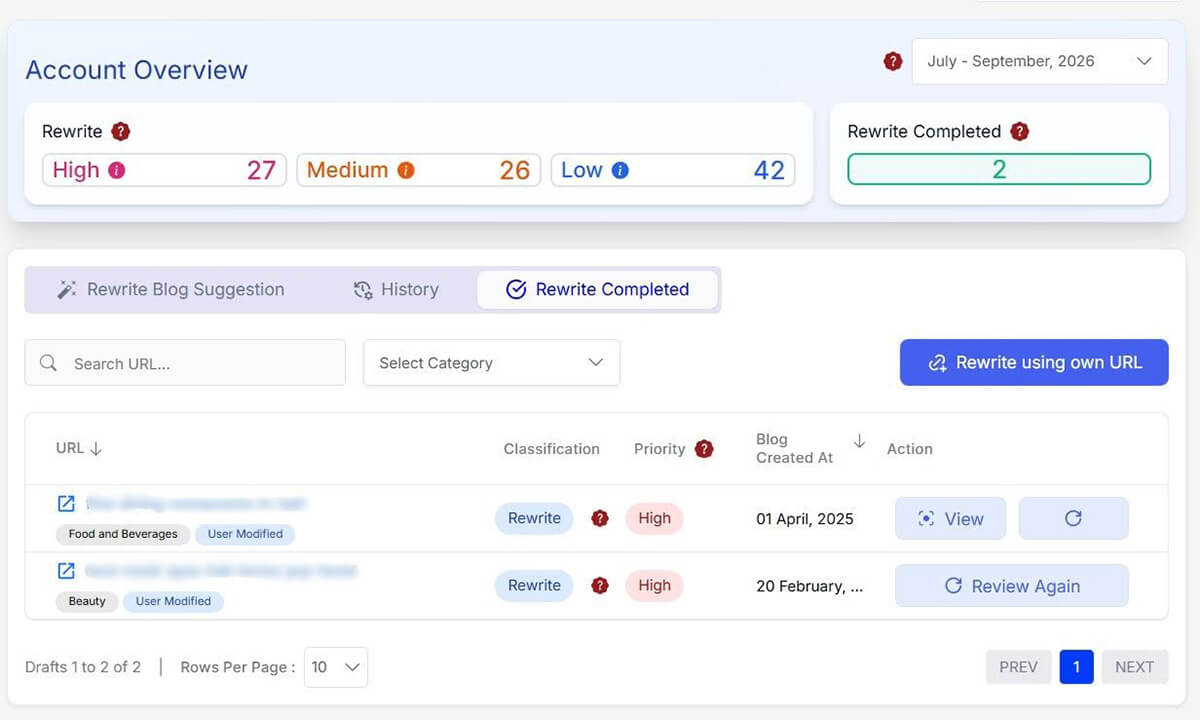
Go to your Addlly AI dashboard and launch the Rewrite Agent. This is where you can start improving the page based on what the audit surfaced. Instead of manually rebuilding the page from scratch, you can use the rewrite workflow to focus on the parts that need the most attention.
4. Choose How You Want to Rewrite
Select the rewrite option that best fits the page you are updating.
- Full rewrite: best for older posts that are broadly outdated or no longer aligned with current intent
- Section-based rewrite: best when only certain paragraphs or sections need improvement
Choosing the right rewrite type helps you improve the page more efficiently and avoid unnecessary changes to sections that are already performing well.
5. Add Suggested Keywords
Use the keyword suggestions from your audit report to strengthen the page’s relevance. Addlly AI helps place these keywords naturally so the content stays clear and readable without forcing them into the copy.
Focus on improving keyword coverage in important areas such as:
- Headings
- Core sections
- Supporting explanations
- Metadata where needed
6. Improve Headers and Structure
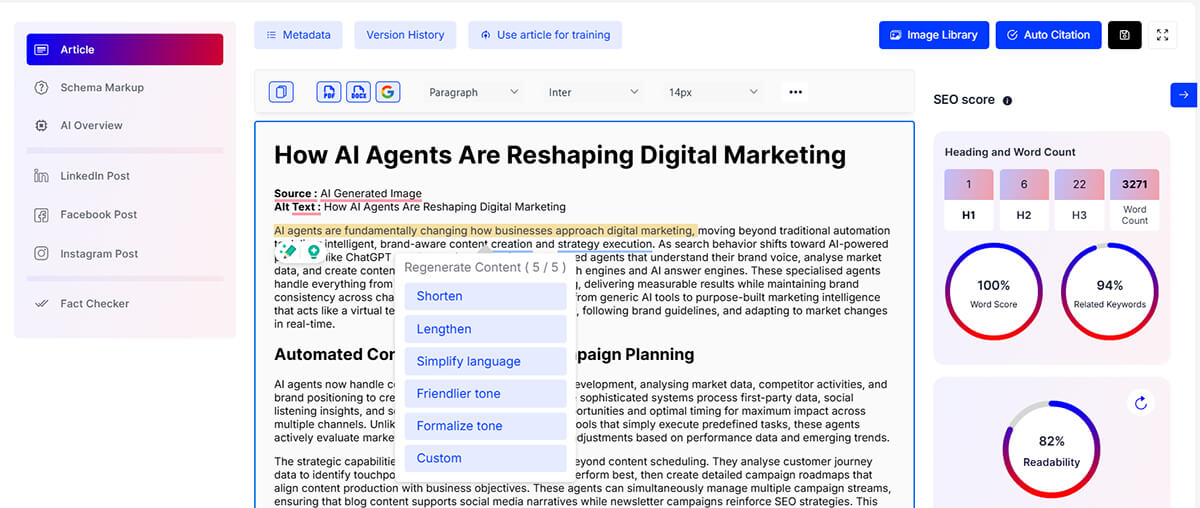
If the audit highlights structural issues, update the page layout to make it easier to follow and for search systems to understand.
This may include:
- Updating the H1 for clarity
- Adding missing H2 or H3 sections
- Reorganizing topics into a clearer flow
- Improving scanability for readers
Better structure helps both users and search engines understand what the page covers and why it is relevant.
7. Expand Thin Content
If the audit shows that the page lacks depth, expand it with more useful detail. This can include clearer explanations, examples, supporting points, or related subtopics that strengthen the page as a whole. The Rewrite Agent can help generate stronger sections while keeping the content aligned with your existing topic and brand voice.
This is also where content optimization can more directly support GEO and AI visibility. Pages with clearer structure and stronger topic depth are generally easier for AI systems to interpret, summarize, and connect to related queries.
8. Publish Your Updated Content
Once the page has been updated, publish the improved version to your site. Before publishing, review:
- Title tag
- Meta description
- Internal links
- Overall tone and brand alignment
This helps make sure the final version reflects both the audit findings and your broader content standards.
9. Re-Run the SEO Audit
After your changes are live, run the SEO audit again on the updated page. This helps you confirm what improved, identify any remaining issues, and decide whether the page needs additional work.
Re-auditing also helps you build a repeatable process for refreshing older content across the rest of your site.
How Does Addlly AI Help You Optimize Existing Content?
Addlly AI consolidates the main parts of the optimization process into a single workflow so that you can move from diagnosis to improvement more efficiently.
You can use Addlly AI to:
- Identify weak pages: audit findings show which pages need attention first
- Rewrite content: improve full posts or selected sections without rebuilding the whole page manually
- Strengthen keyword coverage: use keyword suggestions to improve relevance and alignment
- Fix structure: improve headings, layout, and content flow
- Build more depth: expand thin sections or plan supporting content where needed
This makes it easier to optimize existing pages consistently and improve content quality over time.
What Are the Best Practices for Better Optimization Results?
- Priority pages first: Start with the pages your audit marks as weakest, so you focus effort where it is most likely to improve visibility.
- Metadata review: Update title tags and meta descriptions when the content changes significantly.
- Supporting content: Create related blogs or pages when a topic needs more depth than one page can reasonably cover.
- Internal links: Review them after a rewrite to ensure they still support the updated structure and user flow.

FAQs
How do I know which blogs need updates?
Run an SEO audit in Addlly AI. The report highlights pages with weak keywords, thin content, outdated sections, or structure issues so you can identify which pages should be optimized first.
Why do older blogs lose ranking?
Older blogs often lose visibility when search intent changes, keywords shift, or competitors publish fresher and more complete content. Pages that no longer meet users’ needs can gradually decline in rankings over time.
When should I re-audit my updated page?
Run a new SEO audit after your updates are published. This helps you confirm whether the changes improved the page’s signals and whether there are still issues that need further adjustment.
Should I optimize existing blogs or create new ones first?
In many cases, start with optimization. Existing pages often have history, backlinks, and search signals that give them a stronger starting point than brand-new pages, which can make updates a faster path to improved performance.
Can I optimize product or service pages using the same method?
Yes. The same audit-and-rewrite workflow can be used for blogs, landing pages, product pages, and service pages. The goal is the same: improve clarity, structure, relevance, and overall visibility.
How often should I optimize older content?
Review important pages monthly or whenever you notice visibility drops, outdated information, or changes in search intent. Regular optimization helps keep content aligned with current search behavior and site priorities.
Can I optimize content based on a GEO audit, too?
Yes. GEO audit findings can also help guide content updates, especially when the goal is to improve AI visibility. In that case, you would focus more on clarity, structure, entity coverage, and answer-friendly formatting.
Do I need to update metadata every time?
Not always, but you should review it whenever the page changes significantly. If the focus, keywords, or structure of the content changes, the metadata should usually be updated to accurately reflect the new version.