
How Addlly AI Supports Enterprise Security and Compliance
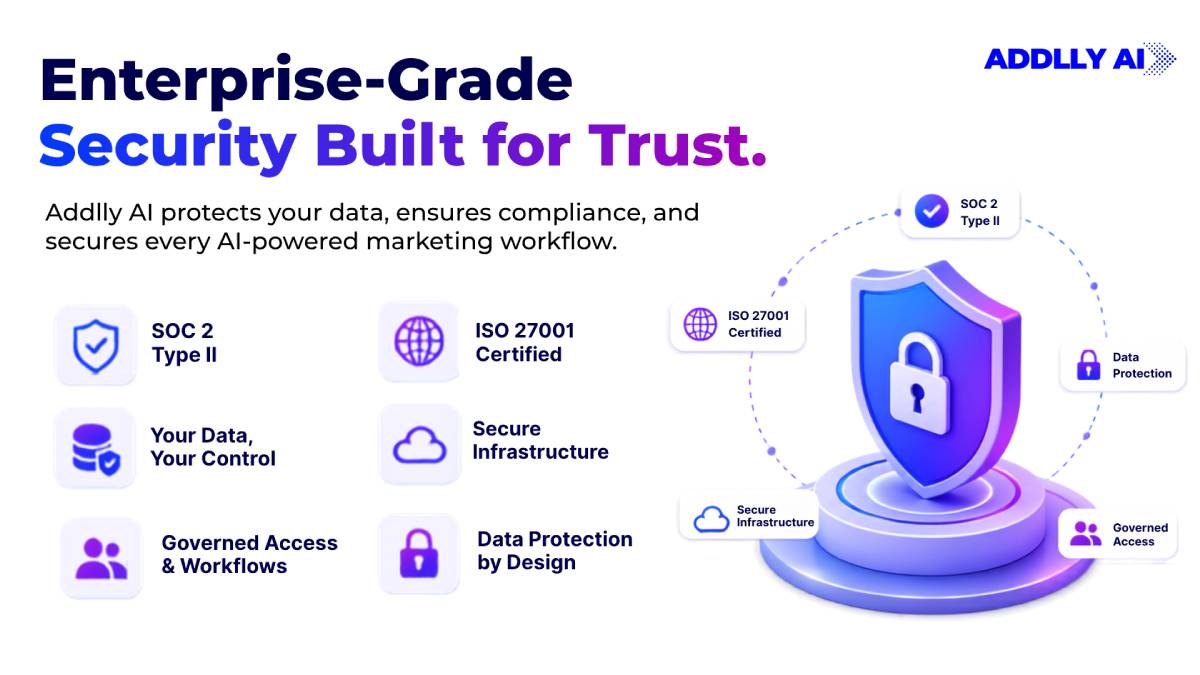
Addlly AI supports enterprise security and compliance through SOC 2 Type II and ISO 27001 frameworks, advanced encryption and authentication, and data protection practices designed for enterprise marketing workflows. Customer data is protected and is not used to train third-party AI models. These measures help enterprises manage marketing data, brand assets, campaign information, internal documents, and performance data within a security-focused AI platform.
Addlly AI’s enterprise security approach covers key areas including data protection, access controls, encryption, authentication, compliance frameworks, and responsible data handling. The platform is designed to help enterprise teams use AI for marketing while maintaining appropriate security and governance standards.
The sections below explain Addlly AI’s security and compliance measures in more detail, including its certifications, data protection practices, and approach to customer data.
Why Do Security and Compliance Matter for AI Marketing Platforms?
AI marketing platforms often handle more than simple prompts. They may process brand guidelines, campaign briefs, product pages, newsletters, social assets, and other business-sensitive materials. That means enterprise buyers need to evaluate not only product capabilities, but also how the platform protects data, controls access, and supports governance.
For enterprise teams, trust is not only about certifications. It also depends on day-to-day security operations, data handling practices, and whether the platform can support internal security review and procurement processes.
What This Security and Compliance Overview Covers
A practical enterprise security page should help teams understand the platform across a few core areas:
- compliance and assurance standards
- data protection and handling
- access control and governance
- infrastructure and operational security
- enterprise evaluation support
For Addlly AI, the public positioning emphasizes enterprise-grade security, encryption, authentication, and compliance support through SOC 2 Type II and ISO 27001.
Compliance and Assurance Standards
SOC 2 Type II
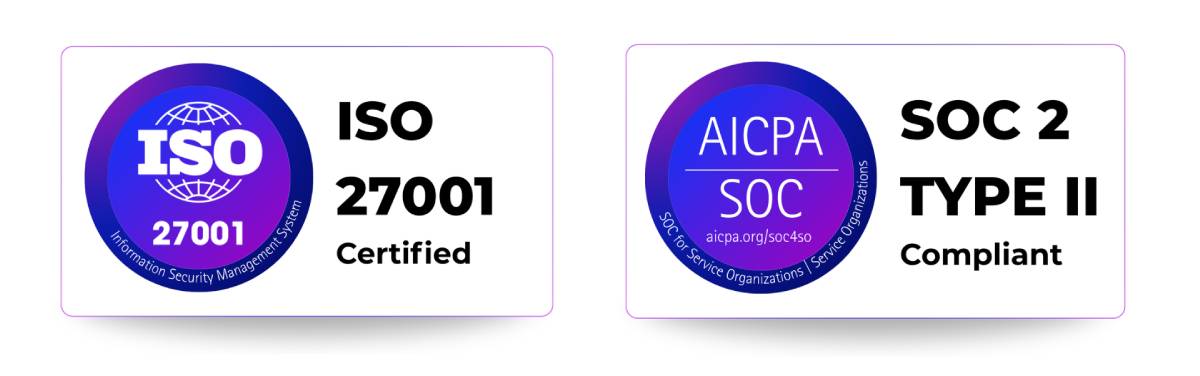
SOC 2 Type II is a third-party assurance framework commonly used to evaluate how a company operates security-related controls over time. For enterprise buyers, this matters because it suggests the platform’s controls are not only defined, but also tested over an operating period. Addlly AI publicly states that it is SOC 2 Type II compliant.
ISO 27001
ISO 27001 is an information security management standard that focuses on how organizations manage security risks and maintain a formal security program. For enterprise teams, ISO 27001 helps show that security is being managed through a structured system rather than informal or ad hoc processes. Addlly AI publicly states that it is ISO 27001 certified.
Why These Standards Matter Together
These two standards support different parts of enterprise assurance. SOC 2 Type II supports confidence in operational controls over time, while ISO 27001 supports confidence in a structured information security management approach. Together, they can help reduce friction during procurement, legal review, and internal security assessments.
How Does Addlly AI Support Data Security?
1. Data protection
Addlly AI positions its platform around protecting enterprise content and workflow data under enterprise-grade security frameworks. Public materials emphasize that customer data is protected and not used to train third-party models, which is especially relevant for teams uploading proprietary brand and campaign materials.
2. Access control and permissions
Enterprise teams usually need confidence that access is limited to authorized users and aligned with internal governance. Addlly AI publicly references authentication as part of its enterprise security posture. In this context, that supports a controlled-access model for sensitive workflows and shared brand assets.
3. Secure infrastructure and monitoring
Addlly AI also references scalable cloud infrastructure and enterprise-grade architecture in its enterprise materials. In a security and compliance context, this supports the idea that platform availability, performance, and operational oversight are handled in an enterprise-oriented environment.
4. Encryption and data handling practices
Addlly AI states that customer data is protected with advanced encryption. It also emphasizes that proprietary data is used to generate on-brand content while remaining protected within the platform. For enterprise readers, this is an important part of evaluating how business-sensitive information is stored and handled.
5. Operational security and incident readiness
A security overview should make clear that platform protection is not a one-time setup. It depends on ongoing controls, internal processes, and operational discipline. Addlly AI’s privacy policy states that it implements appropriate technical and organizational measures to protect personal data, which supports this broader operational framing.
How Does Security Support Enterprise AI Workflows?
Enterprise teams use AI platforms for workflows that can involve SEO, GEO, audits, rewrites, brand voice systems, product messaging, and campaign planning. Security matters because those workflows often cross multiple teams and regions. Addlly AI’s public materials position the platform as supporting AI visibility, content creation, and optimization at scale while maintaining brand consistency and governance.
That means security is closely tied to adoption. Teams are more likely to use AI workflows across departments when they can answer internal questions about data protection, compliance posture, and vendor security expectations.
What Do Enterprise Teams Typically Look for during Evaluation?
When enterprise buyers evaluate an AI platform, they usually want clear answers to questions such as:
- Which compliance standards does the platform support?
- How is customer data protected?
- Is the platform suitable for sensitive marketing workflows?
- What should legal, IT, procurement, and security teams review first?
- Can the platform support cross-team usage under enterprise governance?
A strong security and compliance overview helps answer these questions early, which can reduce delay during vendor review.
How Does This Help during Enterprise Procurement and Review?
Security and compliance information is often useful before final procurement. It can help marketing teams prepare internal stakeholders, support security questionnaires, and reduce back-and-forth with legal or IT teams. For Addlly AI, public security messaging around SOC 2 Type II, ISO 27001, encryption, authentication, and non-training of third-party models forms the core of that story.
Best Practices for Enterprise Teams Using AI Platforms
- Review security and compliance information early in the evaluation process.
- Align marketing, IT, legal, procurement, and security stakeholders before rollout.
- Clarify what data will be uploaded, processed, or shared in workflows.
- Apply internal access controls and approval standards to AI platform usage.
- Treat AI platform security as part of your broader vendor and governance review, not only as a product feature discussion.
FAQs
What Does SOC 2 Type II Mean for Addlly AI Users?
It means Addlly AI publicly states that it meets a recognized assurance standard for security-related operational controls over time. For enterprise users, that helps support trust during vendor review and indicates a more mature control environment.
What Does ISO 27001 Mean in Practice?
It means Addlly AI publicly states that it supports an information security management approach aligned with ISO 27001. For enterprise buyers, that signals a structured security program rather than informal or reactive security practices
Why Do These Certifications Matter for Enterprise Marketing Teams?
Enterprise marketing teams often work with sensitive campaign, product, and brand materials. Certifications such as SOC 2 Type II and ISO 27001 help provide assurance that the platform’s security and operational practices are being managed in a more formal way.
How Does Addlly AI Help Protect Uploaded Brand and Content Data?
Addlly AI states that customer data is protected with advanced encryption and authentication and is not used to train third-party models. That is especially relevant for teams uploading proprietary content, brand guidelines, and internal marketing assets.
Can Enterprise Teams Use Addlly AI for Sensitive Marketing Workflows?
Public enterprise materials position Addlly AI for enterprise-grade workflows involving audits, content creation, and optimization. Whether a specific workflow qualifies as sensitive under your internal standards should still be reviewed by your legal, procurement, and security stakeholders.
What Should Procurement or Security Teams Review First?
Start with the platform’s public security and compliance posture, including SOC 2 Type II, ISO 27001, encryption, authentication, and data handling statements. Those usually provide the fastest first-pass view of whether the platform fits your internal vendor review requirements.
Is Compliance Enough on Its Own to Evaluate Platform Trust?
No. Compliance is important, but it is only part of the picture. Enterprise teams should also review data handling practices, access controls, internal governance fit, and how the platform will actually be used in live workflows.
How Does Addlly AI Support Secure Cross-Team Workflows?
Public materials emphasize enterprise-grade security, governance, and protected data handling across platform workflows. In practice, secure cross-team usage depends on combining that platform posture with your own internal access, approval, and governance standards.
Why Is This Kind of Security Overview Useful During Vendor Evaluation?
It gives procurement, security, legal, and marketing teams a shared starting point. It reduces repeated questions, speeds up internal alignment, and helps decision-makers understand whether the platform meets baseline security and compliance expectations.
What Is the Difference Between Compliance and Day-to-Day Security Operations?
Compliance shows that the platform aligns with recognized standards or external review processes. Day-to-day security operations refer to how the platform is actually run, monitored, controlled, and protected on an ongoing basis. Enterprise buyers typically need confidence in both areas.